
Rather important because it tells us that cell phone tech has become universal. thay number was unimmaginable not too long ago and now it is here. This means that over 80% can read and conduct daily business and all primitive methods are gone.
The demand was always there and it is now satisfied.
We now see blanket growth everywhere. it takesvwilful action to avoid this such as north korea.
80% Of The World's Population Will Use Social Media By 2028
Tuesday, Feb 24, 2026 - 02:45 AM
https://www.zerohedge.com/technology/80-worlds-population-will-use-social-media-2028
Launched in 2004 as an experiment at Harvard, Facebook is often regarded as the defining social media platform of its era, the one that brought such platforms into the mainstream.
Facebook reached one million users just ten months after its launch; it took Mark Zuckerberg's social network around eight years to reach one billion users.
That milestone was reached in October 2012; by that point, many other social media platforms had become household names, including Twitter (launched in 2006) and Instagram (launched in 2010).
Just over 20 years after Facebook first took the internet by storm, social media use is almost universal.
As Valentine Fourreau shows in the infographic below, based on Statista Market Insights data, over 5 billion people worldwide were estimated to use social media in the world in 2024, a global penetration rate of almost 71 percent. According to Statista estimates, the global penetration rate of social media should reach 82.6 percent by 2029.
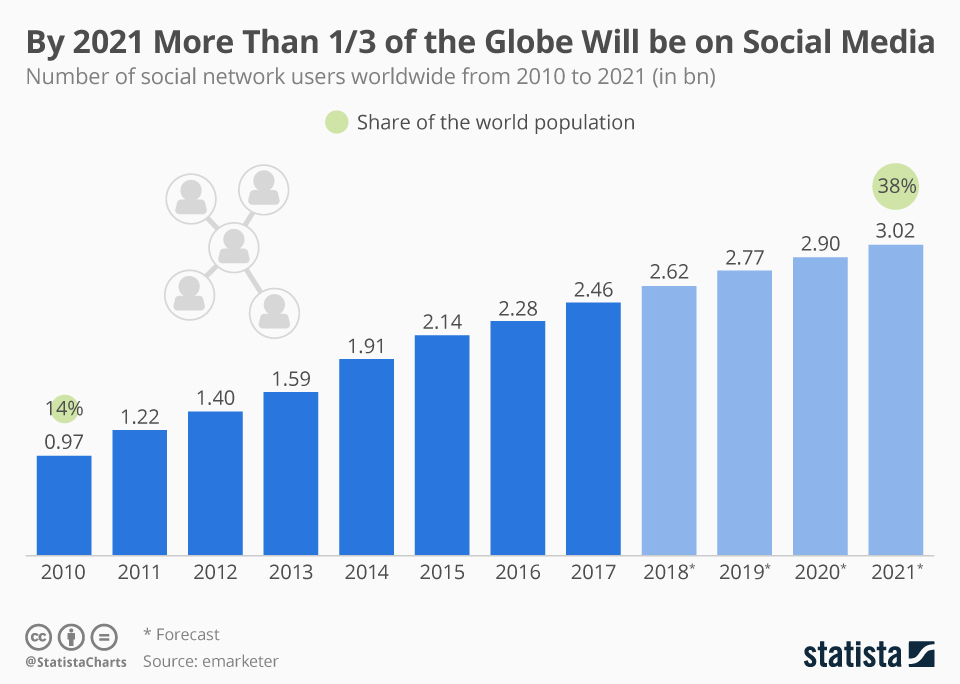
You will find more infographics at Statista
In recent years, growing concerns about mental health, online safety and digital addiction have led governments worldwide to take action to limit children's access to social media.
In November 2024, Australia passed the Online Safety Amendment, banning social media for users under 16, and platforms face significant fines if they don't comply.
Several European countries are working on comparable bans, while similar legislation will take effect in Brazil in March 2026.
According to a recent WHO survey, one in ten adolescents worldwide is considered to be a problematic social media user.


No comments:
Post a Comment