
ah yes. how do we get out of all this? multi million production runs tend to argue against been brave and just who is going to have the authority? A central banker?
literally too big to change.
and it is still evolving.
Five (Maybe Six) Things That Have Made New Cars Suck
By eric
-August 31, 2026
https://www.ericpetersautos.com/2026/08/31/five-maybe-six-things-that-have-made-new-cars-suck/
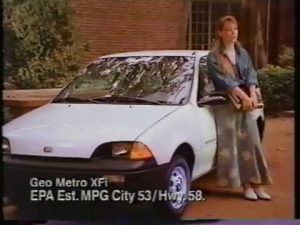
Back in the day, some of the things that made cars suck were underpowered engines, rapidly rusting bodies and – in what were then called economy cars – the creature comforts of a cardboard box. Today, no cars suck in those ways. There are cars that have less power than others, but nothing new is “underpowered” in the way many cars were back in the ’70s and ’80s and even into the ’90s (Geo Metro, anyone?) and bodies usually don’t show rust at least until the loan is paid off and there’s no longer such a thing as an “economy” car, either – because today’s entry level cars all come standard with AC, power everything, an at least decent stereo and so on.
New cars just suck differently. Here are some of the ways they do:
They are hard to see out of –
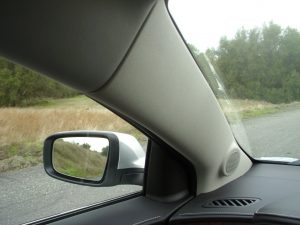
One of the great virtues of the cars of the past was that they were easy to see out of, because they had lots of glass and thin A, B and C pillars holding up their roofs. A quick glance to the left – or the right – assured there was no one coming from that direction and you could just pull out from a sidestreet onto the main road. In most new cars, this is often fraught with peril – as they say in bodice-ripping romance novels – because the A, B and C pillars are as thick as the structural girders of a small bridge. That’s because – per federal “safety” decree – they have to be able to support the weight of the car if it rolls on its roof. Of course, it is more likely to roll on its roof because it got hit hard from the left or right because its driver pulled out in front of someone he couldn’t see coming on account of those massive A, B and C pillars
.
Their gas mileage sucks –
Back when there were still economy (rather than entry level) cars, they were lots of inexpensive cars that got better mileage (50-plus MPG) than any new car available today that isn’t an expensive hybrid, such as the Prius. This was the major upside to being underpowered; you maybe didn’t pass many other cars – but you did pass lots of gas pumps. Today, even with efficiency advantages that were not yet even gleams in an engineer’s eyes, such as direct injection, variable valve/cam timing and (of course) transmissions with more overdrive gears than most automatic transmissions had gears, period – 35-40 MPG is considered outstanding for a non-hybrid and nothing that isn’t a hybrid gets to 50, let alone exceeds it. The reason why is because all that technology is counteracted by weight – most of which has been added by government regs. There’s not a single new car that weighs less than 2,000 pounds and most weigh well over 3,000. If new cars weighed what the sucky cars of the ’70s and ’80s and ’90s weighed, they’d probably get 60 MPG without needing a hybrid drivetrain to achieve it.

They are boring –
Say what you will about the cars of the ’70s and ’80s and ’90s – they at least had some personality, most of them. There was a great variety of shapes and color and sometimes just strangeness, which is at least better than boring. A Pacer, for instance. Or a Subaru SVX. How about an Isuzu VehiCROSS? Pontiac Aztek, anyone? They were conversation starters. They made you laugh – or maybe your friends laughed. New cars have a Soviet flavor; a dreary sameness made even more soporific by their homogenous operating characteristics. If you’ve driven one 2.0 liter four-powered, CVT-equipped transportation appliance, you have driven them all. Ask the guy who has to write about them every week, week-in, week-out all year long.
You can’t tell what’s under the hood –

More finely, there is nothing to see under the hood – other than a black plastic engine cover. It’s as if they don’t want you to see the engine, which is a very strange thing when you stop to think about it. Raising the hood to see the engine was once something along the lines of opening a Christmas present; you wanted to see what’s in the box – as well as under the hood. Car companies used to put real thought into making an engine compartment look special or at least, not like everything else. You could tell at a glance whether you were looking at a four cylinder or a V6. Performance engines used to have “dress up” stuff that typically included chromed rocker covers and a special air cleaner of some kind – sometimes with stickers touting the specialness of the engine. Now almost all car engines are covered by a black plastic cover, which is something like the way all devout Muslim women are covered by burqas and sheets. You can’t tell whether any of them might be good-looking under there. For the Muslims, that’s the point; i.e., modesty. But why do they have to burqa up the engine compartments of new cars?
The government designs them –
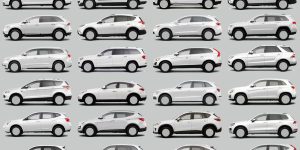
For most of the history of the car (and truck) it was up to the car companies to design them. They often did – to paraphrase Steve Martin – wild and crazy things, which is part of the reason why many people look back with nostalgia on the cars of the past. Then along came the government, which – it is hard to explain how – somehow found in the Constitution the power to “regulate” new cars, which meant to define the parameters of allowable design. New cars look like the were all made by the same company because they basically are made by the same company – only that company is the government. The car companies bear a share of the blame for this as well because they have all decided it is better to go along to get along than to fight the government.
Oh, one more really sucky thing.
New cars parent you and mulct you and narc on you –
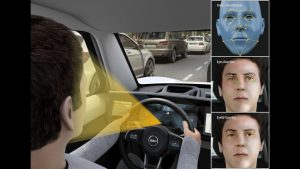
New cars, as most people have discovered, are more controlling than an abusive spouse; they “correct” your driving constantly. They pester-parent you relentlessly. They blast “buckle up” buzzers at you if you put a gym bag (or even a sandwich from Subway) on the front passenger seat – so you have to buckle-up the bag or sandwich to get the buzzer to shut off. They turn down the sound of the stereo when you back up; they throw the transmission back into Park when you try to back up with the door cracked – so that you can see behind you, as back up. At the same time, they belch ads from the TeleScreen that is also used to watch your eye movements and that electronically takes note of your “preferences” and sends them off to Peddler Central, so that the peddlering directed your way can be personalized. One day, you get a letter from the insurance mafia adding a 20 percent “surcharge” to what you’re forced to pay for “coverage” – because your car narced you out for “speeding” and “aggressive inputs.”
It all makes a ’72 Pinto look pretty good.


No comments:
Post a Comment