
This is encouraging. It argues that the problem is a result of ongoing issues that can be reversed and are been reversed.
Past protocols were accidental misdirection that took us away from superior practise.
we can do better.
Alzheimer’s Is Not a Life Sentence
What 3,872 studies in the GreenMedInfo database reveal about protecting — and rebuilding — the human brain.
Oct 13, 2026
What 3,872 studies in the GreenMedInfo database reveal about protecting — and rebuilding — the human brain, plus the 10 most powerful evidence-based approaches
2:11 PM · Oct 13, 2026 · 168 Views
In May 2008, Dr. Mary Newport, a Florida neonatologist, watched her husband Steve try to draw a clock. He produced a few small circles and some numbers scattered at random. His doctor told her he was “beyond moderate” Alzheimer’s. Two days later — after staying up all night reading patent filings — she began stirring coconut oil into his breakfast. Two weeks later he drew the clock again. This time it looked like a clock. Within months he could read again. His humor returned. (GreenMedInfo)
One story is not a clinical trial. But it points to a question the pharmaceutical model spent thirty years refusing to ask: what if Alzheimer’s is not a fixed, genetically sealed fate — but the downstream expression of things we can actually change?
That question is no longer fringe. In 2024, the Lancet Standing Commission on dementia concluded that roughly 45% of dementia cases are potentially preventable or delayable by addressing 14 modifiable risk factors across the lifespan (The Lancet Commission). Nearly half. And that estimate does not even include most of the nutritional, botanical, metabolic and environmental factors catalogued in the research you are about to see.
This is a comprehensive review of everything GreenMedInfo has gathered on Alzheimer’s disease: what the database contains, the philosophy behind how we read it, and the ten approaches that I believe have the strongest human evidence behind them today.
Part I: What 3,872 Studies Show
The GreenMedInfo Alzheimer’s Disease page is one of the largest disease files in our database. As of this writing it indexes 3,872 research abstracts, 576 natural substances, 33 therapeutic actions (exercise, diet, light, sound, touch), 128 pharmacological actions, 47 problem substances, and 206 articles (GreenMedInfo).
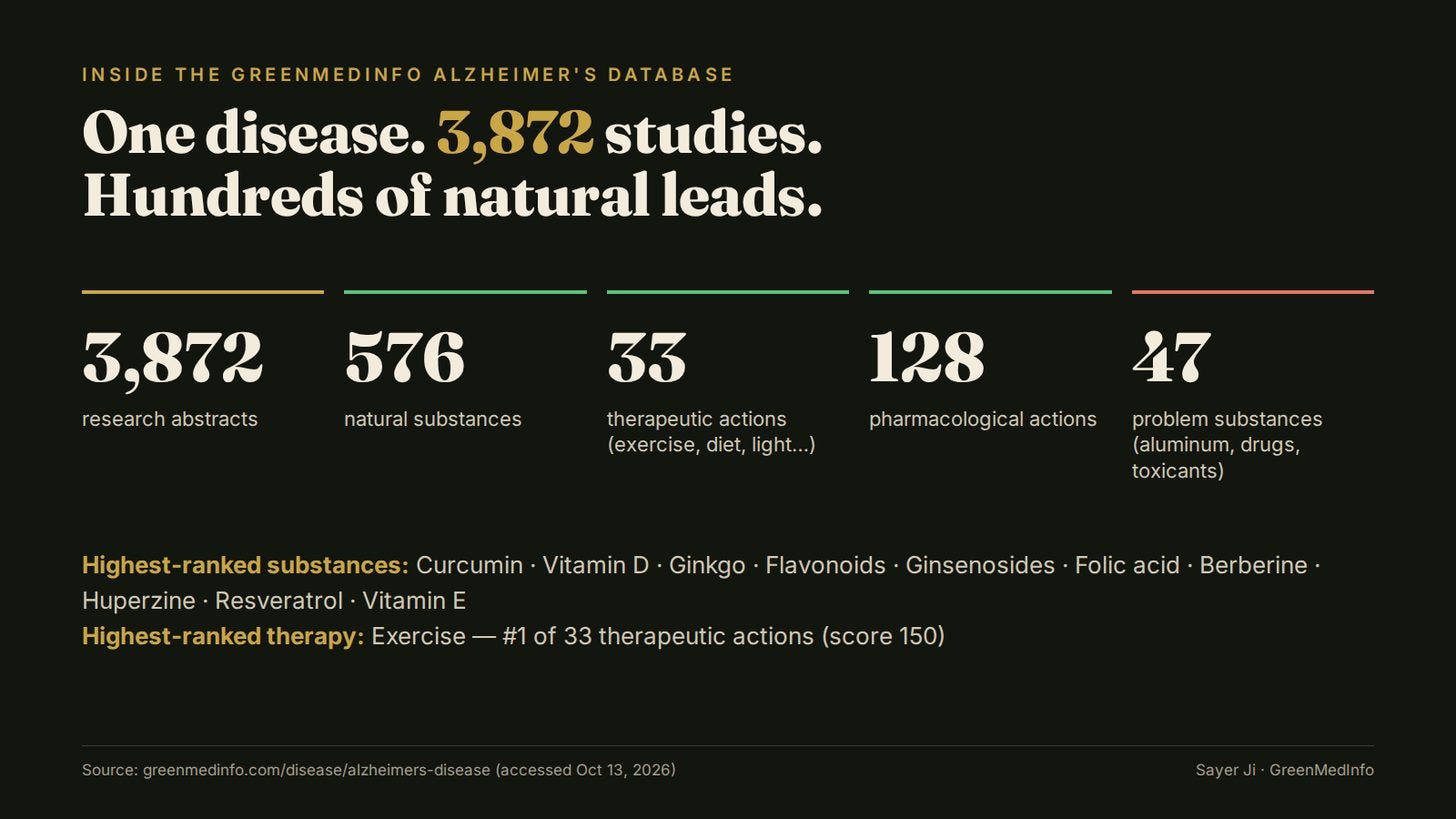
The GreenMedInfo Alzheimer’s file at a glance.
A few patterns jump out the moment you sort the data.
The top-ranked substances are foods, nutrients and ancient medicinal plants. Curcumin (from turmeric) leads with 270 abstracts, followed by vitamin D, ginkgo biloba, flavonoids, ginsenosides (from ginseng), folic acid, berberine, huperzine, resveratrol, vitamin E and melatonin (GreenMedInfo).
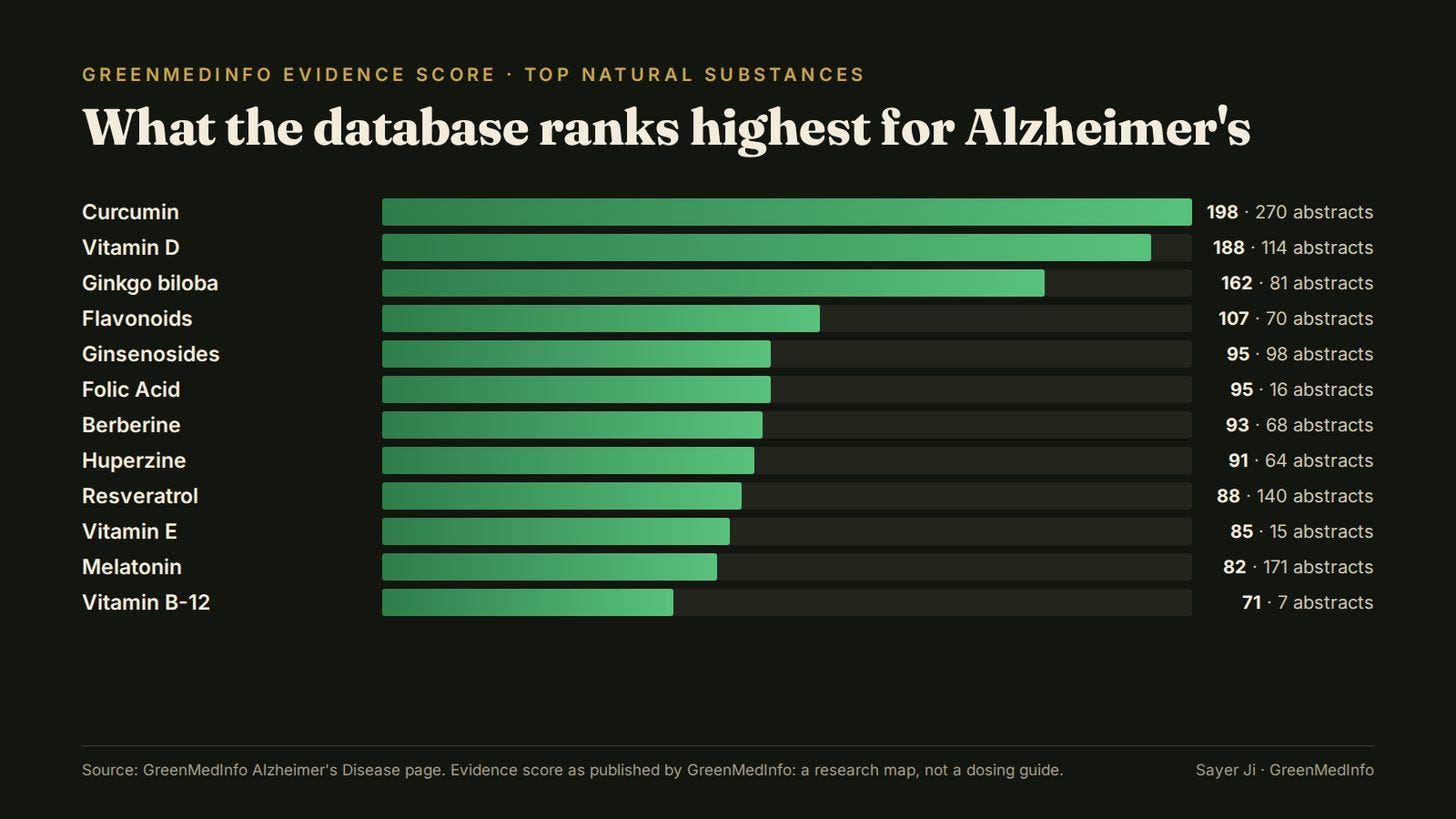
GreenMedInfo’s highest-scoring natural substances for Alzheimer’s disease.
The top-ranked therapy is not a substance at all. Among the 33 therapeutic actions, exercise ranks first, followed by low-carbohydrate/ketogenic diets, the Mediterranean diet, photobiomodulation (red and near-infrared light), electroacupuncture and music (GreenMedInfo).
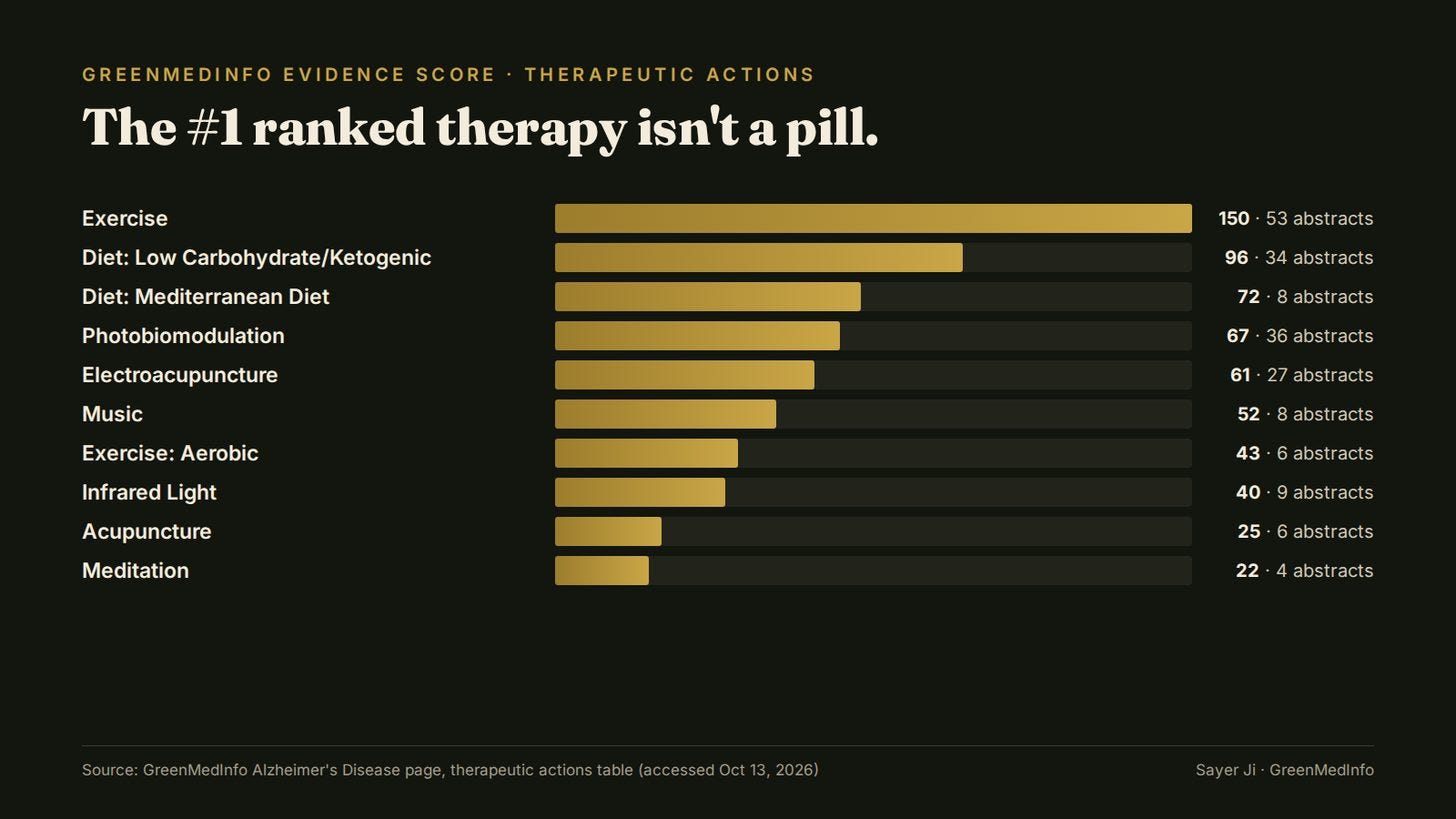
Movement, metabolic nutrition, light and sound dominate the non-drug therapies.
The mechanisms converge. The most-studied pharmacological actions are not “amyloid removal.” They are neuroprotection (2,055 abstracts), antioxidant activity (507), anti-inflammatory activity (480), anti-apoptosis — preventing cell death (177), and the dampening of inflammatory messengers like TNF-alpha, IL-1 beta and IL-6, NF-kappaB inhibition and Nrf2 activation (GreenMedInfo). In other words, the literature keeps describing a brain that is inflamed, oxidatively stressed, energy-starved and under-defended — not one that simply has too much of one sticky protein.
And the database tracks what harms. Of the 47 problem substances, aluminum compounds rank highest. Lead, glyphosate, micro- and nanoplastics, benzodiazepines, proton-pump inhibitors, artificially sweetened and sugar-sweetened beverages also appear. Notably, two of the most-prescribed Alzheimer’s drugs, donepezil (Aricept) and memantine, are themselves indexed under problem substances — a reflection of research on their limits and adverse effects (GreenMedInfo).
Part II: The Philosophy — Why We Read the Evidence Differently
1. Regeneration is the default state
In 2012 I wrote that so-called “incurable” neurodegenerative conditions such as Alzheimer’s can be slowed, if not partially reversed — because “regeneration, after all, is the default state of the human body” (GreenMedInfo). That sentence was considered heretical then. Today, adult neurogenesis is textbook science, and controlled trials — some described below — show measurable changes in brain volume and function from food, nutrients and movement.
2. The plaque is the smoke, not the fire
For three decades, nearly all Alzheimer’s drug development was built on the amyloid hypothesis: sticky beta-amyloid plaques caus the disease, so remove the plaques and you cure the disease. The results speak for themselves.e
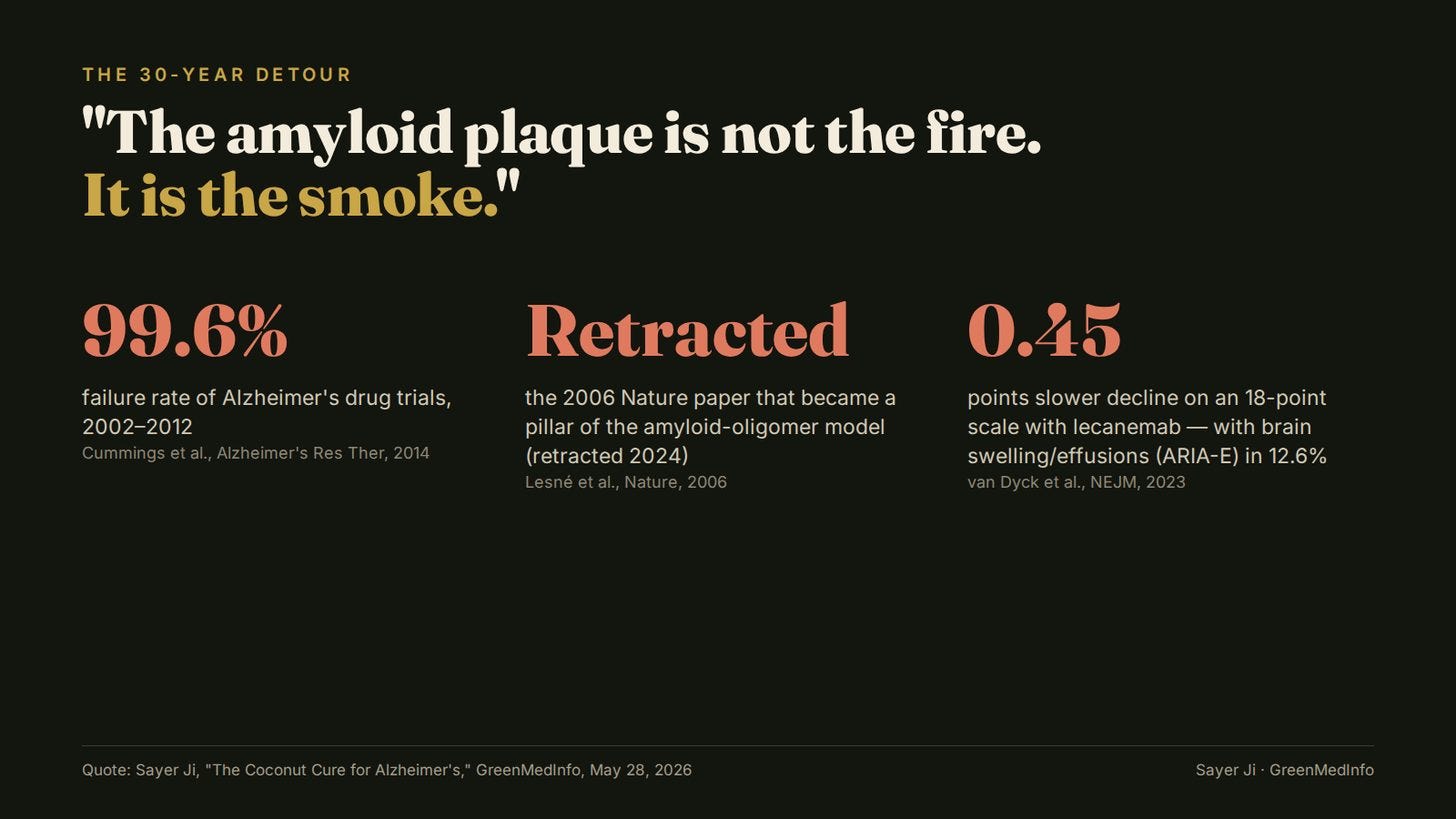
Three numbers that define the amyloid era.
Between 2002 and 2012, Alzheimer’s drug candidates had a 99.6% failure rate (Cummings et al., Alzheimer’s Research & Therapy, 2014).
The 2006 Nature paper that became one of the most-cited supports for the toxic amyloid-oligomer model is now formally a retracted publication (Lesné et al., Nature, 2006 — retracted).
Lecanemab, the flagship anti-amyloid antibody, removed amyloid dramatically yet slowed decline by only 0.45 points on an 18-point scale over 18 months — while causing brain swelling or effusions (ARIA-E) in 12.6% of recipients (van Dyck et al., NEJM, 2023).
As I put it earlier this year: “The amyloid plaque is not the fire. It is the smoke. The fire is metabolic — a slow starvation of neurons cut off from their fuel by insulin signaling that the modern diet, environmental toxic load, and chronic inflammation have systematically corrupted” (GreenMedInfo).
3. Alzheimer’s as “type 3 diabetes”
The metabolic view has deep roots. Brown University neuropathologist Dr. Suzanne de la Monte documented brain insulin resistance and insulin deficiency in Alzheimer’s and framed the condition as “type 3 diabetes” (de la Monte & Wands, J Diabetes Sci Technol, 2008). If neurons are starving for fuel, then one of the most rational interventions is to restore their energy supply — which is exactly what ketones, low-glycemic eating and exercise do.
4. A roof with 36 holes
Dr. Dale Bredesen’s analogy is the best summary of why single-target drugs keep failing: imagine a roof with 36 holes. A drug that patches one hole perfectly still leaves 35 leaks (GreenMedInfo). His first report on a personalized, multi-target program described subjective or objective cognitive improvement in 9 of 10 patients within 3–6 months (Bredesen, Aging, 2014). Small and uncontrolled — but the principle has since been tested in randomized trials, as you’ll see in Approach #3.
5. The calcified gland and the sleeping brain
I have also proposed that pineal gland calcification — a “benign” finding in most adult brain scans — may be a convergent mechanism linking melatonin loss, disrupted sleep, impaired brain waste clearance and amyloid accumulation (GreenMedInfo; GreenMedInfo hypothesis paper). This is a hypothesis, clearly labeled as such, and it informs Approach #9.
6. The self is not erased
Finally, there is something the disease model rarely admits: the person may still be in there. A 2026 case report described an 80-year-old woman with advanced Alzheimer’s who, roughly 19 hours after a single high dose of psilocybin-containing mushrooms, began speaking spontaneously about her life, with weeks of improved continence, mobility and social engagement (Lago et al., Frontiers in Neuroscience, 2026). The authors are explicit that this “does not imply disease reversal” — and so am I (GreenMedInfo). But it suggests that residual capacity may persist far longer than we assumed. That changes how we should treat every patient: as someone still reachable.
The GreenMedInfo lens, in one sentence: treat the brain as a living, self-repairing system that has been overloaded and under-fed — remove what injures it, supply what it lacks, and let regeneration do the rest.
Part III: The 10 Most Powerful Evidence-Based Approaches
I chose these ten by combining two filters: how strongly each ranks in the GreenMedInfo database, and — more importantly — whether it has been tested in humans, ideally in randomized controlled trials. Each section has a plain-language summary first, then a technical callout with the numbers.
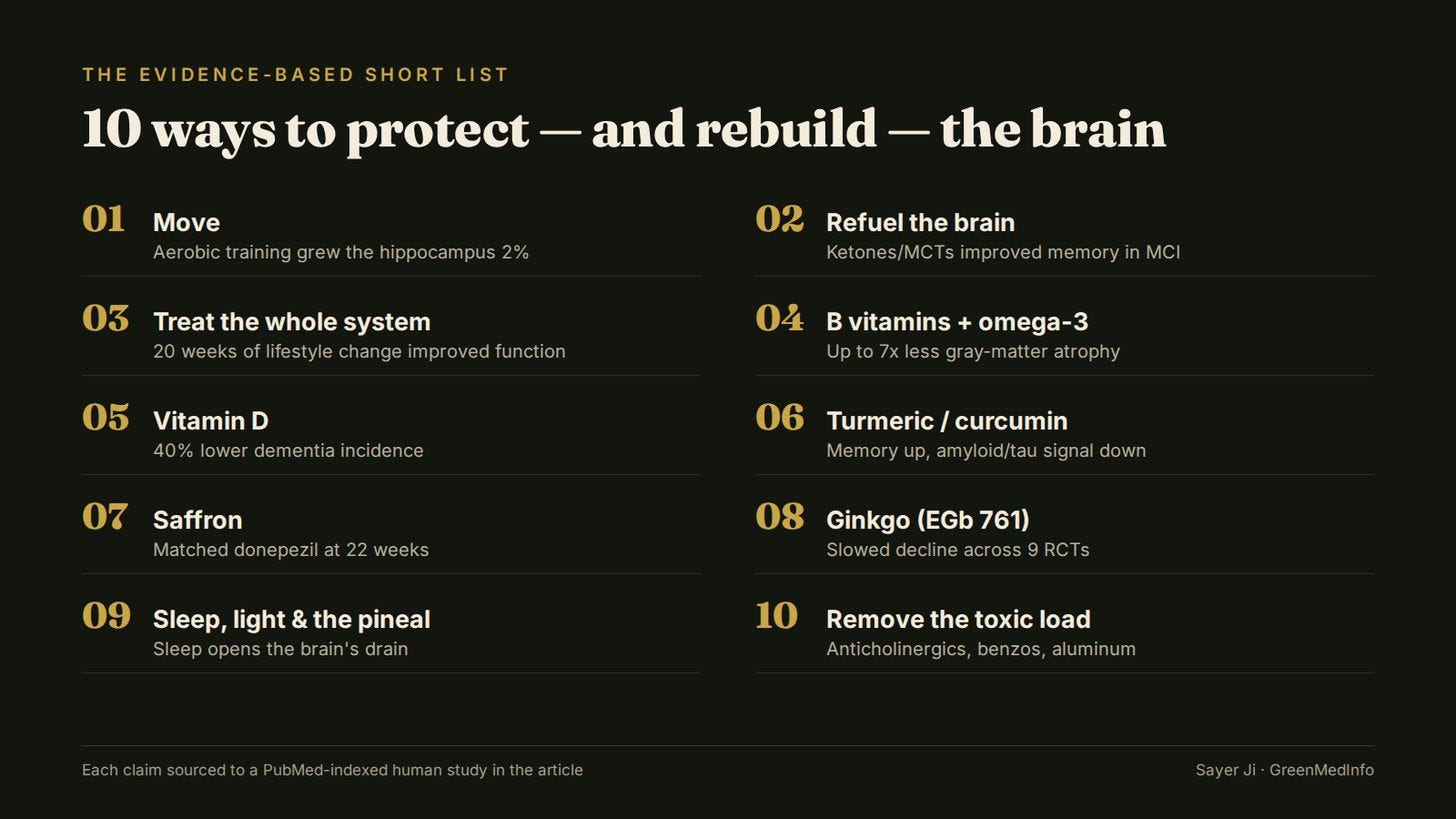
The short list.
1. Move — the brain’s most potent “drug”
Exercise ranks #1 among the 33 therapeutic actions in the GreenMedInfo Alzheimer’s file.
If exercise came in a capsule, it would be the best-selling brain drug in history. In a randomized trial, a year of brisk walking literally grew the memory center of the brain in older adults. Across dozens of trials, moderate exercise improves thinking in people over 50 — whether their cognition starts out normal or impaired. It ranks first among the therapeutic actions in our Alzheimer’s file (GreenMedInfo: Exercise).
The evidence: In a randomized controlled trial of 120 older adults, aerobic training increased anterior hippocampal volume by 2%, “effectively reversing age-related loss in volume by 1 to 2 y,” and improved spatial memory (Erickson et al., PNAS, 2011). A meta-analysis of 39 RCTs in adults over 50 found exercise improved cognitive function (standardized effect 0.29; 95% CI 0.17–0.41), with benefits linked to 45–60 minute sessions of at least moderate intensity, independent of baseline cognitive status (Northey et al., Br J Sports Med, 2018).
How to apply it: Aim for 45–60 minutes of moderate activity on most days — brisk walking, cycling, swimming, dancing — plus two sessions of resistance training per week. Walking with others adds social connection, itself a Lancet Commission risk factor.
2. Refuel the starving brain — ketones, MCTs and low-glycemic eating
The Alzheimer’s brain struggles to burn glucose, often years before symptoms. But neurons have a backup fuel: ketones, which the liver makes from fat and which enter brain cells without needing insulin. Medium-chain triglycerides (MCTs) — about two-thirds of coconut oil by weight — are converted into ketones within hours. Low-carbohydrate/ketogenic diets rank #2 among therapeutic actions in our file, and the Mediterranean diet ranks #3 (GreenMedInfo: Ketogenic; GreenMedInfo: Mediterranean Diet).
The evidence: In 20 adults with Alzheimer’s or mild cognitive impairment (MCI), a single MCT drink raised blood beta-hydroxybutyrate within 90 minutes (P=0.007), and “higher ketone values were associated with greater improvement in paragraph recall” (P=0.02); benefits on the ADAS-cog were seen in APOE4 non-carriers (Reger et al., Neurobiol Aging, 2004). In a 6-month randomized trial in MCI, a ketogenic MCT drink (15 g twice daily; n=39 vs 44 placebo) significantly improved free and cued recall, verbal fluency, naming and Trail-Making errors versus placebo (Fortier et al., Alzheimer’s & Dementia, 2021). Note: this trial was partly industry-supported (Nestlé Health Science).
How to apply it: Cut refined sugar and flour first. Build meals around vegetables, olive oil, fish, nuts and legumes. If adding coconut or MCT oil, start with a teaspoon per meal and increase gradually as tolerated to avoid digestive upset (GreenMedInfo).


No comments:
Post a Comment