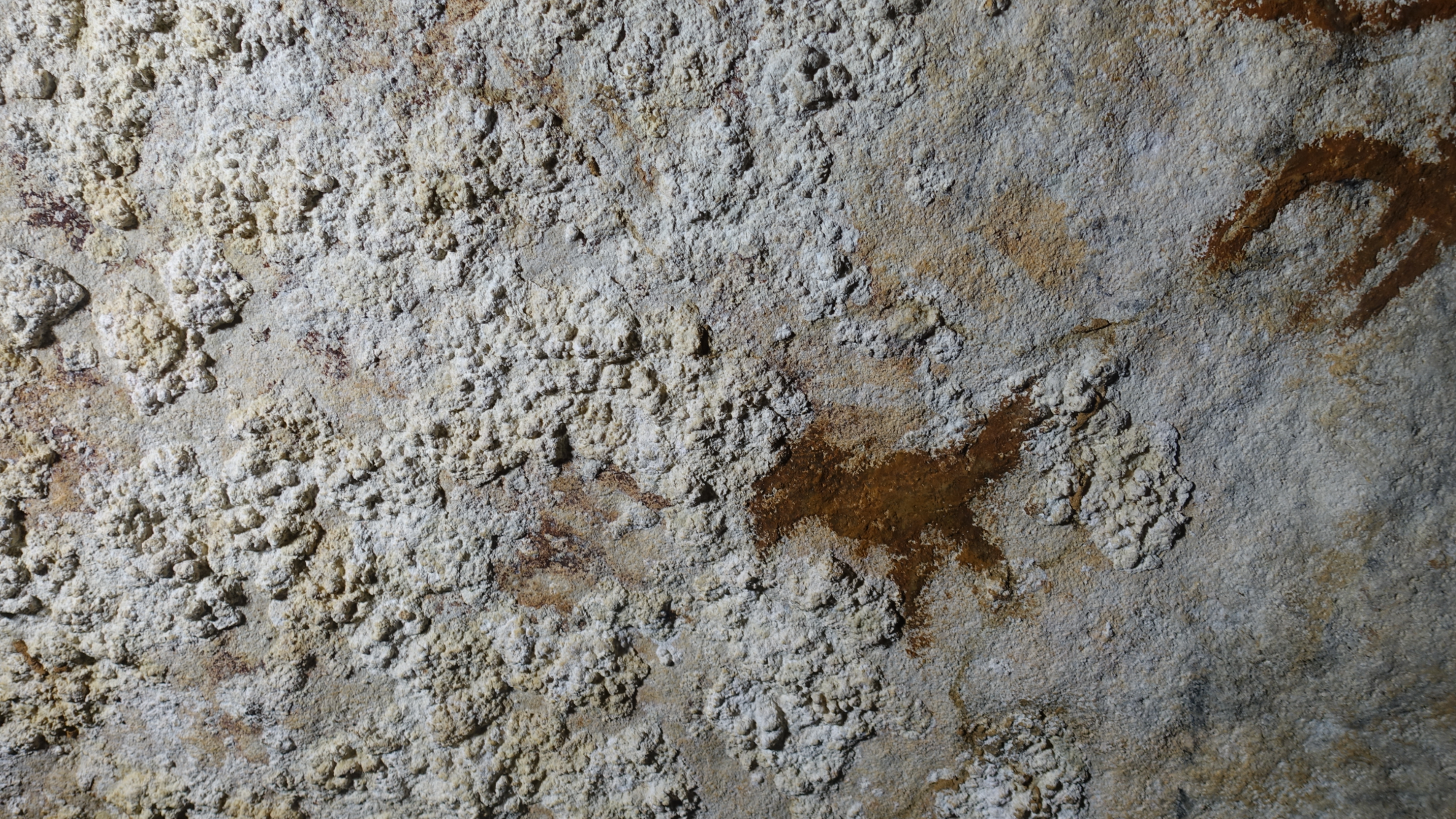
67,800 years makes it contemporaneous with the earliest indication of human population in australia. That is good because it gives us consistent timelines for the global spread of humanity. Making a hand mark is a clearly human signature and easily done with any dyestuff.
what we have is a human presense in the Sahul marking the spread of humanity for all of Eurasia aand assuming earlier presense in Africa. No reson so far to disturb a thing.
I do like the ideathat humanity properly arose in and around the Sahul in the first place simply because we have a lot of conforming indicators. Recall that the entire south China sea was open land at the time. The Wallace line was then a narrow strait at best.
World’s oldest-known rock art found in Indonesian cave
The claw-like drawing of a human hand is roughly 67,800-years-old.
Published Jan 21, 2026 11:00 AM EST
The hand stencil was likely created by a population that is closely linked to the ancestors of Indigenous Australians. Supplied by Max Aubert
A drawing of a claw-like hand on the wall of a cave in Sulawesi, Indonesia is now the oldest known rock art in the world. The roughly 67,800-year-old art exceeds the previous record holder in the same region of Southeast Asia by 15,000 years or more. The drawing is detailed in a study published today in the journal Nature, and helps fill in the archaeological timeline of how and when Australia was first settled.
What are hand stencils?
The cave paintings were discovered by an international team of researchers preserved in limestone caves on one of Sulawesi’s satellite islands called Muna. The team found a fragmentary hand stencil on the wall.
A hand stencil is an outline or template of human hands that are often found on ancient cave paintings. The hand may have been made by tracing the hand (or using it as a stencil), putting charcoal powder into a reed like a straw and spraying the powder around the hand’s shape, or simply eyeballing it. Some hand stencil. Some hand stencils are engraved into the wall rather than painted on. Hand stencils have been found in caves in Europe, North America, and throughout Southeast Asia.
Importantly, the hand stencil in this Muna cave is surrounded by more recent painted art. To help determine the art’s age, the team used uranium-series dating techniques, analyzing the microscopic mineral deposits that formed both on top of and, in some cases, beneath other cave paintings.
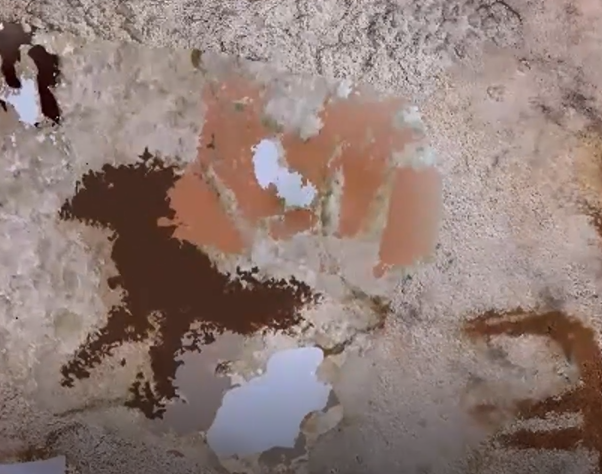
Hand stencils like the one found in Muna are a common motif in ancient art. Image: Supplied by Max Aubert.
The team dated the hand stencil to a minimum of 67,800 years ago, making it the oldest reliably dated cave art yet discovered. In 2024, the same team discovered a rock painting in Sulawesi that is about 15,000 years younger. The team believes that the paintings were likely created by a population that is closely linked to the ancestors of Indigenous Australians.
This hand stencil also indicates that the Muna cave was used for making art over a long period of time. Paintings were repeatedly produced there for at least 35,000 years, continuing until roughly 20,000 years ago.
“It is now evident from our new phase of research that Sulawesi was home to one of the world’s richest and most longstanding artistic cultures, one with origins in the earliest history of human occupation of the island at least 67,800 years ago,” Maxime Aubert, a study co-author, archaeologist and geochemist from Australia’s Griffith University, said in a statement.
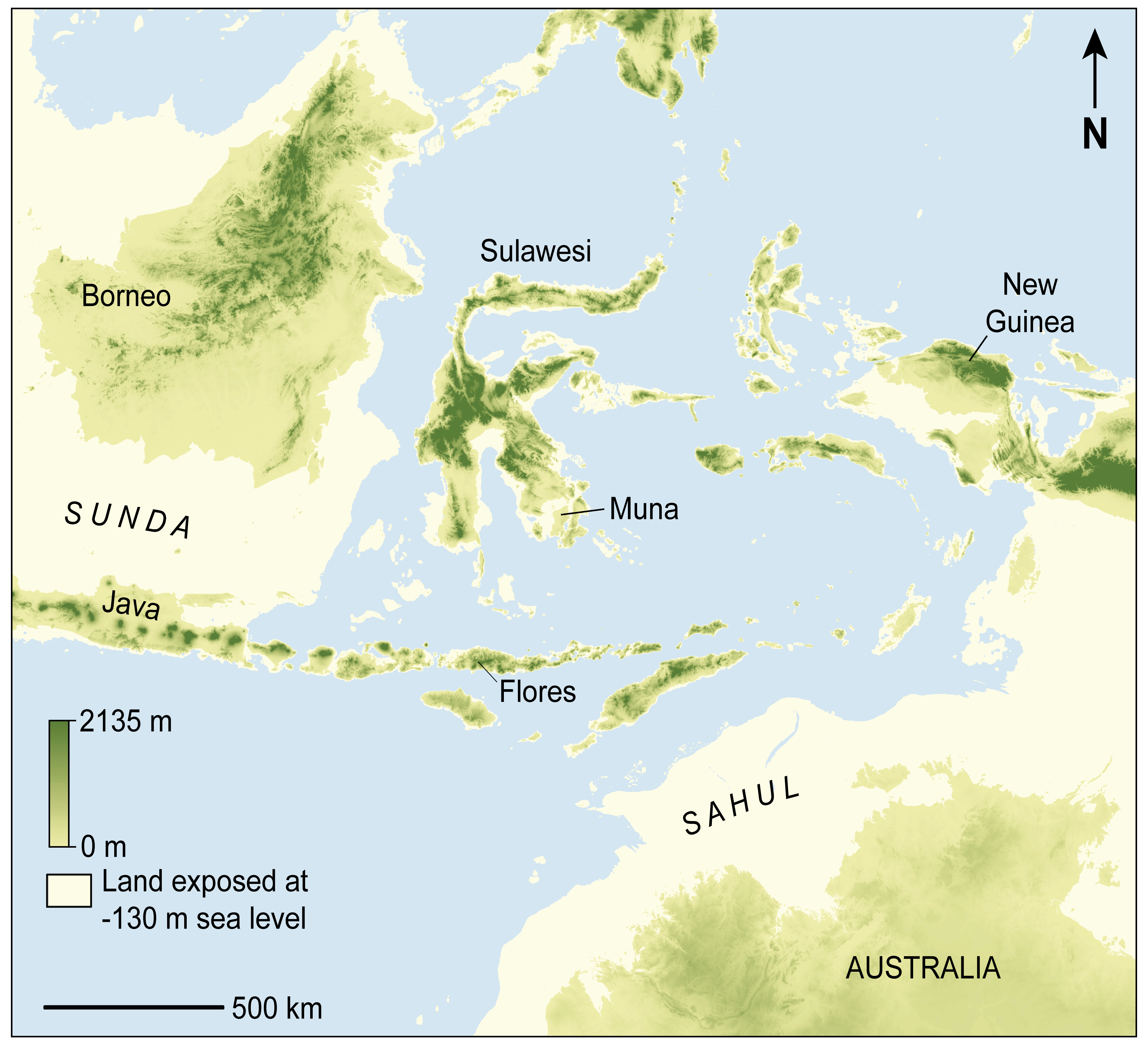
Map showing the island of Muna, Sulawesi. Image: Generated by M. Kottermair and A. Jalandoni using ArcGIS.
Additionally, the team found that this hand stencil is a globally unique variant of this ancient art motif. After the stencil was created, it was changed to deliberately narrow the negative outlines of the fingers. The result is a more claw-like hand. Why the artist used narrowed fingers is not exactly clear.
“This art could symbolise the idea that humans and animals were closely connected, something we already seem to see in the very early painted art of Sulawesi, with at least one instance of a scene portraying figures that we interpret as representations of part-human, part-animal beings,” study co-author and archeologist Adam Brumm added.
Timelines and travel routes
The team believes that this also has far-reaching implications for understanding the history of Australian Aboriginal culture.
“It is very likely that the people who made these paintings in Sulawesi were part of the broader population that would later spread through the region and ultimately reach Australia,” said Dr. Adhi Agus Oktaviana, a study co-author and rock art specialist from Indonesia.
The timing of initial human occupation of Sahul—the Pleistocene-era supercontinent that is now Australia, Tasmania, and New Guinea—has been debated among archeologists. In what scientists call the short chronology model, the first people entered Sahul about 50,000 years ago. In the opposing long chronology model, people arrived at least 65,000 years ago.
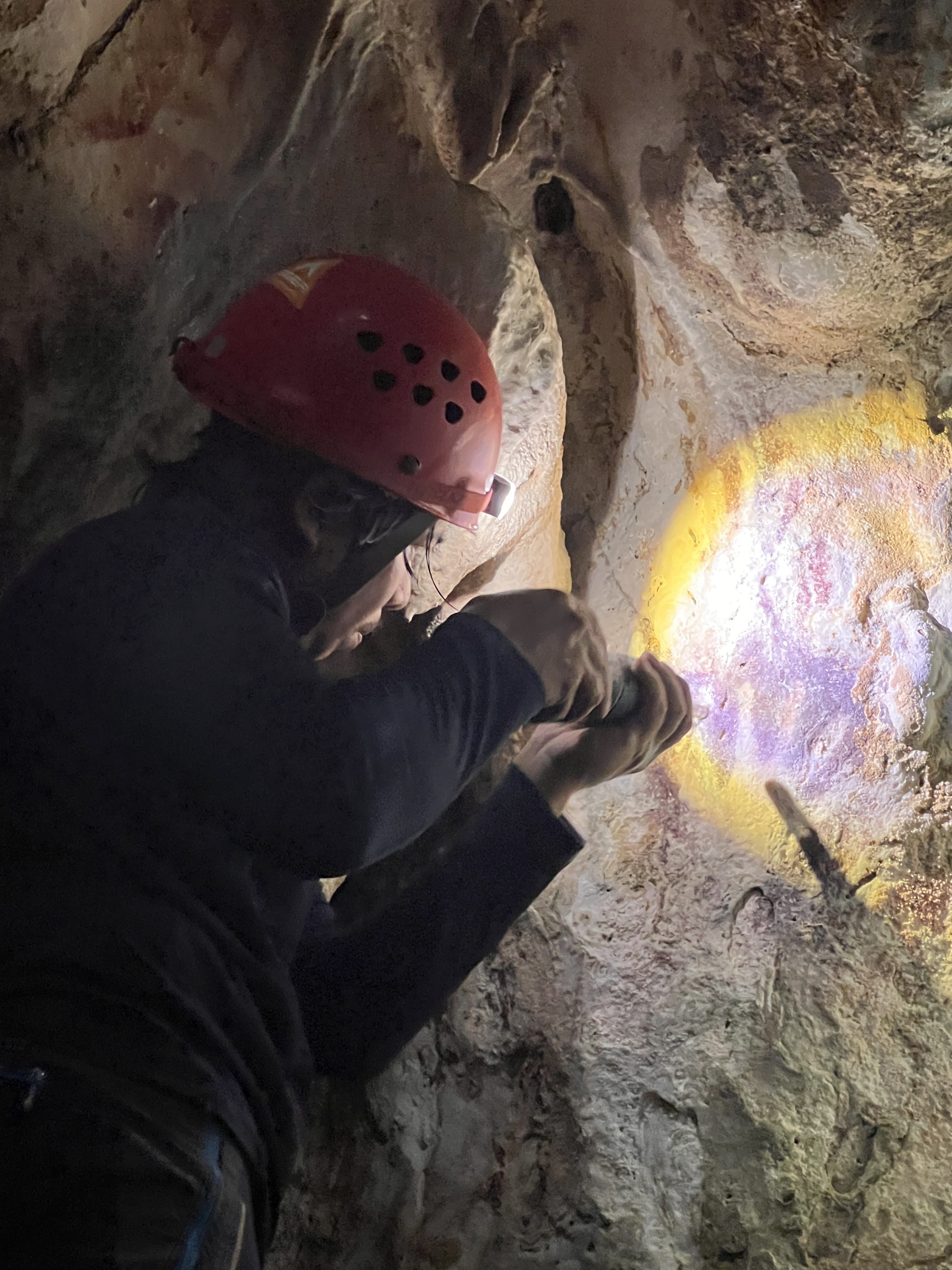
Dr. Adhi Agus Oktaviana illuminates another hand stencil found on Sulawesi. Image: Supplied by Max Aubert
“This discovery strongly supports the idea that the ancestors of the First Australians were in Sahul by 65,000 years ago,” Dr. Oktaviana added.
Researchers also believe that there were two main migration routes into Sahul. The northern route to the New Guinea portion of this landmass went through Sulawesi and the Spice Islands. In the more southerly route, sea voyagers traveled directly to the Australian mainland via Timor or nearby islands.
“With the dating of this extremely ancient rock art in Sulawesi, we now have the oldest direct evidence for the presence of modern humans along this northern migration corridor into Sahul,” said Renaud Joannes-Boyau, a study co-author and archaeologist at Southern Cross University in Australia.
With funding from the Australian Research Council, the team will continue to look for more ancient art and other archaeological finds.
“These discoveries underscore the archaeological importance of the many other Indonesian islands between Sulawesi and westernmost New Guinea,” Aubert concluded.


No comments:
Post a Comment