This is so right and so doable as well. now imagine a daily glass of fresh raw milk just milked that morning. And a big pot of soup every day all wintetr. Is this really so hard? Any farm can make up the soup and start boiling it early in the morning. Particularly if it uses beef bones.
Understand this is what all those oriental noodle houses are all about. It is not the noodles, it is the long boiled beef stock.
It also provides a wonderful connection between the kids and the rural world.
Partnership With Farms Reinvents Kentucky School Lunches, Ending Days of Pan Pizza and Fruit Cups
Partnership With Farms Reinvents Kentucky School Lunches, Ending Days of Pan Pizza and Fruit Cups
Whether you’re a student, an administrator, a farmer—or the journalists getting their teeth into the story of Kentucky schools’ movement to buy and serve local produce, the consensus is clear: the fajitas are great.
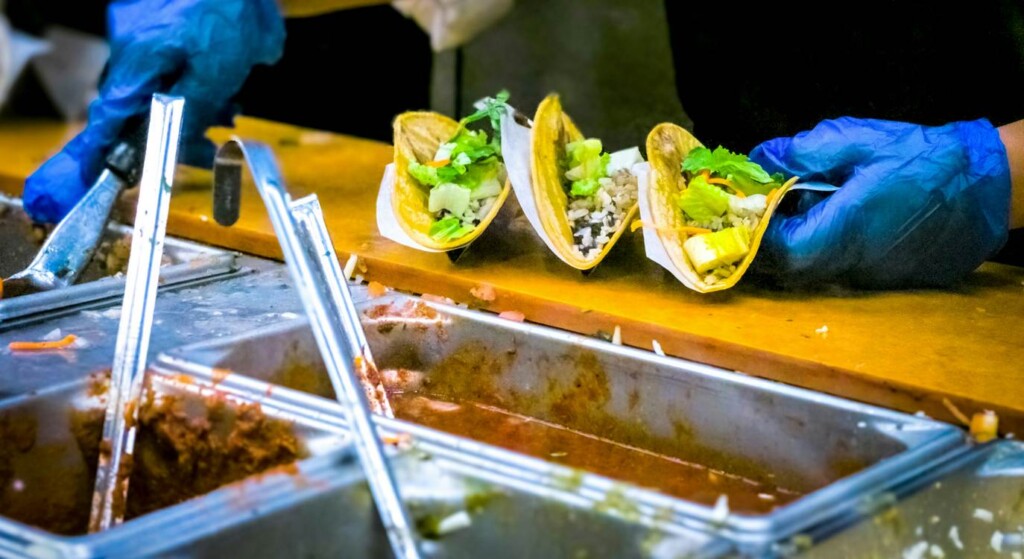
At Boyle County High School, locally-raised beef marinated in cumin is heaped onto corn tortillas with queso, guacamole, sharp red tomatoes, and vibrant lettuce.
It’s just one of many meals the teens at Boyle get to enjoy, and a far cry from the days of fruit cups, pan pizza, and skim milk, days which everyone involved are happy to see gone.
According to Lex 18 News, some 150 Kentucky farms sell their produce to around 90 state school districts thanks to a pandemic-era grant that supplied the state with $3.2 million for the purpose.
It’s clear from the attitude of Boyle County School District Food Service Director Cheyenne Barsotti that the move-to-local has affected far more than just the hungry teens’ excitement for lunch hour: it’s changed the whole way the school approaches food.
Barsotti’s cafeteria staff may just cook from scratch at times depending on what produce is available. As the kids devour and delight, trust in the kitchen increases, and the cooks feel safe trying out new recipes.
Several students told the NBC-affiliate that the fajitas were a 9.5 out of 10.
“I love it because I know that means they’re enjoying it,” Barsotti said. “We do prioritize those center-of-the-plate items, so items like beef that are going to feature as an entree, as a director, I prioritize that because I know the quality is noticeable when you buy the local product, and I think our kids notice that as well.”
Under the new direction of American health policy, the USDA Dietary Guidelines have featured, for the first time in their history, a focus on protein over carbs—and real food, that is to say, food which spoils and doesn’t come out of a box, over all others.
That in turn is reflected not only in the food purchased at schools like Boyle, but in the farmers who are signing up to supply them.
Circle G Farms, a diversified agricultural operation just 7 miles from Boyle, pasture raises cattle on feed grown on the farm, the manure from which fertilizes the entire operation.
“That’s the origin of Circle G Farms,” explained co-owner and operator Carly Guinn. “We try to utilize every division of our farm to its highest potential and keep it sustainable.”
Circle G has now been selling to schools like Boyle for several years, and even though that grant money has been halted, the program has enlivened so many that school districts are trying to maintain the new direction, the new attitudes, and the new menus, as much as possible.


No comments:
Post a Comment