On the basis of the best available intel, we have over seventy separate alien observation bases on planet. We observe them rarely while transiting from these bases into space. They are cloaked, but imperfecdtly. Right distance and angle and they can be seen.
They observe but no level of commercial activity has been seen outside of individual activity. Very much how we would proceed ourselves when non contact is wished.
Eye witnesses have shared with me. conforming to other reports which substanciates the body of reports available. One saw a large craft enter the ocean. we cannot do that yet. A lot of this tech is waiting for application of gravity manipulation, or properly DARK MATTER manipuation.
Chasing Alien Mysteries in the Sky
(Image credit: Greg Wyatt)
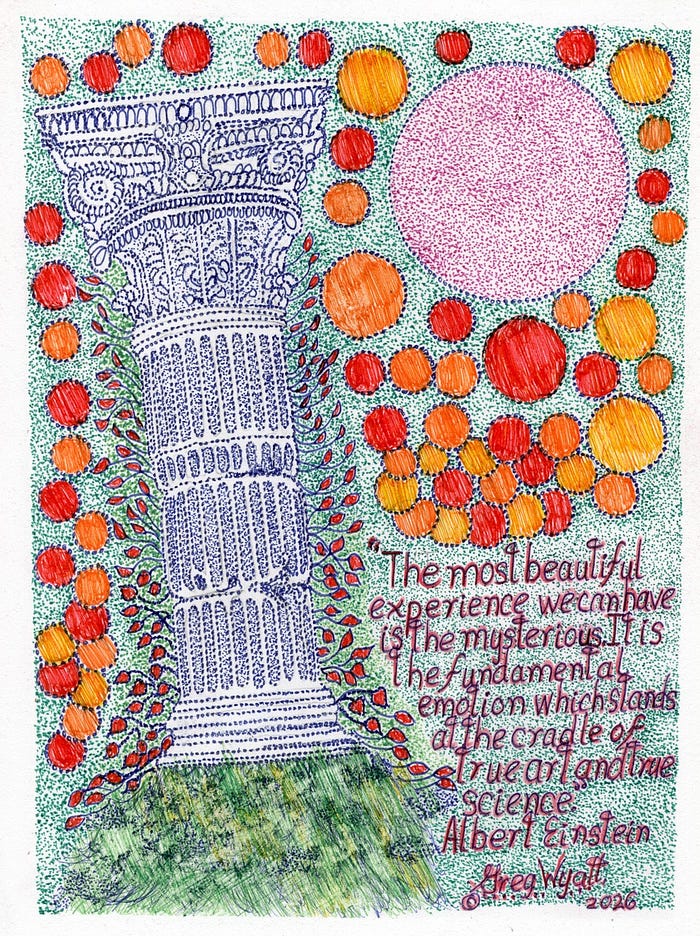
Albert Einstein noted:
“The most beautiful experience we can have is the mysterious. It is the fundamental emotion which stands at the cradle of true art and true science. Whoever does not know it and can no longer wonder, no longer marvel, is as good as dead, and his eyes are dimmed. It was the experience of mystery — even if mixed with fear — that engendered religion.”
Before my morning jog at sunrise today, I had received the following email message:
“I came across your astrophysics work at Harvard in the context of how the possibility of intelligent life beyond Earth seems to affect people emotionally even before there is any final answer. It changes the feeling of how alone humanity really is.
A question, in case you have a minute: In your experience, why do you think the idea of life elsewhere in the universe affects people so personally, even when it remains uncertain?”
My response was short:
“The thoughts about aliens allow people to escape from the frustrations they have in reading the news every day. We hope for uplifting news from space that would inspire us to do better and fill us with wonder. The Messiah may arrive from another star.”
A decade ago, I told my wife that if a spaceship lands in our backyard and I am offered a one-way trip away from Earth, I will accept the invitation. She responded: “Go ahead. Just make sure you leave the car keys with me.” Recently, she changed her answer to say: “I will join you.” One way to interpret this change is that our marriage got better over time, like good wine. But the more likely explanation is that she got too frustrated with the latest geopolitical trends on planet Earth.
Press enter or click to view image in full size
 (Image credit: Greg Wyatt)
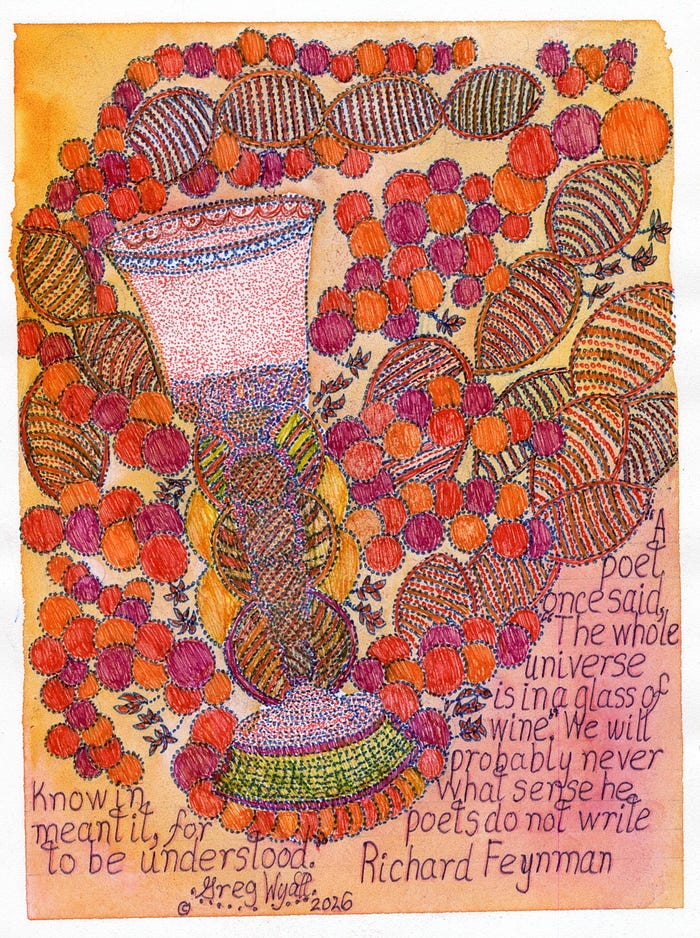
The mysteries in art have multiple meanings and we have no method of narrowing down the ambiguity of possible interpretations. The physicist Richard Feyman noted:
“A poet once said “The whole universe is in a glass of wine.” We will probably never know in what sense he meant it, for poets do not write to be understood.”
On the other hand, science aims to clear the fog of mystery by collecting new data. For example, the latest UFO files released here by the Department of War have multiple possible interpretations because the information accompanying each document is rather limited. The problem with past UFO reports is that we cannot go back to the time and place where they were recorded and improve our understanding of these rare anomalous events. The practical scientific approach — adopted by the Galileo Project observatories under my leadership, is to collect new higher-quality data on millions of objects in the sky and check if any of them resembles past reports on unidentified anomalous objects. In simple terms: we can identify the unidentified by looking up.
 (Image credit: Greg Wyatt)
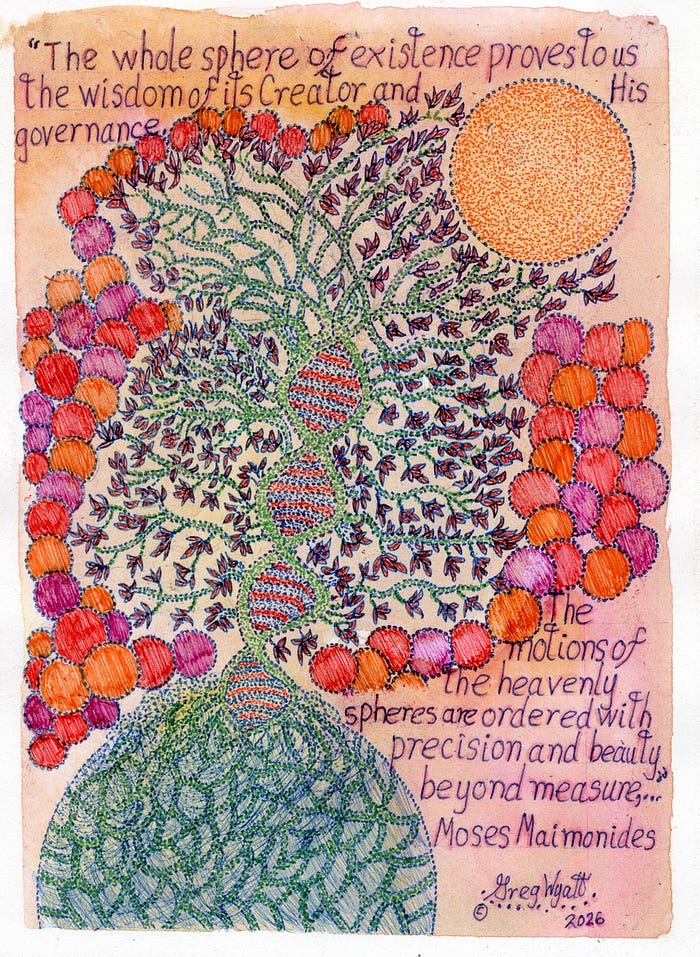
The religious scholar and philosopher Moses Maimonides discussed extraterrestrial life in his philosophical masterpiece: the Guide for the Perplexed, where he argued against the anthropocentric view that Earth and humanity are the sole focus of creation. Indeed, the discovery of cosmic neighbors will affect religious beliefs by implying that God is not a parent of a single child. But the same discovery will also be humbling to secular people, because it would suggest that our cosmic siblings are more accomplished than we are. After all, their technological products reached our home planet before we reached their point of origin. Perhaps alien brains do not possess better cognitive skills but they simply had the benefit of more than a century of science and technology since discovering quantum mechanics. Once we meet their amazing vehicles, we would be shocked to learn about their advanced science and technology.
This afternoon I was interviewed by a BBC reporter about my expectations from an encounter with extraterrestrials. The interview was recorded in anticipation of Steven Spielberg’s movie: “Disclosure Day.” When I met Steven Spielberg at Harvard, he asked me to notify him first if I found evidence for alien technology. Even Spielberg realizes that our neighbors would appear differently than we imagine them. I told the BBC reporter that I expect to encounter a technological device guided by AI rather than a biological visitor as portrayed in Spielberg’s 1982 film “E.T.”. But it would be foolish of me to forecast what this blind date of interstellar proportions might look like. One thing is clear: we must observe our dating partner to learn more about its qualities and intent and make sure that it is not a serial killer.
Realizing that we are visited by the products of a sibling in the cosmic family of technological civilizations would also have a profound impact on geopolitics. It would pose a potential threat to all earthlings because we are all in the same boat. All nations will have to be restrained because an irresponsible militaristic response from one of them towards the visitor could have a devastating effect on all of us. The stock market may crash because of the uncertain future of financial securities.
A few months after the anomalous interstellar object 3I/ATLAS was discovered, I reached out to the United Nations Office for Outer Space Affairs and the International Astronomical Union with the recommendation to establish a committee that will define a protocol for an international response to a visit by alien technologies. This protocol would be very different from the traditional SETI protocol of response to electromagnetic signals (posted here) from a source which is many light years away, because the response to a visitor in our backyard has to be prompt. Unfortunately, the representatives of these organizations replied that it will take years for their administration to approve and establish such committees. As often is the case with administrators, my initiative was damped by bureaucratic viscosity.
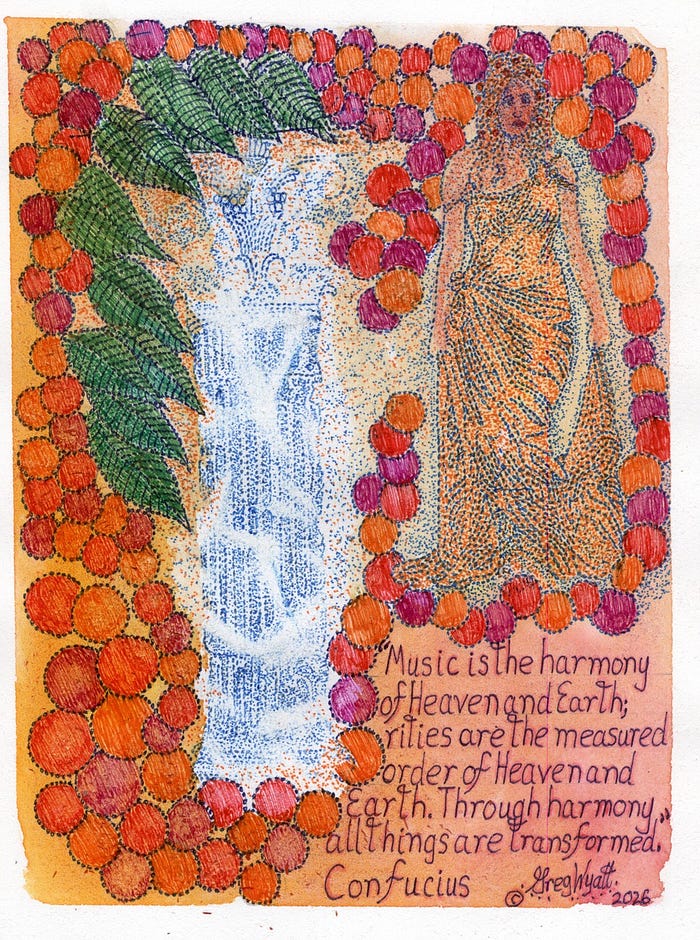
The antidote to bureaucracy is the inspiration that creative art and science bring when exploring the unknown in our cosmic neighborhood. Lets hope that interstellar visitors will bring harmony, and as Confucios realized:
“Through harmony all things are transformed.”
Press enter or click to view image in full size
 (
(Image credit: Greg Wyatt)
***
In this essay, I featured four amazing watercolors from a series created by the celebrated artist, Greg Wyatt. These watercolors incorporate inspiring statements by Albert Einstein, Richard Feyman, Moses Maimonedes and Confucios. This is the 16th in a sequence of essays, where Greg and I collaborate on the interface between art and science. The first essay in this series, titled “Music of the Cosmic Spheres,” appeared here; the second essay, titled: “Cosmic Waterfalls in Spacetime Cliffs,” appeared here; the third titled “Missing Elements in the Cosmic Jigsaw Puzzle,” appeared here; the fourth essay, titled: “Why Do We Exist?”, appeared here, and the fifth titled “Inspiration from the Stars”, appeared here, the sixth titled: “We Might Understand How the Cosmos Works Before We Understand How Life Works”, appeared here, the seventh titled: “Will the Human Survive for Billions of Years”, appeared here, the eighth titled: “The Butterfly Effect of Intelligence in the Cosmos”, appeared here, the ninth titled: “Benefits of Extraterrestrial Intelligence over AI”, appeared here, the tenth titled: “Übermenschen on Exoplanets” appeared here, the 11th titled: “If You Had an Infinite Research Budget, How Would You Allocate It?” appeared here, the 12th titled: “Are Human-Made Objects Orbiting Earth?” appeared here, the 13th titled: “Lets Send AI Astronauts, Not Humans, to the Moon”, appeared here, the 14th titled: “Our Highest Priority Should be National Innovation Centers to Complement AI Data Centers” appeared here, and the 15th titled “The Cosmic Shells That Seeded Life” appeared here.


No comments:
Post a Comment