Yes, we can imagine the possibility and have done so since the first succssful helicoptor. Is there really a better way for a plane to take off and go to airspeed without using a run way?
how about 6gs of applied thrust and jumping into the air? Both are violent and hard on the pilot.
So this is also about keeping your pilot alive.
Anyway this is technically difficult at best and must take design and materials to real limits. It will all be titanium if a solution can be designed. You just have to remember that tip speed really matters. Can we rethink the airscrew itself?
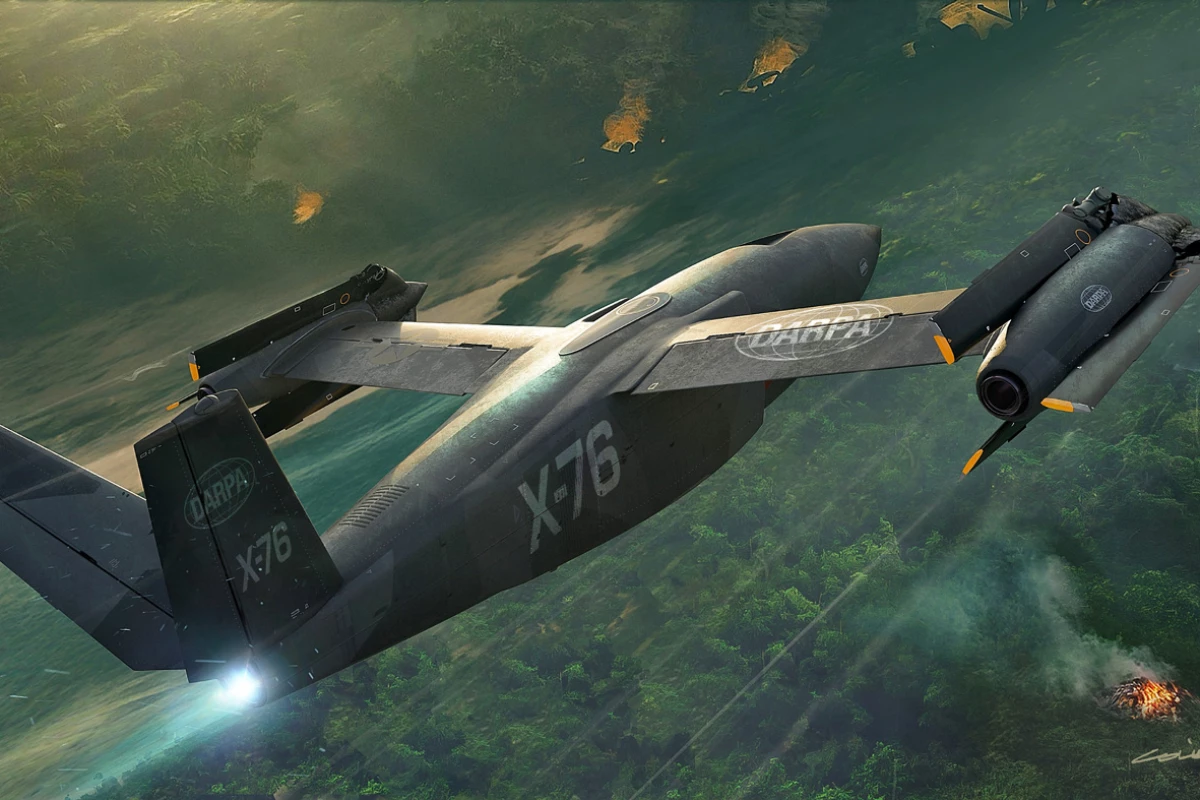
Meet DARPA's X-76: The rotorcraft that flies like a jet
By David Szondy
March 09, 2026
The X-76 combines the features of a rotorcraft and a jet
There's a new X-plane in town. Bell Textron's tilt-rotor aircraft being built for DARPA's Speed and Runway Independent Technologies (SPRINT) program, which aims to combine the features of a helicopter and a jet, has officially been designated the X-76.
Launched in 1946 with the Bell X-1, the US X-Plane program is a series of aircraft, missiles and rockets built solely to develop advanced aerospace technology rather than production aircraft. Essentially, they are proof-of-concept platforms made in very small numbers that tolerate a higher risk factor than standard aerospace development.
Normally, the numbers assigned to X-planes are sequential, though exceptions are sometimes made for symbolic reasons. This is the case with the X-76, which was named in celebration of the upcoming 250th anniversary of the United States in 2026.
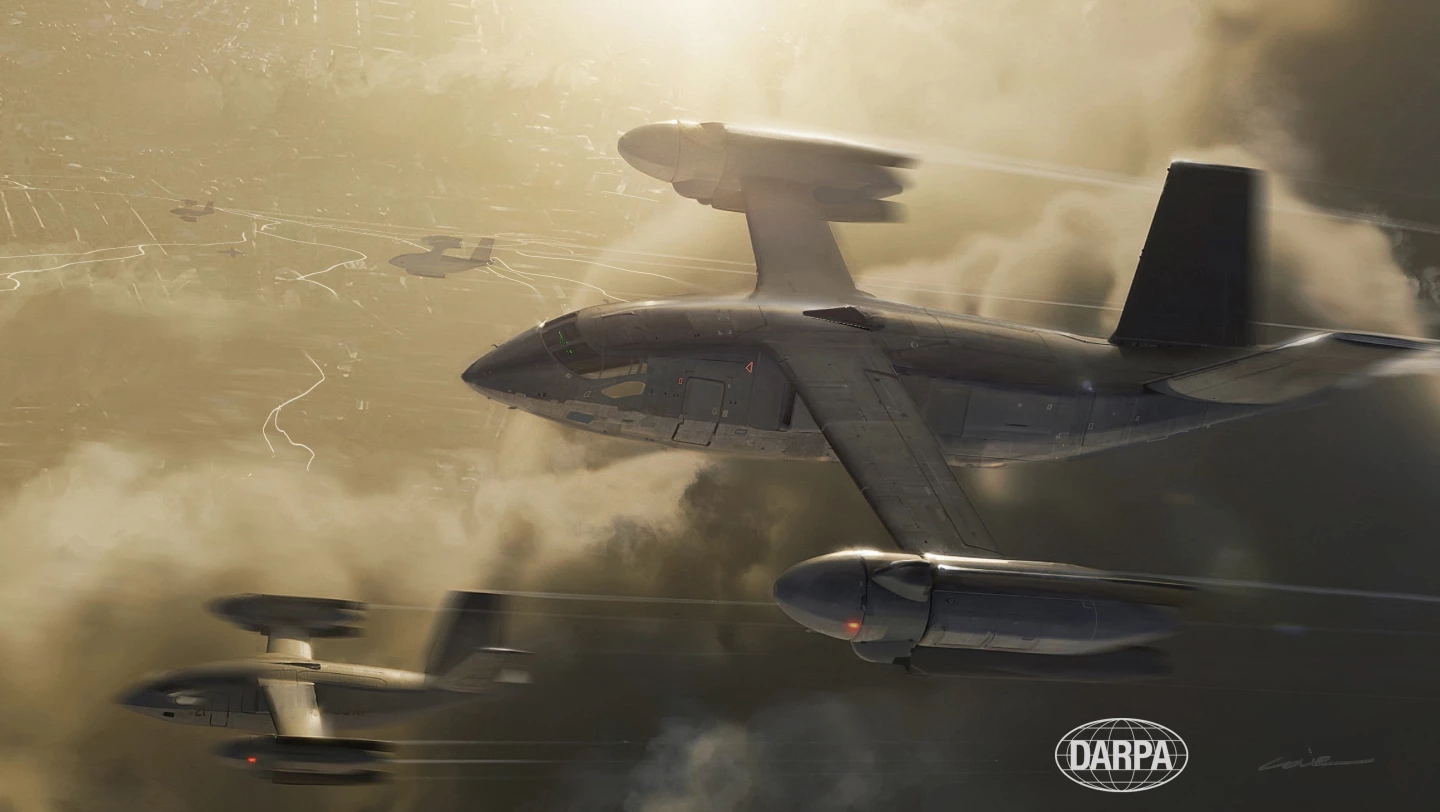
The X-76 is in the prototype phase
DARPA
Up until now, the X-76 has been in its conceptual and design phase, but with the new official designation it's moving on to Phase 2, which handles detailed design and fabrication, followed by the Phase 3 flight test program beginning in 2027. Its purpose is to bridge the gap between rotorcraft like the V-22 Osprey and high-performance jets.
In other words, the goal is to create an aircraft that can take off and land from bare fields like a helicopter, yet boasts the speed and performance of a jet. This is important because most jets require a runway to operate, while rotorcraft have very limited flight performance. The X-76 aims to remove these limitations and combine the advantages of both.
The basic problem with rotorcraft like the V-22 Osprey is that the large rotors providing lift and propulsion are also an inherent limiting factor. At high speeds, the rotors generate significant drag, which worsens as the blades spin faster. That means the Osprey can only reach a top speed of about 270 knots (311 mph, 500 km/h).
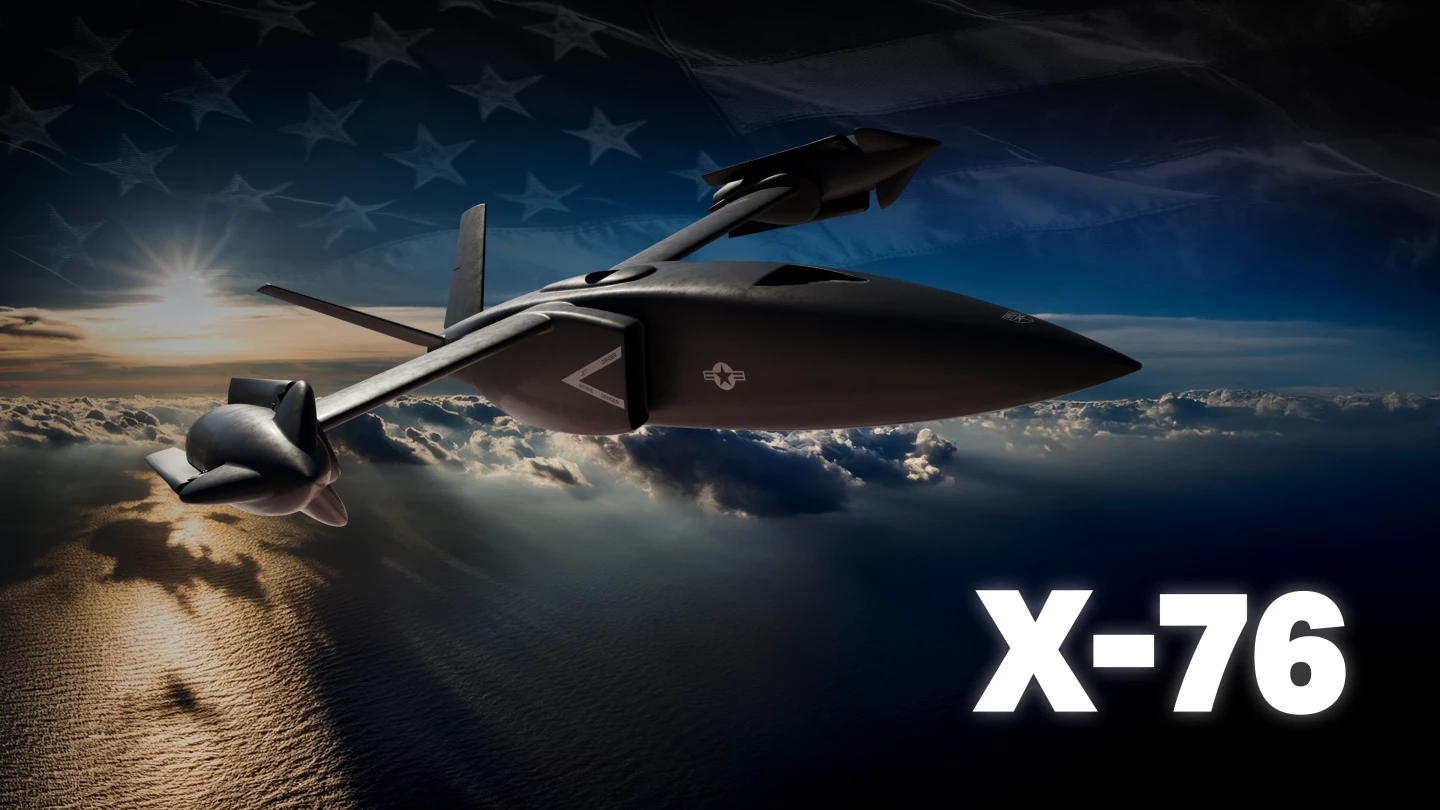
Concept rendering of the X-76
DARPA
Ideally, the best solution, according to DARPA, is to get rid of the rotors when the aircraft transitions into high-speed horizontal flight. The X-76 does this by stopping the rotors and folding them back against the nacelle body when the engine converts to a full turbojet configuration. That sounds simple, but it requires eliminating the complex gearbox of the Osprey and replacing it with a new configuration that incorporates two distinct thermodynamic cycles – one for static lift and one for high-subsonic cruising.
While hovering or during vertical takeoff, the X-76 operates like a conventional tilt-rotor. In this mode, the high-performance turbine core engine drives a shaft connected to the rotors. As the aircraft accelerates forward, the wings begin generating lift. When a critical speed of about 150 to 200 knots (173 to 230 mph, 278 to 370 km/h) is reached, the clutch to the rotors disengages and the rotors feather as they fold aft to form a streamlined aerodynamic pod.
As this happens, the engine's power is redirected through a conventional jet nozzle at the rear of the nacelle. Without the drag of the rotors, the X-76 could reach speeds of over 450 knots (518 mph, 833 km/h). The prototype is projected to carry a payload of about 1,000 lb (454 kg) and have a target range of 1,000 nm (1,151 miles, 1,852 km).
"For too long, the runway has been both an enabler and a tether, granting speed but creating a critical vulnerability," said Commander Ian Higgins, US Navy, serving as the DARPA SPRINT program manager. "With SPRINT, we're not just building an X-plane; we're building options. We're working to deliver the option of surprise, the option of rapid reinforcement, and the option of life-saving speed, anywhere on the globe, without needing any runway."

