
I am truly hesitant to take any of this seriosly, not least because the other side has shown me the Inner Sun which all my prior knowledge and education makes impossible.
We all need better exposure to the sun. We just do not know how.. And I do not think a tanning bed is a plan.
We really need a full on empirical science reseach program at its best that unravels our best choices.
What happens when you lay under a glass and water layer in the noon time sun? Do we know?
Neuroscience just confirmed:
The greatest unrecognized endocrine hormone disruptor isn’t in your food or water — it’s in your lightbulb.
Irrefutable empirical evidence confirms that the largest hidden driver of metabolic disease is LEDs and fluorescents, celebrated as “efficient,” emit narrowband blue-heavy spectra and invisible flicker that destabilize circadian clocks, spike glucose and insulin, increase cortisol dramatically and stress the nervous system mimicking the same metabolic chaos as sugar.Controlled studies show that even a single night of artificial light raises next-morning glucose and insulin resistance by ~30%. Here’s why: • Circadian disruption: Blue-spiked spectra overstimulate melanopsin in intrinsically photosensitive retinal ganglion cells (ipRGCs), sending distorted signals to the suprachiasmatic nucleus (SCN) — the master clock in the brain. The result? Melatonin suppressed, cortisol rhythms scrambled, peripheral clocks in the pancreas, liver, and gut thrown out of sync. • Metabolic chaos: Controlled studies show that even a single night of artificial light raises next-morning glucose and insulin resistance by ~30%. To your cells, it looks as if you just ate dessert. • The flicker effect: LEDs are driven by pulse-width modulation (PWM), switching 50–120 times per second. Your eyes may not see it, but ipRGCs do. This entrains abnormal gamma-band oscillations in the visual cortex, raising cortisol, lowering HRV, and exhausting those most vulnerable: migraine, epilepsy, ADHD. And then there is infrared — the missing spectrum. Incandescent bulbs “waste” energy as heat. Yet that so-called inefficiency is precisely what your biology craves: • Near-infrared photons penetrate 2–5 cm into tissue, energizing cytochrome c oxidase (Complex IV) in mitochondria. • They expand exclusion zone water, improving electron tunneling and ATP production. • They liberate nitric oxide, enhance blood flow, and activate detoxification pathways. The very spectrum engineers tried to eliminate in the name of efficiency is the spectrum that heals. Incandescents deliver a continuous, full-spectrum, no-flicker waveform closer to sunlight than any LED. They may consume more watts per lumen — but they return it as metabolic coherence. ✨ Make Incandescents Great Again. ✨ Because the future of health isn’t just in diets or devices. It’s in remembering the ancient covenant between biology and light, mitochondria and the sun.
Lanson Burrows Jones Jr.
The video features Dr. Jack Kruse, a neurosurgeon, presenting findings about how sunlight, light exposure, and related environmental signals are deeply linked to human health. Among his detailed studues are that modern light sources (LEDs, screens, artificial lighting) damage biology — circadian rhythm, hormones, immune and neurological function. • He connects artificial light exposure to chronic disease, mental health decline, aging, and suggests that returning to more natural light cycles (sunlight by day, dim/infrared/red by night) is critical. https://youtu.be/a6gYuFpZSKw
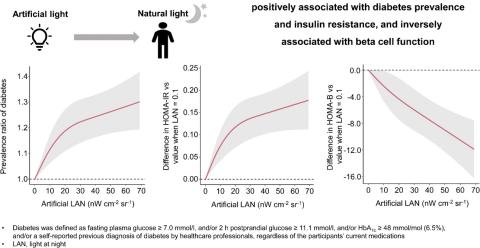
📚 Peer-Reviewed Sources — Light, Metabolism & Health 1. Artificial light & diabetes risk • Baek et al., 2024 (Frontiers in Endocrinology): Blue-enriched light at night significantly increases insulin resistance and glucose levels. 👉 https://pmc.ncbi.nlm.nih.gov/articles/PMC11449813 • Windred et al., 2024 (Lancet Regional Health – Europe): In ~85,000 UK Biobank participants, higher night-time light exposure predicted higher incidence of type 2 diabetes over 8 years. 👉
Peer-reviewed data: Artificial light at night directly raises diabetes prevalence, insulin resistance, and impairs beta cell function (Diabetologia, 2022
The fastest switch we could make is simple: design bulbs that track the sky automatically — bright, full-spectrum with some blue in the morning, then smoothly shifting warmer, infrared-rich, and low in blue after sundown. Phones already do this with night shift; our homes and offices should too. And it’s not just spectrum, it’s flicker rates. Cheap LEDs run at 50–120 Hz — a strobe the eye can’t see but the brain still feels, raising cortisol and lowering HRV. True DC or high-frequency flicker-free systems remove that invisible stress. If we get spectrum and flicker right, we stop fighting biology and start working with it. Sunlight by day, firelight by night — with technology that finally remembers the template nature gave us.
Most people think light is just about seeing. But your body treats light like food — it programs your hormones, your metabolism, even your mood. Here’s what to do: 🌅 Morning: Get outside within an hour of waking. Ten minutes of real sunlight sets your circadian clock, raises serotonin, and stabilizes cortisol for the day. If you can’t, open windows wide or use a halogen/incandescent lamp near your desk. 💻 Daytime: If you work under harsh LEDs or fluorescents, balance them. Use a desk lamp with a warm halogen or incandescent to add back missing red and infrared. High-quality “flicker-free” LEDs at 2700–3000 K are a step up if you can’t change everything. Position yourself near windows whenever possible. 🌙 Evening: After sunset, cut the blue. Overhead lights off, lamps or candles on. Use amber/red bulbs in bedrooms. Incandescents or halogens are ideal here because they’re rich in infrared — they calm the nervous system and let melatonin rise. 📱 Screens: Use night-shift modes, apps like f.lux or Iris, or red screen filters after dark. Keep brightness low. Best of all — no screens for the last hour before sleep.


No comments:
Post a Comment