Saturday, May 31, 2025

The light beyond sight


Every once in a while i am reminded of just how little we can see.  now we are getting out into space and widening our spectral perception.

I do think that the so called greys are Space humanity with an engineered eye device expanding our perception for space.

In the meantime our atmosphere shields us from so much.  What can we see between the Galaxies?


The light beyond sight

Only a tiny sliver of the Universe’s light can be seen by human eyes. But today we’re catching glimpses of the invisible


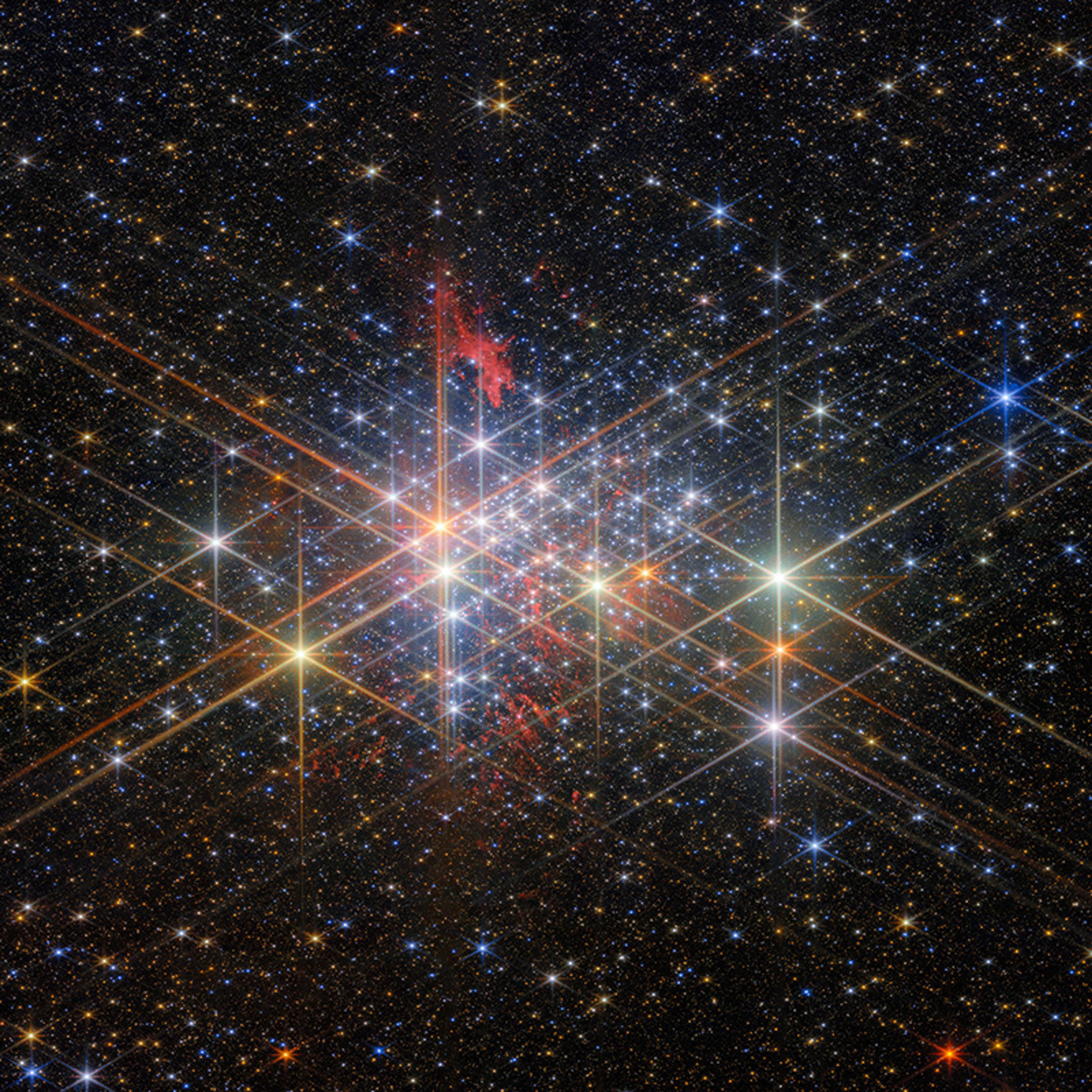
Nearly the entire sky, as seen in infrared wavelengths and projected at one-half degree resolution, assembled from six months of data from the Infrared Astronomical Satellite (IRAS) in 1983. Photo courtesy NASA/JPL-Caltech


is a science editor and journalist. He has been an editor at Discover, Scientific American and Aeon. He is the author of God in the Equation (2003), and co-author of three books with Bill Nye, including Everything All at Once (2017). He is currently working on a book about the invisible aspects of the Universe, to be published by Harper One in 2026. He lives in Brooklyn, New York.


Edited byPam Weintraub
3,400 words

https://aeon.co/essays/william-herschels-sensors-let-us-see-the-invisible-universe?

The human eye, that great enabler of art and action, has some galling design limitations. Our vision is tightly tuned to the peak colours of sunlight, leaving us blind to almost all other forms of radiation. If you think about the frequencies of light by analogy with the frequencies of sound, there are some 80 octaves of detectable electromagnetic radiation found in nature. We are able to see exactly one of them: the octave that extends from the violet to the red ends of the rainbow. The Universe bombards us with the other 79 octaves all the time, but we are oblivious to them.

The human mind, on the other hand, suffers no such limitations. Technology can create sensors responsive to rays that are utterly inaccessible to the human eye, or to any other type of eye found in the biological world, for that matter. Venturing even a tiny bit beyond the red edge of the rainbow, into the undiscovered country of the infrared, is a transformative experience: it reveals an entire hidden Universe, a previously walled-off layer of reality that we are now exploring every day as results pour in from the James Webb Space Telescope (JWST).


Photo by Diego Augusto Lima

From its perch a million miles from Earth, JWST has spent the past three years scanning the sky in infrared radiation, sensing light waves that are up to 40 times longer than the reddest red that we humans can see. All of the glorious pictures that the telescope sends back – scenes of galaxies in collision and infant stars spewing out streamers of gas – are not photographic snapshots so much as they are data interpretations. JWST perceives celestial shapes and colours that exist only within the circuitry of its digital detectors. Astronomers then use software and imagination to translate the detectors’ electrical impulses into images we can comprehend.

Every fresh result from JWST, then, is a showcase of the technological evolution of our species. The largest, most complex observatory ever sent into space is also the largest, most complex bionic eye ever wired into our consciousness. It is the culmination of a two-century effort to tear off our evolutionary blinders and endow Homo sapiens with senses that are as expansive as the laws of physics allow.

JWST is a floating catalogue of everything that astronomers have ever learned about telescope making. It follows a blueprint laid out in a 1988 report from the US National Research Council, which endorsed a giant new space telescope that ‘would lead to a quantum leap in our understanding of some of the most fundamental questions in astronomy’, supported by $10 billion of subsequent funding.

The resulting instrument peers out at the cosmos using a 6.5-metre-wide mirror composed of 18 interlocking hexagons, fabricated from lightweight beryllium metal and coated with 48 grammes of super-reflective pure gold. Together, those mirrors take in a million times as much light as the pupil in your eye. The collected rays then focus on 15 mercury-cadmium-telluride detectors and three detectors made of arsenic-doped silicon, which act as JWST’s infrared-tuned electronic retinas. The whole telescope huddles behind a 21-metre-wide Kapton sunshade that keeps it chilled to 233 degrees below zero Celsius; even a trickle of solar heat would ruin its hypersensitive vision.


Everything about JWST is up to the minute. But the underlying technology, and the whole ‘seeing in the dark’ agenda that inspired it, follows directly from the work of the British astronomer William Herschel more than two centuries earlier. In particular, it follows from a revolutionary but deceptively simple experiment that Herschel performed using nothing more than a prism, a box and three mercury-bulb thermometers.
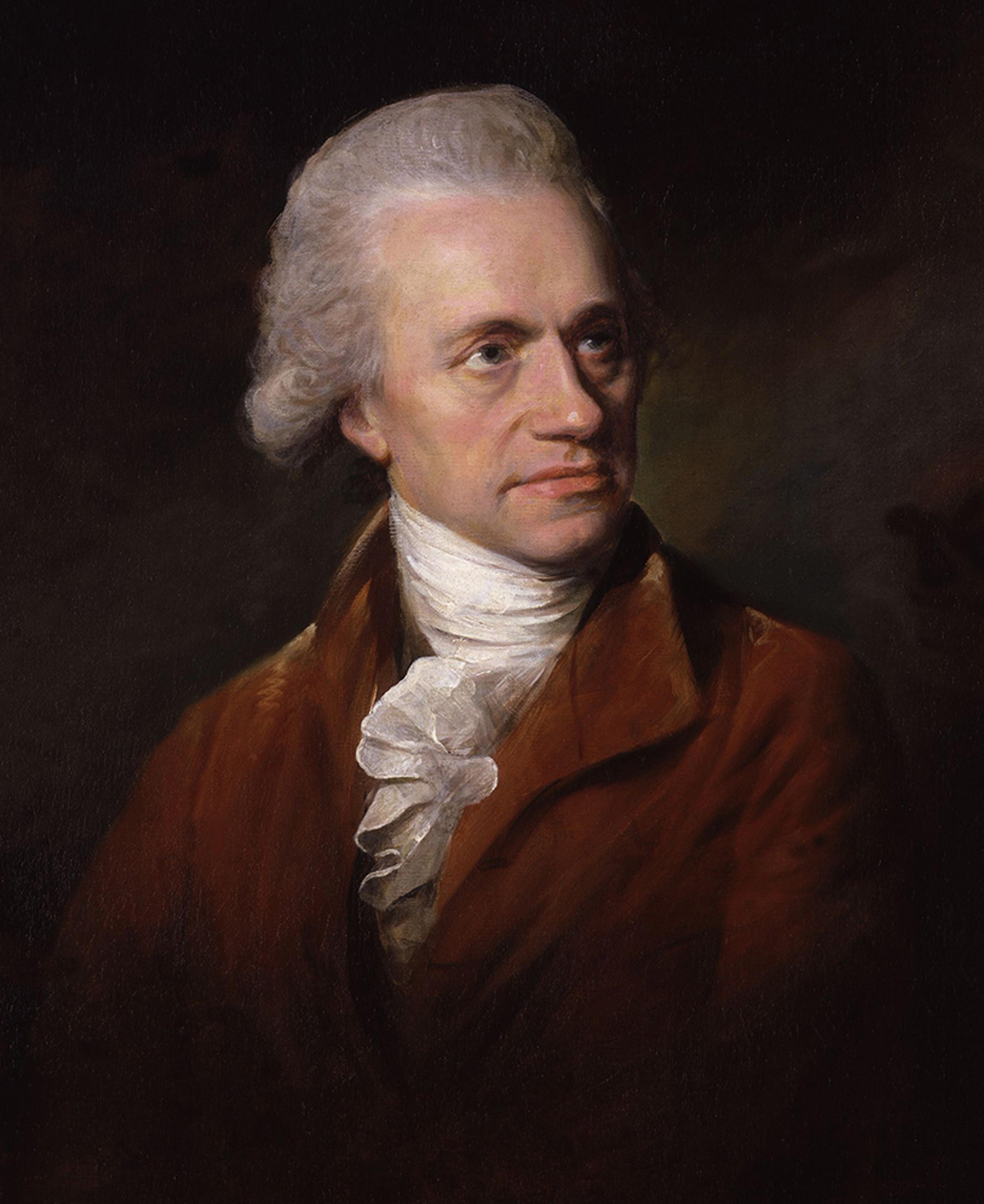


William Herschel by Lemuel Francis Abbott c1785. Courtesy the NPG London

Today, Herschel is best remembered as the man who discovered the planet Uranus in 1781. That achievement alone would be enough to earn him a star on the history-of-astronomy walk of fame. There was much more to him, though. He was an accomplished instrument-maker who built the largest telescope of his age. He performed the first serious attempt to map our home galaxy, the Milky Way. He speculated on the nature of life on other worlds (even, he suggested, on the Sun). And, starting in early 1800, he carried out a series of experiments that culminated in the detection of rays that carry a warming effect even though they are invisible to the eye.

In modern terms, Herschel discovered infrared rays, and the entire unseen Universe that they signify.

This sweeping discovery was born out of simple, stubborn frustration. Annoyed by having to write off half of his potential observing hours, Herschel wanted to extend his celestial investigations into the daytime and study the surface of the Sun. But his huge telescopes, ideal for viewing dim stars at night, were far too powerful to handle the brilliance of solar rays.

Herschel had discovered a new type of ray: undetectable to the eye, warmer than visible light, and redder than red

Herschel began testing various types of filters that would let him look at the Sun without frying his eyes, when he noticed a perplexing disconnect. ‘[W]hen I used some of them, I felt a sensation of heat, though I had but little light; while others gave me much light, with scarce any sensation of heat,’ he wrote in a paper read before the Royal Society on 27 March 1800 in Somerset House, London. He recognised that his finding carried two huge, intriguing implications: certain types of rays were capable of transmitting heat, and some of those rays were somehow different from the types of light rays that stimulate vision in the eye.

Now Herschel had a juicy mystery to solve: what were these unseen rays? Did they bend through a prism, like ordinary light? If so, did they correspond to the colours of light in some way? Herschel being Herschel, he passed sunlight through his prism, cast a rainbow, and measured the temperatures within the different colours. A clear pattern emerged as he moved from the violet to the red end of the prismatic spectrum. Green light produced more warming than blue; red produced more warming than green.

Which made Herschel wonder: What if? What if he kept going beyond the red, where there is no visible light at all? What would he find there?

Herschel’s initial journey into the invisible Universe extended all of four inches (10 cm) across his tabletop apparatus, but they were four extremely significant inches. He updated his Sun-filter experiment, relocating his thermometers to the seemingly dark zone past the red edge of the rainbow that beamed from his prism. There, to his delight, he found that the instruments continued to register heat, even where his eyes registered nothing.

When Herschel took the readings from his thermometers, he determined that the warming caused by the Sun’s rays not only continued beyond the red zone, but the effect actually intensified as he ventured deeper into the darkness past the rainbow’s edge. He had to move his thermometers far outside the visible spectrum before the warming effect peaked and then tapered off. Evidently, he was measuring a rising and falling distribution of some phenomenon that existed beyond the human senses. It was as if he were running his hands over the arched back of an invisible cat.

To be methodical, Herschel also poked around at the other end of the spectrum, past the violet edge. There he found no warming effect, confirming his inference: he had discovered a new type of ray emitted by the Sun, one that is undetectable to the eye, warmer than visible light, and (illogical as it sounds) redder than red. On 24 April 1800, he relayed the results of his investigations to his Royal Society colleagues.

It is impossible to know what Herschel was feeling at the time, but in yellowed pages of the 225-year-old volumes of Philosophical Transactions of the Royal Society, he seems to be bursting with excitement. Normally, he confined himself to sober notations of his empirical observations, and shied away from extravagant speculations. In this case, though, he seemingly could not hold back an outpouring of ideas.

In his two presentations to the Royal Society, Herschel introduced an entirely new scientific vocabulary. On 27 March, he coined the term ‘radiant heat’. A month later, he distinguished between the visible colours that he could see and the invisible ‘colours’ that he could only feel based on their warmth, calling the former the ‘prismatic spectrum’ and the latter the ‘thermometrical spectrum’.

Most perceptively, Herschel realised that the two types of rays he was examining must have one and the same fundamental nature. Applying the principle of parsimony, he rejected the existence of ‘two different causes to explain certain effects, if they may be accounted for by one’. The difference between the two types of rays, he deduced, was merely that the human eye could perceive one type of ray, but not the other. He concluded that ‘radiant heat will at least partly, if not chiefly, consist, if I may be permitted the expression, of invisible light.’

We limited human animals see only what we need to survive

Invisible light. What a concept! The invention of the telescope had proven that there are objects too faint to be visible to the unaided human eye – but when their light is concentrated, they pop into view. The invention of the microscope had likewise demonstrated the existence of objects too small to be seen – but when they are magnified, they, too, pop into view. Herschel had revealed a more fundamental limitation of human perception. His ‘thermometrical spectrum’ indicated that some portion of reality is invisible to us not because it is lacking in quantity (size or intensity, say), but because of its essential quality. The scope of Herschel’s intellectual breakthrough was all the more remarkable given the modesty of the technology that enabled it. If you want to recreate the Herschel experiment yourself, you can find simple, step-by-step instructions online.

In Herschel’s culminating experiment, presented to the Royal Society on 6 November 1800, he produced a ‘spectrum of heat’, showing how his measured temperature varied with distance from the red end of the visible spectrum. It was, in essence, a line drawing of his invisible cat. In an earlier paper, he had even offered what a modern scientist might call an evolutionary explanation of why much of the Universe is invisible to us:
admitting, as is highly probable, that the organs of sight are only adapted to receive impressions from particles of a certain momentum, it explains why the maximum of illumination should be in the middle of the refrangible rays; as those which have greater or less momenta, are likely to become equally unfit for impressions of sight.

Plainly put, we limited human animals see only what we need to survive.

It might seem inevitable that Herschel would then have embarked on more expansive investigations of light-beyond-light, or at least that other researchers would have taken on such an agenda. In reality, Herschel’s investigations were soon hindered by the crude thermometers available to him, which were accurate only to about half of a degree. Creating any kind of image or snapshot of the beyond-red realm was impossible using such simple devices. Herschel was limited, too, by the prevailing theories of the time. In the early 19th century, most scientists thought of light as a shower of particles, and heat as a movable fluid called ‘caloric’.

Herschel sounds increasingly defeated in the succession of papers that he presented to the Royal Society through 1800. By May of that year, he had sourly confessed that ‘the termination of a prismatic spectrum cannot be accurately ascertained.’ He had no desire to be drawn into contentious arguments about the nature of heat. Herschel was an empiricist by nature, and his great aspiration was to be the supreme celestial cartographer. When he realised that he could not map the boundaries of his new invisible landscape, he returned to the more accessible challenge of mapping stars and nebulae.

And there the story of the unseen Universe stalled for a long, long time. What Herschel had achieved was not so much a scientific revolution as something both bigger and less well defined: a slow-moving perceptual transformation. Peering into the infrared world required the development of entirely different sensory technologies, ones that could take us well beyond what our organs of sight are adapted to see.

Charles Piazzi Smyth, Scotland’s Astronomer Royal, made an incremental but meaningful advance in 1856, more than three decades after Herschel’s death. He detected infrared rays from the Moon using a thermocouple, a then-novel type of thermometer that measures temperature based on the way that electricity flows through two adjacent conductors. It seemed logical that the Moon must reflect invisible heat rays from the Sun, but Smyth had delivered hard evidence. More profoundly, when he performed his measurements at various points on Mount Guajara in Spain, he found that the infrared Moon appeared dimmer at low altitudes. Whatever these beyond-red rays were, they were evidently absorbed by Earth’s atmosphere.

Wood’s technique revealed Herschel’s ghost realm, a place where the sky is dark and trees glow with eerie infrared reflections

Each subsequent sensory advance was similarly hard-won. Starting in the 1870s, the astronomer and aviation pioneer Samuel Pierpont Langley invented the bolometer (a more precise type of electronic thermometer) and used it to map the Sun’s infrared spectrum for the first time. In the 1910s, the physicist William Coblentz strung together multiple thermocouples to create a ‘thermopile’ capable of detecting infrared rays from stars, planets and nebulae as well. That same decade, the inventor Robert Williams Wood combined recently developed, infrared-sensitive film with a special filter (‘Wood’s glass’) that completely blotted out visible light. In this way, he managed to photograph terrestrial landscapes in infrared rays.

Wood’s technique worked only in broad daylight, using extremely long exposures, but it finally revealed Herschel’s ghost realm. It exposed the scenery of the infrared world, a place where the sky is dark and trees glow with eerie infrared reflections.

Hoping to extend infrared vision into deep space, researchers trekked to the tops of mountains, above the bulk of Earth’s atmosphere, wielding new electronic lead-sulfide detectors, which were far more sensitive than film. So equipped, the astronomers Gerry Neugebauer and Eric Becklin achieved the next great perceptual leap in 1966. Using a custom-built telescope situated atop Mount Wilson in California, the two surveyed the infrared sky. In the constellation Orion, they spotted an unidentified glow – something that was bright in infrared but completely invisible to conventional-light telescopes.

The ‘Becklin-Neugebauer object’ is now believed to be a massive infant star, cloaked in a cocoon of dusty gas that blocks all of its visible light but not the more penetrating infrared rays. It was the first celestial object ever discovered in infrared radiation alone.

Even then, the study of infrared rays from space remained a tedious, fringe area of research. All the early explorers of the invisible faced the same limitation: they could trek to mountaintops, loft balloons, or even peer out through a hole in the fuselage of a C-141A jet transport plane (seriously, they did that), but they were still hampered by the thick murk of our planet’s infrared-blotting atmosphere. Infrared astronomy did not take flight until it could literally take flight, using the rockets of the space age.

In 1983, the United States, United Kingdom and Netherlands teamed up to launch the Infrared Astronomical Satellite (IRAS), the first true infrared space telescope. It circled Earth in a near-polar orbit, 900 km (560 miles) above the ground. In a mere 10 months in service, IRAS detected 350,000 infrared sources, and opened our eyes to an entirely unknown side of the Universe. It spied wispy ‘cirrus’ clouds of gas and dust between the stars, and warm disks around young stars, revealing the birthplaces of new planets.

Reporters wrote up breathless stories when IRAS recorded the mysterious glow of a possible Jupiter-sized world lurking just beyond our solar system. ‘All I can tell you is that we don’t know what it is,’ said Neugebauer, who by this time was the chief scientist for IRAS. Further analysis revealed that the object was not an Earth-threatening planet but a star-studded galaxy: a glimpse at the previously unknown way that galaxies flare up with newborn stars when they slowly, powerfully crash into one another.

Each new type of observatory has yielded a new human familiarity with another layer of previously hidden reality

JWST is a majestic elaboration of IRAS’s achievements, extending our infrared gaze to the literal ends of the Universe. It is an elaboration, too, of the motivations that guided Herschel’s work. His greatest goal as an observer was what he called ‘gauging the heavens’. He attempted to catalogue every visible star in the sky and estimate its distance, with the intent of mapping the entire Universe. JWST’s expansive infrared vision is now bringing us close to the completion of that task.

We live in an expanding Universe, which means that visible light from extremely distant galaxies is stretched deep into the infrared. The early history of the cosmos is secreted away in those hidden rays, inaccessible to telescopes on the ground. JWST’s detectors are specifically designed to bring stretched infrared light into view, seeing back to the historic moments when the first galaxies lit up. One of JWST’s sightings – a galaxy designated JADES-GS-z14-0 – is the most distant object known to humanity. We are observing this galaxy from a time 13.4 billion years ago, when the Universe was just one-50th of its present age.
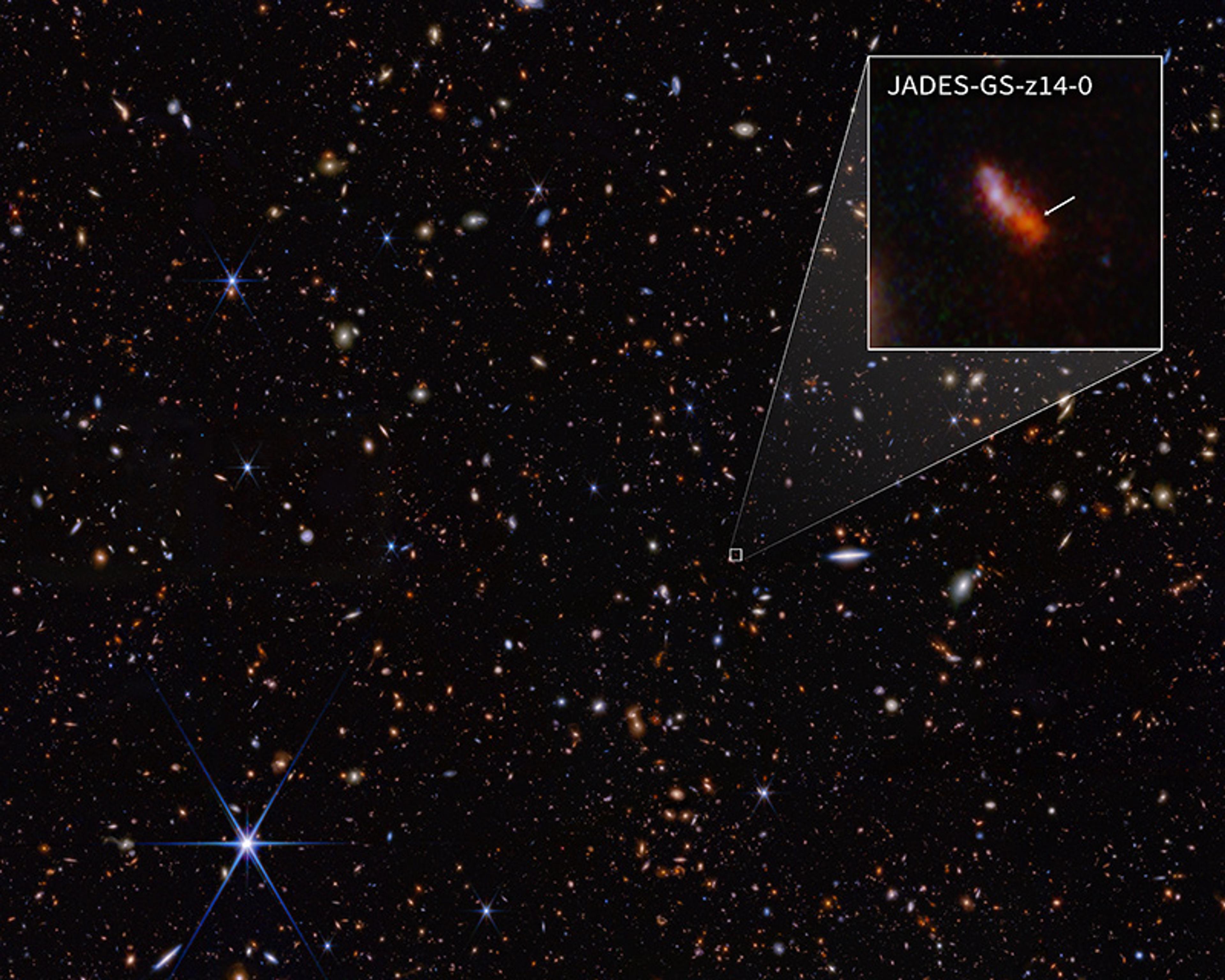

Observed by the James Webb Space Telescope, the JADES-GS-z14-0 is the current record-holder for the most distant known galaxy. Courtesy NASA, ESA, CSA, STScI, B Robertson (UC Santa Cruz), B Johnson (CfA), S Tacchella (Cambridge), P Cargile (CfA)

What’s remarkable is not just that we can see such a thing, but that we can recognise what it is and make sense of it. Astronomers are already analysing the invisible light from this infant galaxy, studying its composition, assessing the glow of its youthful stars. Teams from NASA and the European Southern Observatory put out press releases. News outlets around the world noted the discovery. The detection of invisible light from the edge of the known Universe registered as an exciting yet routine advance in astronomical exploration.

In 1998, the philosophers Andy Clark and David Chalmers proposed a radical understanding of cognition that could take the new realm into account. In it, they argued that human thought doesn’t end at the skull but extends into the tools and environment around us – including our technological surroundings. They called this framework the ‘extended mind’. As an example, they described a person interacting with a computer screen displaying geometric shapes. The individual doesn’t just perceive the shapes; they mentally manipulate them – rotating, moving, imagining them – as though the objects were physically present. In this way, person and machine form a ‘coupled system’, with the digital shapes becoming part of the individual’s cognitive landscape.

Seen through this lens, JWST becomes more than just a distant observer. The stream of infrared data it captures can be considered part of our evolving awareness of the cosmos. Its detectors expand our sensory reach; its images of ancient galaxies reshape our inner mental world; and its vast archive, stored in Baltimore, Maryland, functions like an external annex to human memory. Even if one doesn’t fully embrace the Clark-Chalmers hypothesis, the implications remain striking: JWST can be understood as a sensory prosthesis – like a retinal or cochlear implant – not just enhancing perception but becoming part of how we know.

Patients who receive such implants adapt to them rapidly, their brains assimilating synthetic inputs alongside the biological ones. No wonder, then, that astronomers and the lay public alike have no difficulty identifying the form and the significance of an object like JADES-GS-z14-0. Our minds adapt just as readily to inputs carrying information from the invisible fringes as they do to inputs describing ordinary light and sound. The extension of the human senses, begun by Herschel with his humble prism-and-thermometer experiment, has since continued to gamma rays and radio waves, and even beyond radiation into neutrinos and gravitational waves, both of which are now within our technological sights. Each new type of observatory has yielded a new human familiarity with another layer of previously hidden reality.

Clark and Chalmers pointedly expressed what happens as technology expands our senses and breaks away the barriers of human perception: ‘once the hegemony of skin and skull is usurped,’ they wrote, ‘we may be able to see ourselves more truly as creatures of the world.’

Bongino Claims New Video Evidence Will Prove Epstein Suicide, And 'Bags' Of Improperly Stored Comey-Era Evidence Found


I do think we are getting to the bottom of all this.  I also do trust Dan Bongino to find the answers.


Firstly as an obvious CIA or Mossad operative, Epstein was trained to commit suicide so knowhow is a given.  Then his options had gone and rescue impossible.  He knew he had no future.


And surveilance may not have been bullit proof, but so was a non suveilance envitronment.  He just knew how and no one was the wiser.k


Bongino Claims New Video Evidence Will Prove Epstein Suicide, And 'Bags' Of Improperly Stored Comey-Era Evidence Found


Friday, May 30, 2025 - 02:25 AM

Almost two weeks ago, FBI Director Kash Patel and his deputy Dan Bongino insisted that pedophile financier Jeffrey Epstein definitely committed suicide...


Let's revew:


...which strains credulity in light of all the strangeness surrounding his (or some homeless guy in a mask's) untimely death while awaiting trial for sex-trafficking minors.


For starters, Epstein's cellmate was moved out the day before he 'decided to hang himself' on August 10, 2019 - crushing bones in his neck which can fracture during hangings, but are typically broken during homicide by strangulation. What's more, at least one of the cameras in the hallway outside Epstein's cell had footage that is "unusable," despite "other, clearer footage" which was captured in the area, the Washington Post reported at the time.


Nevermind the 'shouting and shrieking' heard from Epstein's cell the morning he died.


Now (that AI is hyper-realistic?), Bongino says there's footage that will prove Epstein did kill himself. 


"There’s video clear as day," he told Fox News Thursday. "He’s the only person in there and the only person coming out. You can see it." 


"There is video and when you look at the video, and we will release it, we’re working on cleaning it up to make sure you have an enhanced – and we will give the original so you don’t think there are any shenanigans – you will see no one in there but him. There’s just nobody there," Bongino continued. "I say to people of the time — if you have a tip, let us know — but there is no DNA, there’s no audio, there’s no fingerprints, there’s no suspects, there’s no accomplices, there’s no tips. There is nothing. If you have it, I’m happy to see it."


 "There Was a Room"

Bongino also says they've found a room that was "hidden from us" containing improperly stored Comey-era evidence.


"I wouldn’t call it hidden, but hidden from us at least and not mentioned to us, and then we found stuff in there and a lot of it’s from the Comey-era, and we are working our damndest right now to declassify," he said. "And just so you know, because I get the public, I totally understand people saying, ‘Well, do it now.’ The process is [that] not all information is ours to declassify; some is other intelligence agencies, it’s not– we literally can’t do it. Once that gets done and that gets out there, and you read some of the stuff, we found that, by the way, was not processed through the normal procedure, digitizing it, putting it in FBI records. We found it in bags hiding under Jim Comey’s FBI, and you’re going to be stunned!"


Bongino then called Comey "a disgrace to the badge" and "a big child."


Visualizing SpaceX's Stunning Global Lead As 'Made-In America' Rockets Dominate+


The truth is that Space X has now made critical mass for commercial launches.  This means daily launches world wide for 100 ton point to point cargo loads and also earth to space station construction loads.  both are huge commercial opportunities.

They are also practical.  Sending a contaimer load around the world is now likely cost effective.  Travel time around an hour.

building a bicycle space station with usable space measured in potentially square miles while providing one g of internal acceeration has huge commercial potential.

Just doing these two things sets the stage for a Luner Station and a Mars Station at least.


Visualizing SpaceX's Stunning Global Lead As 'Made-In America' Rockets Dominate


Friday, May 30, 2025 - 06:20 PM

https://www.zerohedge.com/technology/visualizing-spacexs-stunning-global-lead-made-america-rockets-dominate

SpaceX has secured a commanding lead in the global space launch industry for several years, propelled by its reusable Falcon 9 and Falcon Heavy rockets that have drastically lowered launch costs. Barring a major technological breakthrough by a government-backed or deep-pocketed private rival, Elon Musk's rocket empire is poised to maintain dominance well into 2030—and possibly beyond.


New data from analytics and engineering firm BryceTech for 1Q25 illustrates the scale of SpaceX's dominance in the global orbital space launch race, surpassing not only domestic rivals but also major spacefaring nations like China and Russia.

In Q1, SpaceX led all rocket launches with 36 missions, followed by China with 12, 5 with US-based Rocket Lab, and Russia with 4.


In terms of satellite deployments, SpaceX dominated the quarter with 900, followed by China with 58 and Rocket Lab with 20. The majority of SpaceX's payloads were Starlink internet satellites.


SpaceX's ability to drive down launch costs has led it to become the leader in all upmass carried to space for the quarter.


SpaceX powers much of America's rocket program. Without Musk's company in the equation, the data clearly shows that China would be leading the space race.


Credit where it's due—SpaceX is keeping the U.S. ahead of Chinese Communist rivals in the space domain amid a military and AI race.


In case you are wondering why Trump is sgning EOs with the cameras rolling.  This is it.

most likely the majoritty of orders under Biden will be overturned because they cannot prove legality.  and somewhere the CCP in the basement appears to have been operating freely.  This is no small time distortion of process.

The picture emerging is really bad.  and must never happen again.


Biden Unaware Of Executive Orders 'Signed' By Autopen; Report

by Tyler Durden
Friday, May 30, 2025 - 05:55 PM


President Joe Biden issued 162 executive orders over the course of his Oval Office tenure, but according to a new report, most of them were signed by “autopen,” giving rise to concerns that unelected White House staffers may have had more say in shaping policy than the president. The report is furthering those concerns and suggesting that Biden may not have even been aware of the existence of the orders being signed in his name.


The American energy advocacy group Power the Future published the report Wednesday, examining eight Biden-era executive orders on climate change and U.S. energy policy, and found “no evidence” that Biden ever spoke about or acknowledged the existence of any of these orders. “Not in a press conference. Not in a speech. Not even a video statement,” Power the Future’s report stated. Power the Future Executive Director Daniel Turner said in a statement, “Americans deserve to know which unelected staffers or radical unnamed activists implemented sweeping change through an autopen. The Biden energy agenda destroyed the livelihoods of energy workers and fueled the record-high inflation that broke the budgets of millions of Americans.” He asked, “The question is simple, and deserves an immediate answer: what did Joe Biden know, and when did he know it?”


According to the Oversight Project, dedicated to government accountability, practically every order signed by Biden was signed via autopen, with the exception of his announcement withdrawing from the 2024 presidential election. The Oversight Project cited House Speaker Mike Johnson (R-La.), who questioned Biden on an executive order affecting liquefied natural gas (LNG) and reported that the president didn’t remember signing the order. “He looks at me, stunned, and he said, ‘I didn’t do that,’” Johnson recounted. He continued, “And I said to him, ‘Mr. President, yes you did, it was an executive order, like, you know, three weeks ago.’ And he goes, ‘No, I didn’t do that.’ … It occurred to me … he was not lying to me. He genuinely did not know what he had signed.”

“For investigators to determine whether then-President Biden actually ordered the signature of relevant legal documents, or if he even had the mental capacity to, they must first determine who controlled the autopen and what checks there were in place,” the Oversight Project wrote in a social media post. The accountability organization continued, “Given President Biden’s decision to revoke Executive Privilege for individuals advising Trump during his first Presidency, this is a knowable fact that can be determined with the correct legal process…”

The “autopen” has been the subject of significant controversy in recent years due to Biden’s excessive use of the technology. Devices have been around for centuries, allowing individuals to replicate their signature or sign multiple documents at once. Thomas Jefferson, for example, kept an early prototype, then called a “polygraph,” in the White House and another in his residence at Monticello. The device allowed a user to sign multiple documents at once but did require the signer to be present and to actively use the machine.

In the late 1930s, an automated version of the machine was developed, called the “autopen,” which would store a template of a signature that could be reproduced without the presence of the actual signer. The autopen became commercially available in the early 1940s and was quickly purchased by politicians, government officials, celebrities, and others. The first U.S. president to use an autopen was reportedly Harry Truman, although he only used the device to sign checks and answer mail. Likewise, most other presidents — such as John F. Kennedy, Richard Nixon, or Gerald Ford — who used an autopen relegated their use of the instrument to signing checks, correspondence, and autographs.

George W. Bush considered using the autopen to sign executive orders and legislation and even got the Department of Justice’s (DOJ’s) approval to do so, but still insisted on signing such documents himself, flying to Washington, D.C. to sign emergency legislation in 2005, for example. Barack Obama was the first president to use the autopen to sign legislation, giving his approval to sign Patriot Act extensions via autopen while he was visiting France in 2011, the National Defense Authorization Act while vacationing in Hawaii in 2012, and fiscal legislation in 2013.

President Donald Trump has openly refused to use autopen signatures for executive orders and other legal documents. “We may use it, as an example, to send some young person a letter because it’s nice,” Trump told reporters in March. Contrasting his limited use of the autopen against Biden’s much broader use, Trump added, “But to sign pardons and all of the things that he signed with an autopen is disgraceful.” Trump has also suggested that pardons — and, potentially, executive orders — signed by the Biden administration via autopen may be legally “void” if the president didn’t know what he was signing or didn’t authorize its signature.

The Washington Stand asked the DOJ about potential investigations and, if applicable, prosecutions of the Biden administration’s autopen use and was told, “No comment here.”

Friday, May 30, 2025

Why Ending the War in Ukraine Is So Difficult Now


Is it possible that drone warfare simply cannot deliver a knock out blow?  Or neither can mass attacks by waves of ill trained soldiers?  After all we proved that in WWI.

The war can only end militarily when one side or the other recreates the Canada Corp.  Otherwise we are waiting for either russias financial exhaustion or that of Europe.

Yet I do think that the end is near through a plausible mutual resolution.  After all, Russia needs to join NATO in order to counter adventurism on its other frontiers.

Why Ending the War in Ukraine Is So Difficult Now


05/28/2025


Connor O'Keeffe


https://mises.org/mises-wire/why-ending-war-ukraine-so-difficult-now

As President Trump wrestles to deliver on his campaign promise to end the war on Ukraine by helping to bring about a negotiated peace deal, the effort has, in part, been undermined by an escalating exchange of kamikaze drones by both sides.


The last week especially saw a sharp escalation, with Ukraine launching thousands of drones deep into Russia—most of which the Russians claim to have intercepted—and Russia, in turn, stepping up its drone attacks in Ukraine. The Russian strikes over the weekend got a lot of coverage in the American media, especially an aerial assault on Saturday night where parts of some of the largest drone swarms launched in the war so far hit residential buildings around the Ukrainian armament factories Russia claimed to be targeting.


That series of strikes led Trump to issue his sharpest rebuke of Vladamir Putin to date. He called the Russian president crazy and voiced frustration with how Putin has changed since their phone call together—after which Trump had characterized Putin as reasonable and interested in a ceasefire.


The establishment press gleefully seized on Trump’s comments to argue that even he is now waking up to what they’ve been saying this whole time: that Putin is an unhinged maniac who cannot be reasoned with because he is motivated solely by bloodlust and delusions of conquering Europe. They then, predictably, bring it back to their broader argument that Trump’s “naïve” effort to “appease” Putin with a peace agreement and then “retreat from Europe” to usher in a new age of American isolationism is futile and dangerous and that he ought to instead recommit to the establishment’s preferred strategy of heavy-handed interventionism.


It is true that the Trump administration’s attempt to kickstart negotiations to end the war in Ukraine has run into difficulties that make it unlikely a ceasefire will be reached soon. But that is not an argument in favor of the political establishment’s interventionism, as that is the very thing that brought about this difficult situation in the first place.


Much has been written on the decades between the collapse of the USSR and the rise of the Western-friendly Russian Federation and the eventual return of Cold War conditions encapsulated by Russia’s invasion of Ukraine. There is plenty of debate about the details and consequences of decisions made along the way. But nobody with any real credibility is even trying to argue that this period was characterized by a lack of US meddling in Eastern Europe.


Washington was heavily involved in the region from the beginning. At first, it was all under the friendly guise of helping with the transition from communism to capitalism. But as that process was botched by a combination of statist Western economists—who thought free markets had to be organized and managed in a top-down fashion—and outright corruption by officials on all sides, the respect, admiration, and trust the American government enjoyed in much of the region began to fade away.


That was accelerated when US presidents began working to expand NATO, the anti-Soviet military alliance, up to Russia’s border. For Russia’s entire history, the lack of natural barriers between Moscow and the rest of Europe has been a source of tremendous anxiety for Russian leaders. No mountains or major waterways blocked the armies of Napoleon and, later, Hitler from marching directly into the Russian heartland. The only factor that doomed both of those invasions was distance.


Even in the age of nuclear weapons, when long infantry supply chains are less relevant, the greater the distance a ballistic missile needs to travel to reach Russian cities, the more time the Russian regime has to detect, assess, and respond. Distance is still a factor in their defense strategy.


US officials knew this and still chose to help NATO expand closer and closer to Moscow. They were even told explicitly by the US ambassador to Russia that working to bring Ukraine, specifically, into NATO would almost certainly cause Russia to invade Ukraine.


Virtually every major American Cold War strategist was vocally against NATO expansion because they saw it as a surefire way to unnecessarily restart the US-Russia conflict that had just miraculously ended without nuclear annihilation. But they were out-lobbied and out-maneuvered by the weapons companies that produce all the military hardware that new NATO countries are required to buy.


So NATO expanded, American military hardware moved east, and anti-government protests in countries aligned with Russia received funding and support from the American government.


Even if we accept the establishment’s argument that Putin doesn’t actually care if the US pours weapons into and arranges security guarantees with the countries right on his border and is only using those actions as an excuse to further his imperial ambitions, US officials still handed Putin an easy way to get the Russian public onboard with an invasion of Ukraine for no real reason whatsoever.


Then, tragically, after the invasion happened, US officials and their allies in Western European governments like the UK convinced the Ukrainians to abandon an early peace agreement that would have resulted in Russian forces pulling back to pre-invasion boundaries. In the years since, Russia has laid permanent claim to much of the eastern Ukrainian territory they had earlier agreed to relinquish. And the Ukrainian government has continuously lost leverage over its Russian occupiers as they tried and failed to drive them out by force.


Last summer, Ukraine made the surprising decision to draw soldiers and resources away from the front lines to conduct a small invasion in Russia’s Kursk region on Ukraine’s northern border. That operation may have been an attempt to regain some leverage in future negotiations. But it did not accomplish much, and Russia has since retaken virtually all the territory they lost. The transfer of Ukrainian troops and resources has now given the Russians momentum on the rest of the front.


That is why it is unlikely that a peace agreement will be reached in the near future. Because it appears that Russia can achieve more if it continues fighting than through negotiations. And, importantly, that is not because the US and its European allies have held back and avoided giving the Ukrainians what they needed to fight the Russians. It’s because the officials who recognized the West’s leverage in future negotiations would only get worse lost out to those who thought the war should be prolonged anyway because it was a good way to “weaken Russia” without risking American lives.


There is no easy path out of this mess. It’s not as if NATO governments have some special weapons system they haven’t sent to Ukraine yet that could begin to turn the tide of the war. If they had, they would have sent it already. Short of sending American troops into combat with the Russians, there is little more that can be done to prop up Ukrainian forces. And, as Scott Horton noted in his recent talk here at the Mises Institute, even if Trump genuinely tried to reverse course and repair relations between Washington and Moscow, the Russians would probably just assume, understandably, that any progress he made would be undone by the next Democrat to win the presidency.


That’s why, if we’re ever going to see a true end to this unnecessary second Cold War with Russia, it requires that more Americans understand how it truly came about in the first place. It needs to be widely understood that if our government’s priority were really keeping us safe, they would have done everything in their power to avoid kickstarting a new conflict with the most heavily nuclear-armed government in the world. And yet, they seemed to have done the precise opposite.


What the path out certainly does not involve is doubling down on the same exact policies that both created this mess in the first place and that are being championed by those who want to see this war drag on indefinitely in a vile attempt to use Ukrainians to weaken Russia a little bit more


This is Real – A Retractable Light Saber Using NO Visual Effects


So far it is a great prop.  Taking it up a notch is quite another matter.  We are not there yet, but this will surely be fun to wave around on Holloween.

Optimising this is plausibe and a laser pulse following a wave guide becomes also plausible.

Mind control is something still far far away.

This is Real – A Retractable Light Saber Using NO Visual Effects

May 28, 2025 by Brian Wang


This is real. Hero Tech has built a retractable light saber that is using no visual effects.


You cannot fight with it but it looks like the movie light saber.

The two led light strips are attached to a retractable magicians cane. The internal setup has a motor to rotate the blade and the lights.


Japan to Begin Clinical Trials for Artificial Blood This Year


Japan has been on the hunt for this since before the second War.  It is though an informant that i came up to speed with the potential of nano tech back in 1990 or so.  That is why i recognized the importance of biochar when i started this blog back in 2007.

It is important and we need this.

So all good news.

Japan to Begin Clinical Trials for Artificial Blood This Year


-May 28, 2025

https://www.goodnewsnetwork.org/japan-to-begin-clinical-trials-for-artificial-blood-this-year/

Japan is the first country to begin clinical trials of artificial blood, a medical innovation which if proven successful, would solve one of the largest hospital challenges of our age.

Beginning back in March, a clinical trial organized by Nara Medical University will look to build on the success of an early-stage trial in 2022 of hemoglobin vesicles, small artificial blood cells that were confirmed to be safe and capable of delivering oxygen as normal.

The trial will administer 100 to 400 milliliters of the artificial blood cells to further test safety before moving onto broader performance and efficacy targets, all in the hopes that by 2030, the artificial blood could enter clinical use.


Whether high-income or low-income, every country has challenges meeting the necessity necessary amounts of stockpiled blood donations for emergency medical procedures.

In high-income countries where the 90% of blood stockpiles comes from voluntary donors, the challenge is getting enough of these donations, and crucially, enough from those with rare blood types.


In low-income countries where only 40% of needs are met with donations, the challenge lies in importation from abroad when donated blood packs are only safe for use for a few months. A useful proxy to understanding this shortfall is that of 175 countries included in a survey of blood donation and use practices by the World Health Organization, 106 countries report that all blood plasma-derived products are imported. These include things like immunoglobulins and coagulation factors which are needed to prevent and treat a variety of serious conditions.

Japan has a different challenge. The WHO found that the use of donated blood varied with income levels, reporting that high-income countries used more blood donations to treat those aged 65 and older, while lower-income countries used it to treat those aged 5 and under.

Japan has recognized that its long-since-collapsed replacement birth rate coupled with long life-expectancy will place a likely unsustainable burden of blood donation on a shrinking working-age population, making artificial blood a priority innovation.


Professor Hiromi Sakai at Nara Medical University has pioneered one method for its synthesis. Using hemoglobin—the oxygen carrying molecule inside red blood cells—from expired donations and encasing them in protective shells, removing the need of matching blood type for administration.


Another method comes from Chuo University where the hemoglobin is encased in an albumin-family protein, which has been used in animal studies to stabilize blood pressure and treat conditions like hemorrhage and stroke.

Either way, the necessity is there and it’s urgent for Japan and the world. If the country’s researchers succeed in this innovation, it will be a medical milestone of epic proportions.

The Third World Is Forever Chasing The White Man


It is the education protpocol stupid.  Why can not even a stupid person see this?  Only a handful of students go on to create our future.  Yet you must educate them all to allow full participation and support,.

Then you have to get out of their way.

The stupid will always merely follow their greed and take from those who create to no good effect.

This is why i talk about the RULE of TWELVE.


The Third World Is Forever Chasing The White Man

May 28, 2025 26 Comments


By Brandon Smith

https://alt-market.us/the-third-world-is-forever-chasing-the-white-man/

This week I was researching the history of the modern African economy as well as the financial effects of “colonialism”, largely in an effort to discern if Africa is actually better off with or without western influence. One can of course argue that racial divisions like Apartheid in South Africa or segregation in Rhodesia have their own oppressive social effects beyond the financial. There’s also the argument that only “white colonists” ever benefited from the infrastructure they built (which is actually untrue, wherever white colonists were established, everything from water access to roads to medical care improved for everyone).

However, I think it’s fair to ask if these nations were experiencing growth and prosperity under white governance, or if things were relatively the same. We’re not supposed to talk about it – We’re only supposed to say “colonialism bad”. I don’t care about that, I just want to know what the realities are.

In the process I came across an interesting video featuring a black South African man who presented the race issue and the South Africa issue in a way that was simple but it brought impressive clarity. In summary he said:

“Africans are forever chasing the white man.”


What he means is, African culture, some elements of black culture, the third world in general, all of them are constantly trying to co-opt what white western culture builds. He argues that wherever the white population in Africa shrinks or migrates away, the country “becomes a shithole”. So, Africans chase white people.

When white people in Africa relocate to Australia, or Canada, or the US or Europe, the Africans try to follow. Instead of building up their own communities and nations they use and then eventually tear down the infrastructure that whites already built. They never replace it with anything else. Then they immigrate overseas to where the white people are because their own nations are in disarray. Eventually, they start tearing down those countries.

Leftists will call this a “racist” argument rooted in “white supremacy”, but this is a black South African making the point. It’s not racist, it’s just an observation of concrete fact. When Rhodesia became Zimbabwe and the whites were ethnically cleansed, the country collapsed and the black people starved to death.

South Africa systematically oppresses (or kills) the white citizenry because they want the land the whites own (they chase the white men). The Afrikaners are 7% of the population but make up around 70% of all agriculture and food production. Instead of seeing the white populace as a valuable asset to the country, they treat them as a foreign enemy. And so, the country falls deeper into economic despair and they are now on the verge of their own collapse.

When Matamela Ramaphosa, President of South Africa, sauntered into the White House with his big grin and his large entourage, he was there to get money. He wasn’t there to explain how he was going to improve conditions in his country. And, he certainly wasn’t there to debate the finer details of the ethnic cleansing of whites in his country or the government confiscation of their land. No, he was a black African leader petitioning a white US President for handouts.

In this case he believes his country is entitled to that money, so it doesn’t come off as begging so much as it comes off as arrogant conceit. If his country could build on its own, it would. If they had the ability to construct and innovate and maintain on their own, they would. Instead, they travel halfway across the world to the US. They chase the white man.

They’ve had over 30 years to get their system to work, and instead everything is broken. They can’t even keep their electrical grid and water functioning. And it’s not just South Africa, this is true for much of the third world. In Europe the populace is far more familiar with Africans chasing them, but we see a similar trend with Central and South Americans chasing whites in the US.

Wherever the west builds and creates and improves, the third world demands a piece. They arrive in vast caravans that stretch for miles. They arrive in boats on beaches in the night. They slip across borders and enter illegally like invaders because they see the west as something to be pillaged. They do not want to build their own thing. They don’t even know where to begin. They simply see what we have and they want to take it. They chase us wherever we go because they can’t emulate, they can only confiscate.

In progressive literature white people overall are elevated to the status of ultimate villains – The great oppressors that enslave and destroy. Yet, if this was true, why is it that the third world chases after us so much? You would think they would stay as far away from whites as possible, but they INSIST on immigrating to the west. Or they bitch and moan about our capitalist ways, but they never leave.

By extension, leftists will claim that white people are the “real invaders” that exploit and steal from the third world. In other words, we are “chasing the brown man”. But, if this was the case, then why aren’t white people rushing to migrate to Africa? Why is the western industrial presence in Africa in steep decline? Even black Africans leave Africa in droves when they get the chance to do so. No one is chasing the brown man. This is not a thing. No one covets what a beggar society has.

Now, I see this not as a race issue but as a cultural issue (I’m sure there are people who will debate that sentiment). If you look at countries like Japan or South Korea, they don’t chase white people. They build their own societies and fuel their own progress for the most part. They don’t need white culture or western culture to feed off of (China does, but that’s a whole separate article).

There are societies in the Middle East that remain relatively self sufficient, while others in the Middle East view the west as a target for conquest. The difference is in the culture, not the skin color. And what do most third world cultures have in common? The first thing is an oversupply of AK-47s, the second thing is they tend to be socialist or communist. These are beggar cultures with a beggar mentality.

In the US we can see this same mentality bleeding into parts of our own society. Every time leftist black American’s demand reparations or special privileges in employment and schooling or handouts through DEI programs, they are, in essence, chasing the white man. They want what the white man has and they’re not really shy about saying it. They didn’t build it or earn it but they want it, and if they can’t have it they will just as happily tear it all down.


The phrase “black fatigue” comes to mind, but again, it’s far more about culture than skin color. It’s something that white people like me aren’t supposed discuss.

Frankly, I find race divisions to be a distraction from the bigger problem, which is elitism and the sabotage of the west from within by wealthy oligarchs so that they can replace it with an authoritarian socialist “Utopia”. That said, I cannot ignore the fact that certain minorities in the US tend to lean majority far left, or that most third world migrants hold socialist ideals.

To be sure, there are millions of white woke liberals helping to fuel this fire, but again, most of the black community is happy to be used. These people become the enemy because they have allowed themselves to be weaponized in the hopes of getting a piece of the western pie before whole thing is ransacked. They don’t want to build for themselves, so, they voluntarily become the barbarians at the gate.

My advice to these people is to stop. Stop chasing the white man. Stop trying to feed off the western world. Put in the effort to construct your own great societies with your own accomplishments. No one is stopping you except yourselves. You are being duped into acting as a battering ram for globalism and multiculturalism; you are a tool for deconstructing the west.

By extension, stop coveting what white people have built within your own communities and start seeing such people as valuable allies in creating something better.

If you try to take from them they will eventually retaliate and it will not be a pretty sight. But, the interesting thing about white people (at least the conservative types) is that they will often help you if you ask nicely. Instead of threatening them, maybe try learning from them? Most white people I know love to improve their communities in any way they can, and they enjoy helping people who want to help themselves.

Instead of seeing white people as the enemy because of historic “crimes” which every single ethnic group has been guilty of, why not look to the future? Of course, this would require people in the third world to abandon their socialist leanings. Far left ideology is a poison that makes nations and cultures weak. It makes them perpetual beggars. To improve one’s future, one must aspire to create, not steal.

Why not stop chasing the white man and work with him instead?