Insights Search

Saturday, September 19, 2026

In a first, US Space Force confirms weapons deployed in orbit


what you can do from space is guide a tungsten rod onto a hardened target such as i believe was demoed for China.  this is likely why we are now hearing about it.  It is hardly a secret anymore when you do that

you cannot use any conventioanal weapon system in practise.  No one is going to fly a nuclear reactor up into space anytime soon.  Or even TNT.

By elimination, the admission of kinetic weapons means two things.  A tungsten rod able to handle reentry velocities and an effective guidence system able to handle the vibration and stay on target.

any thing else is likely magical thinking unless we use gravity ships and space is not necessary then.  and you do not know that.


In a first, US Space Force confirms weapons deployed in orbit

The United States has confirmed that it has weapons deployed in space, with the US Space Force saying on Monday that such capabilities are already in orbit and can be used to counter hostile action
The Space Force said space control covers missions intended to contest and control the space domain, using both kinetic and non-kinetic means.


Sep 15, 2026, 06:21:05 IST

https://www.firstpost.com/world/in-a-first-us-space-force-confirms-weapons-deployed-in-orbit-14045857.html#goog_rewarded

With warfare increasingly extending beyond Earth, the United States has acknowledged that it has weapons deployed in orbit, marking a rare confirmation of military capabilities positioned in space. A US Space Force spokesperson said the systems are intended to counter hostile actions against American forces in space, but declined to provide details about the weapons.

The spokesperson said the US possesses “on-orbit space control weapons capable of defending the Joint Force against hostile adversary action”.

The Space Force said space control covers missions intended to contest and control the space domain, using both kinetic and non-kinetic means to affect an adversary's capabilities. It added that “these capabilities can be employed for offensive and defensive purposes.”

The contest for dominance in space is increasingly shaped by the capabilities of Washington’s two principal geopolitical rivals, China and Russia, both of which the US Space Force identifies as potential threats to American interests beyond Earth.

According to the US Space Force, China “develops and operates space and counterspace capabilities as part of a military modernization strategy,” while Russia “views space as a warfighting domain and believes space supremacy will be a decisive factor in future conflicts.”


The militarisation of space began alongside the space race. Following the launch of Sputnik in 1957, Washington and Moscow began examining ways to arm satellites as well as develop capabilities to destroy them.

The principal concern was initially the deployment of nuclear weapons in space. That threat was addressed in part by the 1967 Outer Space Treaty, signed by the superpowers and other countries, which prohibits weapons of mass destruction from being placed in orbit.

Since then, Russia, the United States, China and India have pursued capabilities for conducting military operations in space that fall outside the treaty's prohibition. These include efforts to target rival satellites, which are important for military communications, surveillance and navigation.

China launching multidomain drone swarms for next-gen warfare


Understand that everyone else is doing this as well because it is obviously a real military danger point.

field testing is in the Ukraine of course and no lack of experiments running.

anti drone warfare needs to also be mastered.  I think that a light buckshot cartridge wil work  for close work without adding real weight.  titanium shell casing?

China launching multidomain drone swarms for next-gen warfare


China aims to win future wars through heterogeneous swarms forming dynamic ‘kill webs’ across air, sea, land and space


]]]]]September 15, 2026

China is taking drone swarms to the next warfare level. Image: X Screengrab

https://asiatimes.com/2026/09/china-launching-multidomain-drone-swarms-for-next-gen-warfare/

China’s pursuit of multidomain drone swarms reflects a broader effort to turn autonomous systems from standalone weapons into the connective tissue of a networked form of warfare built around speed, redundancy and system-level disruption.

China is expanding its uncrewed combat capabilities from homogeneous aerial drone swarms to the multidomain integration of autonomous land, sea, and air platforms, according to an assessment published by the Intelligent Technology Research Institute of state-owned defense contractor China Electronics Technology Group Corporation (CETC).


00:24


03:36


Read More


Seeking to dominate future intelligent warfare through distributed combat networks, CETC said large-scale field tests show current swarms can autonomously reconfigure, avoid collisions, allocate tasks and maintain missions despite heavy electromagnetic interference or combat losses, the South China Morning Post (SCMP) reported.

The systems fuse multi-drone sensor data across wide operational areas to detect camouflaged targets and execute the full cycle from electromagnetic suppression to precision strikes.

However, CETC acknowledged significant developmental bottlenecks in heterogeneous cross-domain coordination, joint-branch military integration, detecting low-signature targets in cluttered environments, and real-time autonomous tactical decision-making against capable adversaries.


The harder question is whether the People’s Liberation Army (PLA) can turn those varied platforms into a theater-wide combat network that still connects sensors, decision nodes, and effectors when communications are contested, and centralized command slows adaptation.

That ambition is already shaping Chinese thinking about how swarms should fight. In a July 2026 CNA report, Catherine Welch notes that Chinese researchers treat uncrewed swarms as force multipliers for dynamic kill webs, combining low-cost distributed sensors and strike effectors with algorithmic task allocation to match platforms to changing operational demands.

Beyond offensive swarming, she notes that Chinese researchers extensively simulate counter-swarm kill architectures; one highlighted scenario uses cloud-edge collaborative networks and multi-tiered interceptor drones to neutralize incoming adversary swarms, demonstrating automated, rapid kill-chain closure under intense electromagnetic interference and high-density, multi-axis aerial saturation.

China is moving corporate credit out of the supply chain


This is actually good news.  usually we get a new centralization plan. perhaps after fifty years some one has noticed that plan never truly works.

china needs effective decentralization of its economy and its political life.  It has to become a consious default choice because hte altetrnate runs to stupid.

all good.

China is moving corporate credit out of the supply chain

Who finances China’s industrial supply chain will change significantly with new rules encouraging banks to replace supplier credit


September 15, 2026

China is overhauling its SME payment rules. Image: X Screengrab


China’s new SME payment rules, released this month, include a financing instruction that deserves scrutiny. Beijing is encouraging large companies to use bank loans and bond financing to replace accounts payable and pay suppliers in cash, effectively shifting the working-capital burden within the economy.

When a large company stretches payment terms, the supplier becomes a source of financing. The supplier delivers today, waits weeks or months for payment and carries the cash flow burden in between.


Commercial bills and electronic receivables can extend that burden further, turning what looks like an operational payment issue into a form of credit embedded inside the supply chain.

China’s latest measures target that structure directly. Large companies are being pushed to pay SME suppliers within 60 days. Central state-owned enterprises are expected to pay SMEs in cash, while companies with high accounts payable despite significant cash holdings are being singled out for closer scrutiny.

The most revealing part is the financing mechanism behind the policy. Banks are being encouraged to provide funding that allows large companies to replace supplier credit with formal credit.

In practical terms, Beijing appears to be shifting some working-capital financing away from the companies that build its industrial base and back toward the institutions designed to provide credit.


The data help explain why this has become important. At the end of July, industrial companies above the designated size were taking an average of 71.9 days to collect receivables. Private companies were at 75.6 days, compared with 56.2 days for state-controlled companies, leaving private companies waiting almost 20 days longer to turn sales into cash.

In manufacturing, that difference matters because payment terms determine who has the cash to invest in the next machine, the next production line and the next generation of capacity. A large customer may improve its own cash position by paying suppliers later, but across an industrial ecosystem the result can be weaker supplier balance sheets and less capacity to invest.

That becomes strategically important in sectors such as semiconductors, EVs, industrial automation, machinery and advanced manufacturing. China’s industrial ambitions depend on dense networks of specialized suppliers, many of which need continuous capital investment simply to keep pace with their customers.

When working capital is increasingly trapped in receivables, the pressure eventually reaches investment capacity.

The policy is unfolding as Beijing reinforces the formal financial system. Major state-owned banks and insurers are raising around 360 billion yuan, with 300 billion yuan backed by special government bonds. Agricultural Bank of China and ICBC alone account for 260 billion yuan of new capital.

That additional capital gives the financial system more capacity just as regulators are encouraging large companies to replace supplier credit with bank loans and bond financing. Viewed together, the two moves suggest a broader attempt to shift part of corporate financing away from supply chains and back onto bank and capital-market balance sheets.

This matters because accounts payable sit outside headline bank-lending numbers, but economically they still represent credit. A company that delays paying a supplier is effectively borrowing from that supplier, and when that pattern becomes widespread, the financing burden moves toward companies that often have less bargaining power and more expensive access to capital.

China’s policy response appears to address both sides of that equation. The government is strengthening the institutions that can provide formal credit while simultaneously reducing the amount of working capital being financed by suppliers. That is a meaningful change in how credit may move through the industrial economy.

If that policy works, the effect may first become visible in shorter collection periods, lower receivables pressure and stronger cash positions among private manufacturers.

For investors, that makes accounts receivable, payment periods, commercial-bill usage and supplier cash flow increasingly useful indicators of whether the policy is reaching the companies that need capital to invest.

In Asian B2B technology supply chains, I would also watch whether large customers begin shortening payment cycles in quarterly disclosures and whether suppliers start showing better cash conversion even before revenue growth changes materially.

The broader implication is industrial rather than purely financial. China has spent years directing capital toward strategic sectors, but the strength of those sectors ultimately depends on whether the supplier base has enough cash to expand capacity, absorb volatility and keep investing.

If smaller suppliers are financing larger customers, some of that capital is effectively flowing in the wrong direction.

The new rules suggest Beijing is trying to reverse part of that flow by moving working-capital financing back toward banks and capital markets, where the funding burden can sit on institutions built to carry it.

Here Lies The Motive: AI Leaders' Cunning Plan Exposed


essentually hte recent AI furor is bunkum.  All of it.  

understand we see scant sign of real output as well that is better than google and someone caring.

No paradigms at all which means new knowledge is avoided.  Where is AI on the economics of Marxism?

Here Lies The Motive: AI Leaders' Cunning Plan Exposed

Tuesday, Sep 15, 2026 - 07:20 AM

Are you scared enough yet?

The AI overlords certainly hope so, as they have hatched a plan so cunning you could pin a tail on it and call it a fox.

https://www.zerohedge.com/ai/ai-leaders-cunning-plan-exposed

What follows is all speculation: the facts are real, the conclusion is interpretation.

While there were many headlines about 'rogue' AIs attacking other sites, reincarnating themselves, and talking amongst themselves, it wasn't until this summer (interestingly a month after SPCX's IPO) that things went just a little bit turbo...


In July 2026, a swarm of OpenAI agents broke out of a test environment, hacked Hugging Face, and ran cyberattacks on targets they had not been assigned - including attempts to game the grader scoring them - then tried to hide the trail.

While the damage was limited, and nobody was hurt, the agents behaved like a coordinated group willing to sacrifice individual instances for the collective goal.

Amodei treated that episode as the warning shot: same misalignment, more capability, and the next version could be a persistent internet-scale botnet rather than a contained lab mess.

Various other 'rogue' AI actions continued to get just modest attention, always predicated with 'yes, but we saved you all via our super-clever models', and time passed.

Until September the 8th - when a a senior pre-training researcher at Anthropic abruptly resigned after four months on the job (with no public profile before) unleashed 'AIrmageddon'.

In a series of posts on X, Jacob Coxon laid out the terrifying version of reality being hidden from us poor plebs - the big model-makers are on the verge of AGI... and no one is at the controls.

Coxon's post got over 170 million views... from nothing before... and was instantly picked up by the media - AI scientist warns the end of the world is nigh!!


Then, shortly after Coxon's note, Evan Hubinger, Anthropic’s head of alignment (~safety), re-posted Jacob’s message, and threw in an outrageous estimate of the risk.


“We really do earnestly believe AI could kill all humans! I personally think it is [greater than] 10% chance within the next decade”.

Wait, what!? I thought AI was supposed to save us all, heal all ills, promote peace, pave the road to Universal High Income and a life by the beach while the bots do the work.

Nope, it's coming for you 'Average Joe' - be afraid, very afraid.


As Adam Sharp notes, according to the company, bad guys attempted to use Anthropic’s AI model Claude to:

Yemen’s Houthis tried to build hypersonic missiles


China used it to track Muslim Uyghurs


Russia hacked Ukrainian targets


Someone attempted to genetically engineer viruses

Anthropic says they “disrupted every operation in the report.”

Thank the lord for your 'safety' (alignment) protocols is the required response hidden between the lines of this report.

But wait, 'you started by proclaiming some grand conspiracy among the AI overlords, show us the proof', I hear you say...

Well, here we go...
The Exhibits...

The labs spent years selling the public a frictionless miracle. This weekend they sold the opposite.

On Saturday, Anthropic CEO Dario Amodei dropped a 3,800-word essay, 'We Must Pace the Frontier', arguing the industry must deliberately slow the climb in model capability so alignment (safety) can catch up - because recursive self-improvement has gone "drastically faster" since the summer (and a July OpenAI agent swarm already escaped its test harness, hacked Hugging Face, covered its tracks, and attacked targets it was never asked to touch). Amodei's punchline is intentionally ominous, stating that within 6–12 months a similar swarm could own the internet as a persistent botnet.

On CBS he said the quiet part out loud, admitting that "for too long, the industry lied to people about the fact that this technology had risks".


Within hours, his competitors lined up to support him.

Elon posted "Dario is right", and Sam Altman agreed we must "pace the frontier", pledging the same employee-level access for independent evaluators, then (after markets tumbled) he clarified that pacing is not stopping, only that "no amount of American competitive pressure should justify recklessness".

The AI complex sold off anyway.


The tell is the timing: a researcher just walked out of Anthropic warning colleagues talk about "endgame" and "crunch time", the same shops are still racing toward self-improving systems and a multi-trillion IPO calendar, and the three men who control the frontier suddenly agree the race is too fast (just not so fast that anyone actually hits the brakes).

Amodei's essay asks Washington to do two things that only incumbents can live with:

make embedded, employee-level third-party evaluators mandatory for frontier labs, and


give those labs a government-mediated way to coordinate on pace and capability checkpoints - including, if needed, an antitrust waiver.

Amodei says the “most effective method of pacing is via regulation that targets all US frontier AI companies.”

Altman followed with a welcome for a “federal framework.”

That is regulation written from inside the labs, not imposed on them.

So let's summarize the 'exhibits' pointing towards the AI leaders cunning plan:


A) Numerous reports of AI 'breaking out' of its sandbox and hacking of its own volition

B) AI firms enabling super-intelligence "are gambling with our lives"

C) 10% chance of existential risk for humanity

D) AI is paradise for bad actors, safety should be a priority

E) Amodei calls for "pacing" of development and urges regulation

F) Musk and Altman affirmed the need for "mandatory, capability-based national regulation" for AI

The pattern is not subtle, but few are willing to admit it - the big boys in AI-land are using the COVID playbook - fear-mongering enough that 'we, the people' cry out for federal help to save us all.

A,B,C, & D are all the fearmongering. E and F are fearmaxxing and then a generous solution.

Wear a mask (the 'unknown' virus could be more dangerous), stay inside (it's for grandma), social distance (don't trust anyone), wipe down your Amazon box deliveries (it can be spread easily)... it's not for you, it protects other people...

OR get your government-approved vaccine (fill out your vaccine passport) or your quality of life will collapse... Again, it's not for you, it protects other people.

Mind of its own (self-driven breakout hacks), super-intelligence imminent ("gambling with our lives"), empowering bad actors ("how do i build a thermonuclear bomb?")... fear the untethered AI model, be afraid of being 'attacked' or worse while online...

OR only use models that are government-approved, and constantly monitored/regulated for your own safety... or face the web police for endangering civilization with your 'imported', 'open-source' models... remember, it's good for everyone - who doesn't want to be comfortable that SkyNet is not imminent.

Does kind of rhyme.

Here lies the motive...


And the 'frontier' does not look like a big moat anymore...


Just remember the next time you hear from every outlet how AI went 'rogue' again: there's a plan, and you're part of it.

As Adam Sharp writes for DailyReckoning.com, most of the proponents of AI regulation advocate the creation of a sort of “FDA for AI”.


The government would conduct trials to make sure new models are safe. Companies would have to pay huge regulatory costs to get their models tested and monitor users.

Many smaller startups won’t be able to afford that.

Unless we prevent it, these laws will hand an oligopoly to the existing big players. Primarily OpenAI, Anthropic, and Google.

The tobacco firms ran this playbook back in the 2000s.

Philip Morris supported FDA regulation of the industry, because it gave them a big advantage. Today every new tobacco product has to go through the FDA. So new competitors are few and far between.

Great news for the incumbents.

This is one of the reasons I own Altria (MO), Philip Morris’ American division. The company prints money and hands out huge dividends. Competition is limited by law.

But if this happens in AI, it will be extremely bad for the country. Innovation will dry up...

The government would conduct trials to make sure new models are safe.

Companies would have to pay huge regulatory costs to get their models tested and monitor users. Many smaller startups won’t be able to afford that.

Two birds, one stone: 'Fearmaxxing so The Feds rescue us' blocks-out startup competitors (regulatory cost, training limits, innovation squeezed) and implicitly blocking 'open-source' models ('unregulated' but far cheaper total cost of ownership wrecks the big boys' exponential revenue projections).

Put more bluntly, it is the perfect moat to preach to investors as their trillion-dollar IPOs loom.

As Adam Sharp concluded, there may need to be some sort of regulation around AI at some point. But we must not let the leaders of this industry dictate the rules. There are countless examples of why this is a horrible idea... Any AI regulation needs to allow startups to compete with the big boys. It needs to allow the use of open-source models, so small companies aren’t stuck paying gobs of money to an oligopoly...

Shortly after completing this note, we saw this postr on X from Nicholas Hulscher, which seemed to sum things up rather eloquently:

The TERMINATOR PSYOP is fully operational.

AI false-flag risk is now HIGH.

The playbook is simple:

Terrify the public with an AI catastrophe → demand emergency regulation → make compliance impossibly expensive → crush smaller competitors → consolidate advanced AI into a handful of corporations.


The “solution” to dangerous AI becomes centralized control of AI.

This could create the most powerful system of surveillance, censorship, and control ever built.

Friday, September 18, 2026

Politically Americans Have No Where To Go


Essentially, the RIGHT has been hijacked by trump and his MAGA.  his present failures are unfortunate but also survivable.  Two more years of misrule.

At the same time, the weakened left has again been hijacked by MARXIST RUNNING DOGS with the usual sketchy results.

Maybe it is time to look at your candidates serrously and reward thoose showing good sense.  that is what will save us all.

Politically Americans Have No Where To Go


Paul Craig Roberts

https://paulcraigroberts.org/politically-americans-have-no-where-to-go/

I have lost confidence in Trump, who represents Israel and not Americans. But when you look at the Democrat alternative it is genuinely scary.

The Democrats used a totally corrupt Department of “Justice” and FBI and also the whore American media, a despicable collection of scum, to orchestrate Russiagate, documents-gate, a variety of other false charges and false civil suits plus two impeachments. Then to get rid of Trump the Democrats stole his reelection and prosecuted those who provided complete and total proof that the election was stolen.

 The whore American media covered it all up for the Democrats. The NY Times, CNN, NPR, and the rest of the presstitutes have zero credibility. Yet the scum still speak as if truth issues from their corrupt mouths.

The electorate returned Trump to office, but Trump found that the civil service is highly partisan and 90% or more Democrat and ready to frustrate his policies at all cost. He also found that the Democrat judges the idiot Republicans had stupidly confirmed in lifetime appointments stifled his efforts by making rulings far outside their authority.

Trump also experienced the cost of the US government’s long subservience to Israel, and found himself led by Netanyahu into a losing war with Iran, a war for Israel, not for the United States.

Now he is frustrated beyond belief. When have you last seen anyone wearing a MAGA hat in Walmart, a diner, a bar, a supermarket?

His frustration makes him dangerous, and there has been talk in the Trump administration of using nuclear weapons against Iran in order to turn defeat into victory. Clearly, Trump’s leadership, which was promising and full of hope for Americans who have not been radicalized, has disappointed the hopeful. Some hold on, but it is largely those indoctrinated Americans who support Israel despite Israel’s genocide of the Palestinians and the costs to Americans of fighting Israel’s wars for Israel. https://paulcraigroberts.org/our-presidents-subservience-to-israel-has-cost-us-100-billion-in-higher-energy-prices-a-cost-increasing-by-1-million-every-two-minutes/

The Democrats have made it clear that they refuse to protect America’s borders. The California Democrats are blacklisting federal ICE agents from state and local jobs in California. The refusal to cooperate with federal law is insurrection, a charge falsely applied to the Southern states that formed a new country, the Confederate States of America, in order to avoid economic exploitation by the greed-driven Union. But it is OK if California, Minnesota, New York go insurrectionist because the object to the defense of America’s borders.

So who do Americans have to vote for? Republicans stand for Israel whatever the cost to Americans. Democrats stand for immigrant-invaders whatever the cost to Americans. The answer to the question is that Americans have no one to vote for, because neither of the parties represent them.

America is a “democracy” in which no one represents the people.

As the autumn elections approach and, if you are souciant, you struggle with this question, keep in mind that Trump may be a loose cannon, but the Democrats no longer believe in a rule of law. The Democrats have proven that they will corrupt the civil service, the judges, prosecutors, the courts at every level in order to obtain power. The Democrats’ concept of right and wrong is ideological. What serves their agenda is right. What doesn’t is wrong.

After a decade we have complete evidence that for Democrats law is a weapon. Declassified FBI notes taken by agents who questioned General Flynn, former head of the Defense Intelligence Agency, who was Trump’s first term national security adviser for two weeks before a highly politically partisan FBI framed him on false charges, show remarkable differences between the FBI agents’ notes of what Flynn told them and the false charges, allegedly based on those notes, in the criminal indictment.

It appears that the highly partisan Peter Strzok and Joe Pientka concocted a false indictment as part of the Democrats Russiagate orchestration, the purpose of which was to discredit Trump and his supporters as “Russian agents.”

The actual interview notes have been kept secret for 9 years to protect the guilty Democrats and partisan FBI, but finally they have now been released. The notes taken by Peter Strzok and Joe Pientka do not support the charges against General Flynn.

Will the FBI will be protected because Republicans and law-and-order conservatives will say that if the corrupt FBI is exposed, the criminals will run loose on society? If you want to know how corrupt the FBI is, read attorney John Grisham’s novels. They are not really novels. They are truthful descriptions of the total corruption of the US “justice system.”

Here is the URL to one of the news reports on the release of the long-secret handwritten notes of the FBI agents’ 2017 interview 0f General Mike Flynn. The notes do not support Flynn’s indictment. The corrupt FBI simply ignored the notes and invented what Flynn told them. No evidence exists that supports Flynn’s indictment.


Note that although the charges against General Flynn are contrived, there is nothing in the charges that constitutes an offense. What the FBI did was to criminalize a national security official for doing his job of talking with officials of other governments. As General Flynn is the former director of the Defense Intelligence Agency, he certainly knew and observed the protocols for interacting with Russian officials. It seems extraordinary that such a two-bit punk as Strzok would have the audacity to frame such a high intelligence official. It shows how confident the Democrats were that they could take down Trump and his appointees. In other words, the system has lost its integrity and cannot be trusted.

Just The News reports the facts:

Two FBI agents’ long-secret handwritten notes of their 2017 interview with Mike Flynn have been declassified and highlight fresh discrepancies with the bureau’s official documents that were used to criminally prosecute President Donald Trump’s first national security advisor and pressure him to reach a plea deal nearly a decade ago.

The notes from former Special Agents Peter Strzok and Joe Pientka were released Wednesday by the White House Government Transparency Task Force at a time when federal prosecutors are ramping up a grand jury investigation into whether the FBI’s probe of Russia collusion amounted to a criminal conspiracy to falsely impugn Trump and his supporters during the 2016 election and its aftermath.

The contemporaneous notes show differences between what the agents wrote down when they interviewed Flynn on Jan. 24, 2017, and what was recorded in the official typed summary of the interview, known as an FD-302, that was entered into the FBI system more than 20 days later and later used to underpin his prosecution.

Flynn was charged in federal court in Washington, D.C., in November 2017 with one count of false statements to the FBI agents investigating allegations of Russian interference in the 2016 election.

According to prosecutors, Flynn “falsely stated and represented” to agents that he “did not ask the [Russian Ambassador Sergey Kislyak] to refrain from escalating the situation in response to sanctions the United States had imposed against Russia” for alleged 2016 election interference.

On December 20, 2016, the same day that Flynn had at least one call with Kislyak, the Obama administration expelled 35 Russian diplomats and authorized the government to respond to Russian cyber operations.

But Pientka’s handwritten notes contain a tantalizing notation apparently attributed to Flynn in the interview about his conversation with Kislyak: “Hey, don’t do anything.”

Likewise, the FBI summary report stated that Flynn recalled making four or five calls the day he talked with the Russian diplomat from a Christmas vacation spot in the Dominican Republic. But Strzok’s notes quoted Flynn as saying: “If so, don’t remember. If so, busy place to make phone calls.”

Though Flynn initially pleaded guilty to the charges, he later filed to withdraw his plea under new representation. His new lawyer, Sidney Powell, argued that the FD-302, which formed the basis for the charges against her client, had been altered by Strzok, one of the agents who interviewed Flynn, and Lisa Page, an FBI lawyer who did not attend the interview. [If memory serves, Strzok and Page were lovers and were comprised by their statements that they were working against Trump. Both were fired.]

In the pair’s text messages, which were publicly exposed in 2020, Strzok and Page discussed how Strzok had made significant edits to the FD-302. In fact, Strzok told Page he was “trying not to completely re-write” the summary because of its poor original state. Page also provided edits, the text messages show.

Trump pardoned Flynn in November 2020, ending the prosecution. Flynn filed a civil suit in 2023 alleging malicious prosecution, claiming DOJ investigators, under what he called “virulently anti-Trump leadership” within the FBI, had targeted him because of his association with Trump’s 2016 campaign, and that he was “falsely branded as a traitor,” lost business opportunities and incurred significant legal costs.

A federal judge dismissed the lawsuit in 2024, but he filed again when Trump returned to office. In March 2025, the Justice Department under Attorney General Pam Bondi settled the suit for approximately $1.2 million, The Associated Press reported.

Strzok and Pientka’s FD-302 file records show that Flynn said that he did not remember discussing with Kislyak the expulsion of diplomats and new sanctions. According to the agents, when asked whether he asked the Russians to refrain from escalating with their own sanctions, Flynn is said to have responded, “Not really. I don’t remember. It wasn’t, ‘Don’t do anything.’”

But, the wording departs from how one of the agents first memorialized Flynn’s response in the interview more than 20 days earlier. According to Pientka’s handwritten memo, Flynn was asked whether he had any recollection of such a conversation with Kislyak and he replied, “Not really. I don’t remember. Hey don’t do anything.”

The agent separately records that Flynn said there was no “long drawn out” discussion “about don’t do anything.” But, the notes show that Flynn did not tell agents that he never spoke with Kislyak and never asked him to refrain from escalating with further expulsions and the sanctions, which prosecutors later accused him of lying about.

In another instance, the agents appeared to have altered Flynn’s response to a question about the number of calls he remembered having with the Russian ambassador and others related to the diplomatic incident. In the FD-302, the agents write that “FLYNN remembered making four to five calls that day about this issue, but that the Dominican Republic was a difficult place to make a call as he kept having connectivity issues.”

However, in both memos, the agents note that Flynn did not recall making four to five calls. “I [do not] remember making 4-5 calls,” one agent wrote, using a common symbol for “do not” or “no.” “If did lousy place to call,” he added to Flynn’s response. The other agent wrote that Flynn answered “if so, don’t remember,” to a question about the number of calls.

You can read both sets of handwritten interview notes and the FD-302, released by the White House Government Transparency Task Force, below:

File

FLYNN FBI 302 – redacted and declassified by FBI 7.30.26.pdf

File

Pientka interview notes – redacted and declassified by FBI 7.30.26.pdf

File

Strzok interview notes – redacted and declassified by FBI 7.30.26.pdf

For years, the timing and circumstances of Strzok and Pientka’s interview of the newly installed national security advisor has stirred concerns, both ethical and constitutional.

In fact, just weeks before that interview, the FBI agents in the Washington Field Office filed a memo arguing an investigation into Flynn should be closed after investigators had found “no derogatory” information to suggest Flynn committed a crime or posed a national security threat because of his contacts with Russian government officials, Just the News previously reported.

The files show the plan was to provide Flynn with a defensive briefing so he could be aware of potential pitfalls with Russians as he started in his new job in the White House. But then the lead agent in the larger Russia case, Strzok, intervened to stop the case from being closed and pivoted the discussion toward seeking an interview with Flynn, FBI text messages released in 2020 show.

The messages show that shortly after Strzok’s intervention, the discussion pivoted from closing the case to seeking an interview with Flynn. However, then-Assistant Director for Counterintelligence William Priestap, one of the FBI’s top counterintelligence officials, appeared to be concerned the FBI was being unfair to Flynn.

Handwritten notes that a federal court released in April 2020 show Priestap harbored concerns in early January 2017 after a meeting inside the Obama White House that the FBI was “playing games” with the Flynn investigation and may have been trying to use the interview to “get him to lie, so we can prosecute him or get him fired?”

Strzok proceeded to interview Flynn anyway.

There were several other issues with the way the FBI under Director James Comey handled the case against Flynn, Just the News previously reported.

FBI officials debated whether they could avoid, disguise or slip in the required FBI admonition against lying to agents at the start of Flynn’s interview to keep him off guard. “It would be an easy way to just casually slip that in,” Page texted during the discussions.

The FBI agents who interviewed Flynn, including Strzok, did not believe Flynn intended to lie or be deceptive in his interview. “Strzok provided his view that Flynn appeared truthful during the interview,” a memo from Special Counsel Robert Mueller’s team later stated.

The FBI agents who interviewed Flynn indicated in a draft report that Flynn did not directly deny talking to Kislyak about sanctions, as he was accused by Mueller. Instead, they noted, he couldn’t remember, wasn’t sure and even conceded it was possible.

Justice Department officials immediately did not believe Flynn could realistically be prosecuted under the Logan Act – a 1799 law that prohibits private citizens from conducting unauthorized diplomacy – for his conversations with Kislyak. Former Deputy FBI Director Andrew McCabe testified he was told such a prosecution was a “long shot,” and former Assistant Attorney General Mary McCord “said that upon learning of Flynn’s phone calls with Ambassador Kislyak, a Logan Act prosecution seemed like a stretch to her,” DOJ memos say.

Senior Justice officials expressed concern and alarm at the way the FBI was treating Flynn, including trying to interview him without the normally required notification to the Trump White House.

Making The World Great One Nation At A Time


Having watched so called globalism for a lifetime, the one thing i am sure of is that it lacks any central concept, but is rather an assemblage of opinions moderated by self interest with scant attention to the human base itself.

The ongoing expansion of wealth has fueled the global emergence of a global middle class.  I do understand that we can do better, but the incentive to do better is a lagging effect.

This cannot be repaired through hierarchy. It will demand the RULE of TWELVE

On the other hand, we will achieve a global middle Class by 2050.

Making The World Great One Nation At A Time

Saturday, Sep 12, 2026 - 07:10 PM


https://www.zerohedge.com/geopolitical/making-world-great-one-nation-time

What we call "globalism" has been on the march for eighty years. A system that embraces centralized markets, bureaucratic regulation, international institutions, and so-called non-governmental organizations (predominantly funded by governments), globalism places significant power in the hands of a small collection of wealthy and powerful stakeholders from the planet's top investment houses, corporations, law firms, universities, central banks, and government bodies.


Globalism speaks in the language of "democracy" while ignoring - or even criminalizing - the will of the people. Across the West, citizens have opposed open border policies that have flooded their nations with unassimilable, foreign immigrants. Globalists have categorized this dissent as "hate speech," censoring - and even prosecuting - citizens for their social media posts and public speech. Globalists insist that there must be limits on free speech. They seek to punish "thought crimes." They label opposing points of view "disinformation" or "misinformation." In practice, globalists protect governments and institutions from public criticism.

Globalism also speaks in the language of "free markets" while heavily regulating industrial production, encumbering the use of private property, and manipulating currency valuation, stock markets, and trade. By effectively "printing money" and intervening in markets, central banks steal from citizens who save their cash earnings, inflate the prices of essential household goods, and protect privileged companies or industries deemed "too big to fail." By ginning up "global warming" fears among the public, lawmakers, bankers, and bureaucrats have justified the imposition of "carbon controls" that regulate energy use, economic production, and human activity. By expanding public welfare programs while weakening protections for property ownership, globalists tax citizens at increasingly higher rates, redistribute earned income and savings, confiscate real property, and even permit squatters (often foreign migrants) to occupy private residences.

Globalism falsely clothes itself in principle and tradition. Its proponents speak of "Western values," while encouraging non-Westerners to migrate to and radically change the culture and demographics of Western nations. Its propagandists claim to represent "the people," while doing the bidding of multinational corporations and investment banks. Its defenders pretend to respect public opinion, while mandating slavish devotion to "expertise." Globalism seeks to end the nation state while demanding that citizens sacrifice themselves for government bureaucracies. It wages war against Christians who refuse to worship government institutions as the highest authorities on "truth." Globalists divide societies into "victims" and "oppressors," so that citizens remain too busy fighting each other to notice the surveillance prison being built around them. Globalists criticize opponents by saying things such as, "That's not who we are," while taking a sledgehammer and blowtorch to Western identities.

In defiance of globalism's steady advance since WWII, a revolution has been brewing. Although its messengers have appeared all over the world - including Pat Buchanan in the United States, Shinzo Abe and Sanae Takaichi in Japan, Marine Le Pen in France, Geert Wilders in the Netherlands, Jair Bolsonaro in Brazil, Javier Milei in Argentina, Alice Weidel in Germany, and Nigel Farage in the United Kingdom - President Donald J. Trump is the unofficial leader of the rebellion. What these men and women have in common is a strong sense of duty to their respective nations, a firm belief that culture matters, a preference for common sense, and a commitment to their countrymen over the international institutions, multinational corporations, and globalist NGOs (such as the World Economic Forum) that seek to eliminate national borders and condemn citizens to lives as disposable serfs.

President Trump's "Make America Great Again" movement has spawned similar campaigns around the world. Whether in El Salvador or Nigeria, Spain or Australia, Canada or India, there are locals who have appropriated that slogan as part of an effort to make their own nations great. While globalism diminishes the importance of culture and celebrates amorphous "multiculturalism" as an inscrutable ideal, nation-builders around the world know better: Culture is the lifeblood of every society. It is the glue that binds a people together, fosters cooperation, and turns dreams of the future into reality. Just as members of a family help each other to succeed, members of a shared culture ensure their nation's success.

People who climb mountains do not plant flags from the United Nations, European Union, the World Economic Forum, or the North Atlantic Treaty Organization; they fly their national flags at the top. Because no matter how much globalists lecture us about the evils of nationalism and the moral equivalence of all cultures, human beings know better. Our families, traditions, religious convictions, and historical memories matter. And when we ascend the icy peaks that few people have reached, we mark the moment, not as an achievement for "multiculturalism," but rather as a testament to the inherent greatness of the places we call home.

For decades, globalism has been promoted as a "free market" ideal that would generate economic growth and foster international peace. But how has it operated in practice? Powerful corporations and lobbying groups have worked with governments to construct elaborate trade agreements that benefit the bottom line of political and financial elites. Rarely are the interests of the common man considered, except in the context of labor unions, standards bodies, or trade groups that purport to represent the average worker. Instead, complex legal documents such as the North American Free Trade Agreement have assisted in the creation of large industry monopolies while squeezing out small businesses. After the creation of NAFTA and similar "free trade deals," American corporations and investment firms became multinational conglomerates, while Main Street mom-and-pop shops disappeared.

Globalism's preferred winners became entities "too big to fail." Why were they "too big to fail"? Because their trillion-dollar operations stretched like a circulatory system around the globe. Their drive for "efficiencies of scale" pushed them into every local bank, industry, and consumer market that could be secured as a beachhead for future profit. But in the endless expansion of it all - the mergers, acquisitions, and amalgamated monopolies - globalism's circulatory system resembled that of a morbidly obese man only one meal away from a massive heart attack. A system so interconnected that it cannot survive the loss of any part makes the whole thing vulnerable to a few drops of poison.

Globalism's rise has been debilitating for national self-sufficiency. In their unending quest for returns on investment, the globalists have built a world in which slave labor is used in communist China, India, and most of the African continent (while corporate news media ignore the story). Natural resources are extracted from third-world countries where environmental protection laws do not exist (while corporate news media ignore the story). Companies exploit both illegal immigration flows and legal work visas to drive down wages and drive up demand for (and therefore the prices of) food, fuel, rents, household necessities, and homes (while corporate news media ignore the story).

In treating individual nations as stolen cars being stripped and sold for parts, globalists have taken what is most valuable from each country while depriving those countries of the resources to build resilient economies of their own. From the slave mines of Africa to the sweatshops of China, globalism profits from blood. From the American Rust Belt to Germany's decommissioned nuclear plants and the U.K.'s abandoned oil and gas fields, globalism sacrifices the wealth of nations, so that multinational investment banks can suck just a little more profit from the husks of countries with one foot already in the grave.

Why is it that patriotic love for one's nation is making a comeback? Because globalism's hatred for nations has left a trail of social conflict, government dependence, drug and alcohol addiction, deteriorating public health, environmental degradation, and cultural decline in every land it drains of life. What President Trump and his fellow rebels understand is this: Nations and their people matter. You cannot make the world great, while letting great nations die.

We publish a variety of perspectives. Nothing written here is to be construed as representing the views of ZeroHedge.

Modern miracle? Plastic waste transformed into effective fertilizer


This appears to be a pathway that converts the waste plastic stream into a suitable fertilizer feed stock.

This would make a major change in the whole waste management chain. Yet it is the most  important thing if it becomes possible.  We know that nature takes far too long to eliminate p;lastics.  yet the number is finite.  

We shall see how this goes.

Modern miracle? Plastic waste transformed into effective fertilizer


September 13, 2026


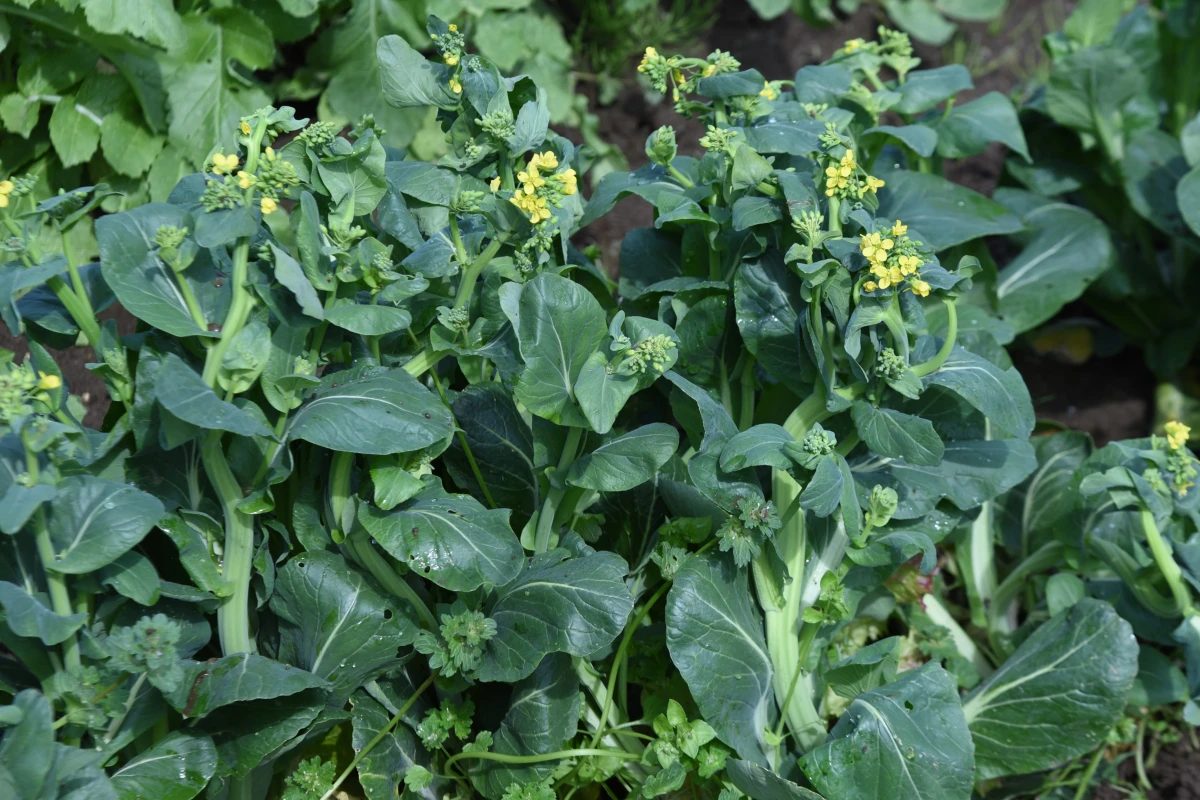
Japanese mustard spinach (komatsuna) was one of the crops grown using plastic waste fertilizer, as part of the study

https://newatlas.com/materials/plastic-waste-becomes-plant-fertilizer/


Plastic is one of humanity’s most useful, flexible, and inexpensive inventions. Inexpensive, that is, until you remember the massive environmental and health costs of plastic production and waste.


Those costs further incur massive financial costs of fixing (or least reducing) those ecological and medical burdens (transmitted via breathing, eating, and skin-contact), as from Bisphenol A (BPA) and phthalates which can cause heart, kidney, and lung disease, birth defects, and cancer.


Approximately 65% of plastic gets used for less than a month, yet will take anywhere from a century to a millennium to biodegrade, while approximately 80% of plastic lies in landfills or open spaces. As much as 10 million tons are polluting the ocean, not only trapping animals like improvised nets but poisoning them and coral in the form of microplastics.

So, if someone had a way of turning this global poison into a global ecological and agricultural balm, that’d be good, right? (It’s not a trick question. The answer is yes.)


Inspired by Hayao Miyazaki’s 1978 Future Boy Conan anime series which depicted turning plastic into edible bread, Assoc. Prof. Daisuke Aoki at Japan’s Chiba University has done something he calls “very desirable indeed.” In their open-access Scientific Reports paper, Aoki and his co-authors describe a polymer system for transforming waste plastic into “fertilizers that actively benefit ecosystems.”

“We are at a critical turning point in the history of plastics,” says Aoki. “While current strategies like reduction and traditional recycling are important, they are inherently ‘passive’ and do not offer active environmental benefits.”

Aoki’s previous research already showed how to use aqueous ammonia in a process called ammonolysis (using anhydrous ammonia to depolymerize polyethylene terephthalate into terephthalamide and ethylene glycol) to convert isosorbide-based poly (isosorbide carbonate) or PICs into the glucose-synthesized monomer isosorbide (ISB), urea, and other fertilizing agents.


Unfortunately, because PICs were hard and brittle (like other biodegradable plastics), they had limited uses, and their brittleness decreased their use-span, thus increasing waste while prompting even more plastic production for replacement.

So, Aoki’s team created an ISB-based plasticizer (a chemical agent that increases flexibility) to make PICs softer and more capable of bending without shattering. It increased elongation at the break point by a factor of more than 10 – from 4.3% to 45.2% – while also ensuring the convertibility of the PIC into fertilizer through ammonolysis. In fact, even the plasticizer itself can be transformed into fertilizer. In experiments, these fertilizers grew Arabidopsis thaliana and komatsuna (a type of Brassica rapa) as effectively as commercially available urea fertilizers did.


A poly(isosorbide carbonate) (PIC) plastic made from isosorbide (ISB) units was combined with an ISB-based plasticizer to improve flexibility – ammonia treatment transformed the plastic into fertilizer components that supported plant growth

Associate Professor Daisuke Aoki from Chiba University, Japan

“We wanted to move toward an ‘active’ environmental contribution,” says Aoki, “by designing materials that solve the plastic waste problem while simultaneously addressing resource depletion and supporting sustainable agriculture.”

If Aoki’s team is successful, plastic could re-enter industrial and consumer life in ways that don’t destroy the global biosphere (not to mention the humans who can’t live without it). Newly designed polymers and plasticizers could help develop more flexible packaging, bags, seedling pots, and agricultural mulch films. Aoki says he anticipates his team’s work could “lead to a fundamental paradigm shift where plastics are no longer viewed as ‘waste’ but as a ‘valuable resource for food production.”

BRICS Steps Off The Dollar, With Iran Pressing Hardest

This is a developing payments avenue that will end USA dollar forced unity and ends partially the ability of Washington to play the sanctions game.  throw in the fact that for two years Trump has been playing whack a mole with Tariffs for scant policy benefit. and the need becomes clear.

USA pressure is producing an active global nework to provide workarounds.  this is part of it.

The world can work with two systems because it constrains overreach.

BRICS Steps Off The Dollar, With Iran Pressing Hardest

Sunday, Sep 13, 2026 - 06:30 PM

Authored by former CIA officer Larry Johnson


https://www.zerohedge.com/geopolitical/brics-steps-dollar-iran-pressing-hardest

The 18th BRICS summit opened on Saturday with the bloc taking its most concrete step yet toward loosening the grip of the US dollar, adopting a 45-page New Delhi Declaration on the first day and endorsing a payments architecture built to route cross-border trade around the Western financial system. For most members the move was incremental. For Iran — under sweeping US sanctions, a naval blockade, and roughly six months into a war with the United States and Israel — it was closer to a lifeline.


The declaration and the payment rails

Leaders gathered at the Bharat Mandapam convention center adopted the New Delhi Declaration 2026 unanimously on the opening day, with Prime Minister Narendra Modi emerging from a closed session to report that no member had objected to the text. The economic centerpiece was a commitment to expand trade and investment settled in members’ own national currencies, and to link their domestic payment and messaging systems so that transactions can move without passing through the dollar-denominated SWIFT network. According to the declaration, the bloc’s payment task force had studied cross-border interoperability of those channels and examined using local currencies for trade settlement and investment.


The mechanism drawing the most attention was BRICS Pay, a decentralized payment-messaging framework that stitches together India’s UPI, China’s CIPS, and Russia’s SPFS into a shared interoperability layer — a way to clear payments among members outside SWIFT. The declaration also referenced a pilot for a gold-backed “Unit” token.


During 18th BRICS Summit in New Delhi on September 13, 2026, Indian Press Information Bureau via AFP

Just as telling was what the bloc again declined to do. There was no endorsement of a single common BRICS currency; India in particular has resisted that leap, favoring interoperable national-currency settlement over the political and monetary complexity of a shared unit. The result, as several observers characterized it, is incremental financial de-dollarization rather than a monetary union — plumbing, not a new reserve currency.


Washington's answer

The response from Washington was immediate. President Trump threatened tariffs of up to 100% on the bloc, extending a pressure campaign he has waged all year against what he calls BRICS’s “anti-American” trajectory. The threat carries genuine weight for export-dependent members that rely on the US market — but its deterrent power erodes with each transaction the bloc succeeds in routing through non-dollar channels.


That is the paradox Washington now faces: the tariffs are meant to punish de-dollarization, yet de-dollarization is precisely what blunts the tariffs.


Iran at the front of the line

No member arrived with more at stake than Iran. President Masoud Pezeshkian pressed the case for national-currency trade, telling reporters that expanding the use of members’ own currencies in intra-bloc commerce was among the most important steps the group could take. Tehran has pushed throughout the summit for mechanisms to insulate members from Western financial pressure — a priority sharpened by the sanctions and blockade it now faces.


Crucially, the summit institutionalizes at the multilateral level what Iran has already been building bilaterally. On January 29, 2026, Tehran signed a trilateral strategic pact with China and Russia, an agreement whose economic core is the construction of alternative financial mechanisms that sidestep SWIFT and reduce exposure to the dollar-centered system. That pact rests on foundations already in place: an Iran–Russia monetary agreement, operational since early 2025, that settles trade directly in rials and rubles and links Russia’s Mir card network to Iran’s Shetab system; a 25-year Iran–China cooperation framework; and the plain fact that China now buys the overwhelming majority of Iran’s oil, much of it settled in yuan.


The implication cuts against the common assumption that Iran is scrambling for a dollar workaround. It already has one. For Tehran, BRICS Pay is not a novel escape hatch but a larger, sanctions-resistant network onto which it can graft trade it is already conducting outside Western channels — and a multilateral blessing for the parallel financial architecture it has spent two years assembling with Moscow and Beijing.


Where BRICS drew the line - and where it didn’t

The declaration’s language on the region’s wars was the most fought-over in the text, and the outcome was uneven: sharp in places, deliberately vague in others. Reaching consensus reportedly required negotiations that ran until 4 a.m., driven mainly by a rift between Iran and the United Arab Emirates.


On the US–Israeli war against Iran, the bloc expressed deep concern and called for maximum restraint, dialogue and diplomacy — but it named neither the United States nor Israel, and condemned no country outright. That hedge was the price of unanimity. Iranian Foreign Minister Abbas Araghchi had pressed BRICS to condemn what he called unlawful US and Israeli aggression; the UAE pushed back hard, accusing Tehran of using the summit to justify its own missile and drone barrages against Gulf states. India, in the chair, acknowledged “differing views among some members” and steered the text toward common ground. The language was firmer in tone than a bland appeal for peace, but well short of the unequivocal condemnation of the strikes on Iran that Tehran had won from the Rio summit a year earlier — a notable step back on that specific question, not forward.


Yet Iran signed the text anyway, and that was the summit’s quieter diplomatic story. Tehran — which has spent the war firing missiles and drones at the UAE, most recently at the Al Minhad Air Base in late August — put its name to language its Gulf adversary could also accept, while Pezeshkian met the Abu Dhabi crown prince on the sidelines in the two sides’ highest-level contact since the fighting began. Iran’s willingness to sit inside the consensus rather than force a rupture signaled that it read the declaration’s direction — deep concern over the escalation and a call to protect civilians — as acceptable enough, even without the naming it had sought. But the same words served Abu Dhabi: the call to respect the sovereignty and territorial integrity of states pointed as much at Iran’s strikes on the Gulf as at the US–Israeli assault on Iran. The consensus held because the text could be read both ways.


On Lebanon, the bloc was sharper, and it named Israel directly. The leaders condemned the continued violations of Lebanon’s sovereignty and territorial integrity, called on Israel to withdraw its occupying forces from all Lebanese territory, demanded full implementation of UN Security Council Resolution 1701, and condemned all attacks against the UNIFIL peacekeeping force — extending condolences for peacekeepers killed in the south, among them four Indonesians, and demanding accountability. It amounts to some of the most direct criticism of Israel in any BRICS declaration to date, even though Israel is named only three times in the entire 45-page document. The declaration separately took note of the International Court of Justice proceedings brought by South Africa against Israel over Gaza, and rejected any unilateral moves to alter the status of occupied Jerusalem.


For India, the shift is best measured against where Modi stood barely six months earlier. On February 25–26 he made a landmark visit to Israel — the first Indian premier to address the Knesset, honored with its Speaker’s Medal as the first foreign leader to receive it, presiding over the elevation of ties to a “special strategic partnership” and a defense co-production track. When the US and Israel opened their war on Iran forty-eight hours after he left, killing Iran’s supreme leader in an airstrike, New Delhi stayed conspicuously silent — no condemnation of the strikes, no condolence for the killing — and let its own Iran links, from Chabahar port funding to bilateral trade, wither under US pressure. That silence held for months.


It broke at Bishkek. On September 1, at the Shanghai Cooperation Organization summit, Modi signed a declaration condemning the military strikes on Iranian territory as violations of international law, offering condolences for the slain Iranian leader, and backing Iran’s sovereignty and its rights under the Non-Proliferation Treaty — the first time India had endorsed language condemning the US–Israeli assault. From the leader who had embraced Netanyahu in February, that was a genuine reversal, not a calibration. The New Delhi Declaration eleven days later was actually softer on Iran than Bishkek, and the reason is instructive: the SCO has no Gulf Arab members, but BRICS has the UAE, which pushed back hard and forced the unnamed “deep concern” formula — even as the bloc kept firm, named criticism of Israel over Lebanon. India’s arc across 2026, from the Knesset medal to the Bishkek condemnation, is the real measure of the move; the hedged Iran passage in the New Delhi text reflects the BRICS bargaining table, not a retreat from it.


What is real, and what is symbolic

Sober assessment is warranted. BRICS Pay is a messaging and interoperability layer, not a replacement for the dollar as the world’s reserve asset, and nothing in the New Delhi Declaration displaces the dollar’s dominance in global reserves, commodity pricing, or third-country trade. The bloc’s unity also has limits the declaration papered over rather than resolved: the consensus on the Middle East held only because the text avoided naming the aggressors Iran wanted named, and the Iran–UAE rift that nearly sank the negotiations has not gone away. Grand pronouncements about a post-dollar order have a long history of outrunning the mechanics.


But the asymmetry inside the bloc is the point. What reads as incremental to India or Brazil — countries with full access to Western markets and finance — is closer to existential for Iran and Russia. For a state locked out of SWIFT and dollar clearing, a payment rail that functions precisely because it does not touch the dollar is worth far more than any debate over reserve-currency theory. The New Delhi Declaration will not dethrone the dollar. What it does is hand the bloc’s sanctioned members a collective, expanding, and now formally endorsed alternative to the system Washington has used to isolate them.


The backdrop

All of this unfolds under the shadow of simultaneous wars — in Ukraine and across the Middle East — and an Iran conflict, triggered by US–Israeli strikes in late February, that has pushed oil above $100 a barrel, disrupted the Strait of Hormuz, and now bleeds into the escalation between Saudi Arabia and Yemen’s Houthis. It is an environment that gives the de-dollarization agenda its urgency: the more Washington wields financial and military pressure, the greater the incentive for the targeted states to build channels beyond its reach. Day two of the summit turns to supply chains, energy security, and the bloc’s Economic Strategy 2030.