
minimally and it compares directly to cigarette smoke. Best avoided and that is easy enough.
otherwise we are noticing what has been historically common enough/. my teachers had smoke memories from the forties in Ontario.
Recall what burns of now will not catch fire for several more years at least. We used to have massive grass fires driving a million buffalo. thzat is a problem
Can Wildfire Smoke Affect Your Cells?
https://drtenpenny.com/wildfire-smoke/
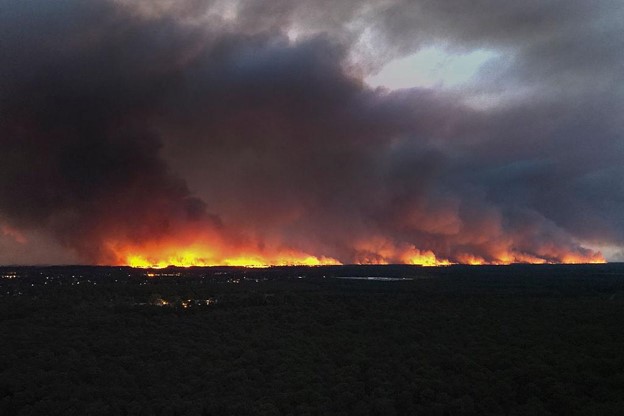
It seems like the whole world is on fire. Europe is currently experiencing one of its most severe fire periods in years. We’ve all seen the major fires in Spain and France. Prolonged heat, drought, and strong winds are complicating matters. Spain continues to battle several significant wildfires in Leon, Zamora and Castellon. Some fires have stabilized enough for residents to begin returning, while other fires continue to remain active.
France is experiencing one of its largest wildfire emergencies on record. Southern France is affected, include Gironde, Var/Provence, and the Bordeaux region. In the Gironde fire alone, 220,000 evacuations have occurred. Thousands of firefighters are deployed. Some fires have been largely contained, but others have reignited due to hot, dry, and windy conditions.
Greece is a very high-risk wildfire zone. Large fires burn near Athens. Homes, forests, and farmland have been destroyed, as strong winds continue to hamper firefighting efforts. During those efforts, two firefighting helicopters collided, killing two crew members during suppression operations.
Canada’s 2026 wildfire season is very active, with fires across the boreal forest ongoing in areas like Manitoba and Saskatchewan. Canadian authorities continue to monitor and respond to new fire starts as hot, dry conditions persist in parts of the country.
Washington State is experiencing one of its most severe wildfire periods in history. The fires are fueled by extreme heat, prolonged drought, low humidity, and strong winds, particularly across the eastern part of the state. The area near Spokane is hardest hit, with multiple large fires having already burned over 250,000 acres. Over 700 buildings have burned and over 65,000 people have been forced to evacuate.
Why are so many fires occurring?
Human causes are being investigated. Authorities are investigating whether faulty power infrastructure contributed to the fires, and arson after multiple ignition points were discovered. In Washington, fires may have gotten out of control in one of its many homeless camps. In all cases, prolonged heat waves, severe drought, low humidity, and strong winds complicate the matter. Dry vegetation is acting as abundant fuel to feed these fires.
The Smoke!
Smoke continues to affect air quality both locally and in neighboring regions. Folks in Michigan, Ohio and other border states experienced major smoke from the Canadian wildfires.
Wildfire smoke is not just wood smoke. Instead, it is a complex mixture of gases and microscopic particles produced when vegetation, buildings, vehicles, and other materials burn. The composition of the smoke depends on what is burning, the temperature of the fire, weather conditions, and how long the smoke remains in the atmosphere.
Just think about all the glyphosate sprayed on those forests. Now it is burning.
One of the primary health concerns is fine particulate matter (PM2.5), tiny particles small enough to penetrate deep into the lungs and even enter the bloodstream. Exposure to elevated PM2.5 levels has been associated with increased risks of asthma attacks, respiratory infections, reduced lung function, heart attacks, and stroke, particularly in older adults, children, pregnant people, and individuals with underlying heart or lung disease.
Wildfire smoke also contains gases such as carbon monoxide, nitrogen oxides, and volatile organic compounds (VOCs). Some VOCs, including benzene and formaldehyde, are known or suspected carcinogens. When homes, vehicles, industrial facilities, or treated wood burn, smoke may also contain heavy metals such as lead, arsenic, cadmium, and mercury, along with other toxic chemicals released from plastics, paints, insulation, electronics, and household products. These contaminants can increase the toxicity of smoke compared with fires that burn only natural vegetation.
Exposure can increase the risk of asthma and chronic lung disease, cardiovascular disease, reduced lung function, and adverse pregnancy outcomes.
Reducing exposure remains the most effective protective measure. During heavy smoke events, people can stay indoors with clean, filtered air, use high-efficiency air filtration when available, limit strenuous outdoor activity, and wear a well-fitting N95 or similar respirator if they must spend extended periods outdoors. Monitoring local air quality reports can also help individuals decide when additional precautions are warranted.


No comments:
Post a Comment