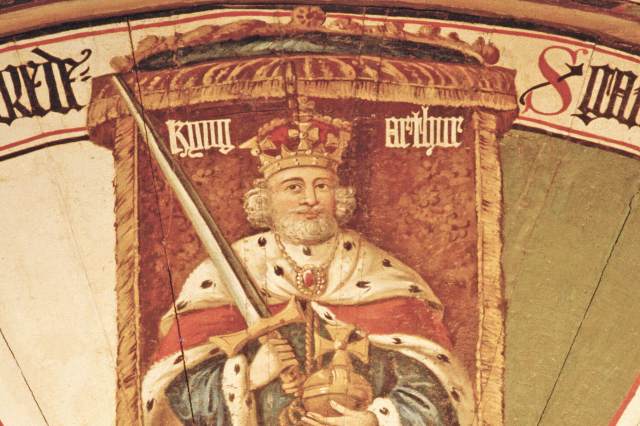
The literary emergence took place in the twelfth century onward and referred to a lengend already six full centuries old. This turns out to be the same time gap as bewtween the claimed foundation of Islam and the known provable creation of the Koran. The ability to write narritives down obviously exploded during the eleventh and twelfth centuries.
All this material also arose in the shadow of the Roman world. It was out there and not too far away. In both cases we have war lords who apparently swept all before him during his active lifetime. That is the hetroic tale but naturally constrained by the physical size of his polity. For Islam it is Mecca and Medina maybe. For Arthur it is Westetrn England along the welsh borderlands.
and could Athur be the Hercules of Welsh Celtic myth? Such could then be applied to any successful warlord all along the western coast.
The advent of written literature fueled his emergence into global imaginations and sobeit. We have ample lesser characters scattered all about as well.
Did King Arthur Really Exist?
King Arthur circa 530 CE
https://historyfacts.com/arts-culture/article/did-king-arthur-really-exist/?
According to legend, King Arthur of Camelot was a heroic leader who lived in England from the late fifth century to the early sixth century. Stories of Arthur, his court at Camelot, and his Knights of the Round Table are at the heart of a collection of medieval literature known as the Matter of Britain, which portrays Arthur as a brave and loyal king who led the Britons in battle against Saxon invaders during the sixth century. Though there is a tremendous body of work about King Arthur, historians have debated for centuries whether this medieval figure ever really existed.
No Reliable Historic Record of King Arthur Exists
Despite the prevalence of Arthurian tales, particularly ones written from the 12th century on, no contemporary evidence has been found from the period in which King Arthur is said to have lived. The earliest references to Arthur first appeared in Welsh and Breton folklore and poetry, but they were not contemporary to the events they described. “Y Gododdin,” a seventh-century Welsh poem, lists one warrior’s many admirable traits before concluding, “although he was not Arthur.” Scholars suggest this reference points to a legendary warrior named Arthur who was well known in the seventh century, but that doesn’t prove that said hero was a real person.
A sixth-century historical account of Britain by a Welsh monk named Gildas is the only surviving source from Arthur’s time that references a powerful British leader who could plausibly be the hero of legend. In the account, titled De Excidio et Conquestu Britanniae (On the Ruin and Conquest of Britain), Gildas attributes the success of the Battle of Mons Badonicus, reportedly fought around 500 CE, to a British commander, but he does not name the conquering hero. The only commander Gildas references by name in his work is Ambrosius Aurelianus, a real Romano-British warrior who fought for the Saxons in the fifth century.
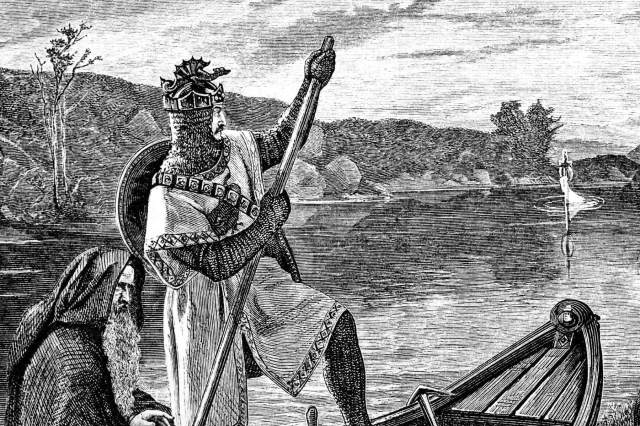
Credit: Hulton Archive/ Hulton Royals Collection via Getty Images
The Line Between Fact and Fiction Is Blurry
Medieval histories often merged fact and fiction, so references to Arthur in historical records aren’t necessarily a confirmation of his existence. It was common practice at the time to embellish true events, which could mean altering names, adding characters, exaggerating a hero’s accomplishments, and even including magical elements to enhance the story. Some Arthurian texts were even labeled as a “history of,” which further blurred the distinction between historical fact and romanticized fiction.
References to Arthur appear in various medieval historical sources, including the ninth-century Historia Brittonum (History of the Britons) and the late-10th-century Annales Cambriae (Annals of Wales). The former, written by the Welsh cleric Nennius, lists 12 battles presumably fought by Arthur, but its historical accuracy is up for debate. Some scholars argue that the battles may be a compilation of various conflicts involving different leaders rather than a single person’s achievements. Both Annales Cambriae and Historia Brittonum mention Arthur’s victory at Mons Badonicus, though their works came centuries after Gildas’ reference to an unnamed commander, and may have been influenced by literary accounts of Arthur.
In 1136, Welsh cleric Geoffrey of Monmouth penned one of the most famous Arthurian texts, Historia Regum Britanniae (History of the Kings of Britain). Geoffrey claimed to have traced the history of Britain back to its founding by Trojan exiles and wove a captivating saga of the rulers of Britain from the mythical first king, Brutus of Troy, in 12th century BCE, to the Welsh king Cadwaladr, in the seventh century. Although his tales have helped shape Arthurian legend as we know it today, including fantastical elements such as Merlin the wizard and the magical sword Excalibur, his account is largely dismissed as fictional.
Arthur May Have Come From Celtic Mythology
In the absence of any evidence that Arthur was a real historical figure, some scholars suspect he may have evolved from stories of a Celtic bear god. This theory is supported by the possible origins of the name Arthur, which may be derived from the Celtic artos, meaning “bear.” In Celtic mythology, the bear is a symbol of strength and leadership, qualities often attributed to the legendary king.
Other theories suggest that King Arthur may have been based on several historical figures who lived during the period following the Roman withdrawal from Britain. Arthur may have been inspired by the real Romano-British leaders who fought against Saxon invaders, including Aurelianus and Vortigern, or the character could be a composite of several warlords from that era. None of these identifications has ever been found conclusive, however — although Aurelianus’ nickname was “Bear” because his military tunic was made from a bear pelt, and some theorize the stories of Arthur evolved from Aurelianus.
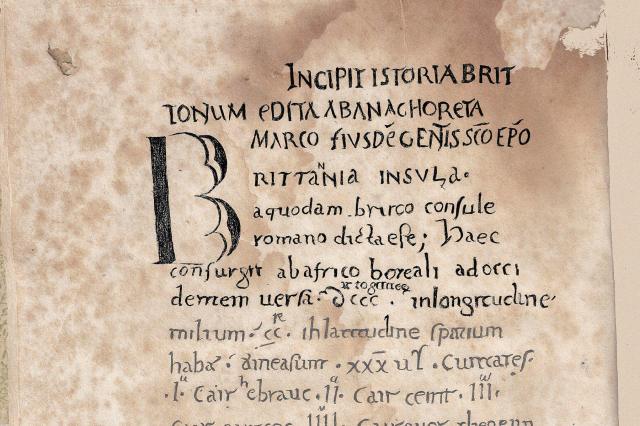
Credit: Heritage Images/ Hulton Archive via Getty Images
No Archaeological Evidence of Arthur Has Been Found
On top of the lack of historical record, there is also no definitive archaeological evidence that links any historical figure to the Arthurian tales. Some real historic sites, such as Tintagel Castle in Cornwall, England, where Arthur is said to have been conceived, have been associated with the legend. But while excavations at these sites have uncovered artifacts from the time period that corresponds with the stories of Arthur, no physical proof of his existence has been found. And some places mentioned in Arthurian legend, such as the location of the Battle of Mons Badonicus (also known as Mount Badon), remain unknown, even though contemporary historians believe they were real sites.
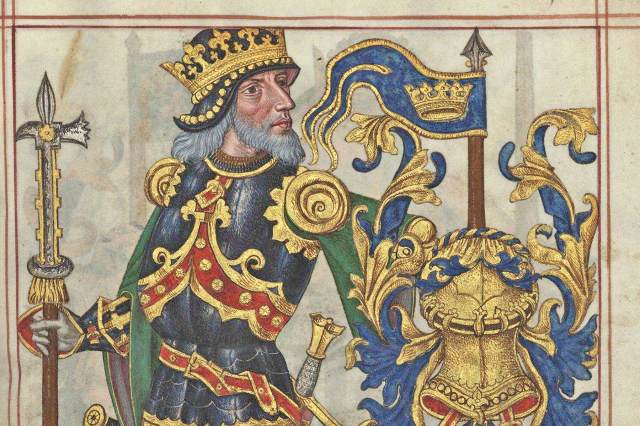
Credit: Heritage Images/ Hulton Fine Art Collection via Getty Images
The Legend of King Arthur Lives On
Though Arthurian literature continued to expand and thrive throughout the Middle Ages, the themes, events, and characters varied widely from text to text, so there is no single canonical version of Arthur’s story. The stories of King Arthur and his realm experienced a resurgence in popularity in Victorian-era England, adding depth and breadth to the legend. Thanks to countless literary works and adaptations for theater, film, television, and other media, the legend remains familiar to this day — regardless of whether a real King Arthur ever existed.
No comments:
Post a Comment