Tuesday, March 31, 2026

One China, one world


The problem is that China is an idea, just as Islam is an idea used as a political organizing principal.  It all covers continous ethnic diversification struggling with hiearchial aggrandization.  Exactly who is tha tpure german? or pure Han?

All this rubbish is an artifact of political agitation and struggle to assemble power.  not so good.

Again democracy has been really good so far is slowly diffusing this type of power assemblage.  After all, political parties struggle to become inclusive which overrides ethnic power schemes.

China needs active provincial democratic systems and also muni councils.  All possible ,but the CCP really needs to wash away without triggering another civil war.


One China, one world

China’s regime insists on national unity and international harmony. Is this anything more than an imperial posture?


China’s president Xi Jinping (front row, centre) and other leaders at the third Belt and Road Forum for International Cooperation at the Great Hall of the People in Beijing, China, on 18 October 2023. Photo by Suo Takekuma/AFP/Getty Images


is professor emeritus of history at Yale University in the US. His books include China Marches West: The Qing Conquest of Central Eurasia (2010), the co-edited collections Imperial Formations (2007) and Shared Histories of Modernity (2008), and the coauthored volumes Global Connections (2015) and Asia Inside Out (2015-19).


If you think that the People’s Republic of China is still a communist country, you are in for a shock. It is, of course, a single-party state ruled by the Chinese Communist Party. But what is the role of the CCP today? The Party celebrates billionaires, runs a capitalist economy, and depends heavily on global trade and investment. This is far from what Mao Zedong imagined when he took power in 1949. Then, the CCP claimed to lead the proletarian classes toward socialism and eventually communism. But what now justifies Communist Party rule? In the past decade or so, the CCP has defined its role in a way that would make Mao spin in his grave. China’s president Xi Jinping has endorsed the ‘great unity’ thesis, which interprets several millennia of Chinese history as the harmonious amalgamation of diverse peoples into a single culture and state, dedicated to bringing peace to ‘all under heaven’. Inconvenient concepts like the proletariat, feudalism and modes of production have vanished. Community, continuity and Confucius now prevail over class struggle, revolution and Karl Marx.

In an address to a symposium on culture on 2 June 2023, Xi Jinping declared that the ‘outstanding unity’ of Chinese culture has persisted for 5,000 years. This unity originated with the formation of the Huaxia cultural community in the 3rd millennium BCE. In Xi’s view: ‘Political unity is the prerequisite and foundation for cultural unity.’ The Qin and Han dynasties built upon this community and developed it continuously through later dynasties and into the 20th century. China consists of multiple ethnic groups whose diversity must be respected, but all have melted into a single nation bound by spiritual ties. ‘Territorial integrity, national stability, ethnic solidarity, and the continuation of civilisation’ become a single unit, ‘concentrated and centralised’ under a single state.
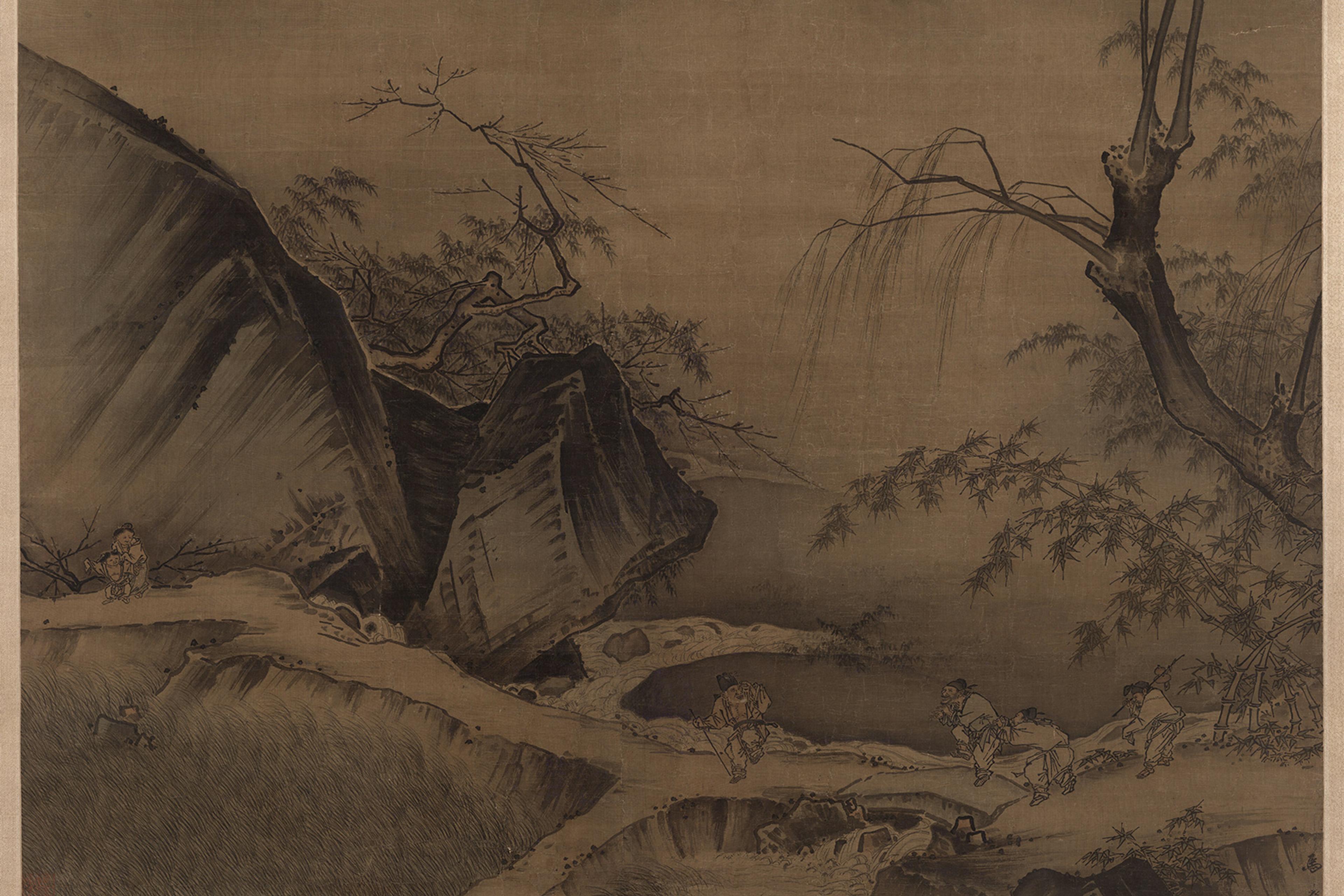

Detail from Dancing and Singing (Peasants Returning from Work) by Ma Yuan (1160-1225). Courtesy the Beijing Palace Museum/Wikipedia

Liu Yuejin, a member of the Chinese Academy of Social Sciences, responded to the statement by an interviewer from the China News Service that China was the ‘only civilisation in the form of a state that has never been interrupted’ by agreeing that for ‘more than 5,000 years … all ethnic groups in China have … jointly forged the Community for the Chinese nation.’ He added that every person who is part of the ‘big Chinese family’ must embrace territorial integrity as the basic symbol of national dignity. Great unity preserves a ‘close-knit community’ that embraces a ‘harmonious and syncretic culture’. He contrasted this culture of harmony with a Western culture that ‘takes interests as the core value, emphasises man’s natural right and law of competition [sic], [and] advocates individualism.’

For these officials and scholars, the great unity thesis provides not only an explanation of Chinese history, but also a model for geopolitical harmony. They celebrate communitarian harmony as an alternative to the Western model of great power politics. Thus, both in theory and in practice, the People’s Republic of China, guided by principles of non-interference, mutual benefit and respect, behaves differently from other states.

Zhao Tingyang, professor of philosophy at the Chinese Academy of Social Sciences, has argued that the concept of tianxia, or ‘all under heaven’, can bring peace to the modern world. Competitive nation-states, inequality and imperial exploitation can no longer resist the pressures of globalisation. As global forces undermine the sovereignty of nation-states, humanity needs a total-world view, inclusive of all peoples, rather than inevitable conflict between divergent national interests and individuals. His tianxia perspective, derived from his study of the relationship of kingdoms during the Zhou dynasty (1046-256 BCE), promotes communitarian interest, mutually beneficial relationships, and the general welfare. He rejects the individualism of Western political theory in favour of the Confucian concept of ren (‘reciprocity’). If nations and individuals respect each other’s values as part of a larger whole, they can work together to attain the ‘expansive harmony’ represented by the Confucian ideal of datong (‘great unity’). Zhao supports democracy and pluralism, but he subsumes these ideals under the larger goal of harmony.

The Yale historian Odd Arne Westad, in his foreword to Zhao’s book, notes that Zhao implicitly assumes the superiority of Chinese imperial dynasties when he draws on their political conceptions as the model for future world peace. Ignoring their real record of violent conquest, Zhao instead propagates cultural determinism: the vision of the common good represented by datong ultimately will create a peaceful global community.

The modern roots of datong spring from the Utopian tract Datongshu, completed in 1902 by the brilliant Confucian scholar Kang Youwei. The first leader of the Nationalist Party, Sun Yat-sen endorsed it, as did Sun’s successor Chiang Kai-shek, and the term occurs in the national anthem of the Nationalist Party: ‘Our party honours the three principles of the people; so as to build China and realise datong.’ This slogan of unity, which aided the Chinese people to envisage a better future during the wars and invasions of the 20th century, however, has taken on a different appearance today. The great unity thesis now celebrates the achievements of the Communist Party as the culmination of Chinese civilisation and a guide for the entire world.


Western observers, and many of China’s neighbours, look askance at these claims. For them, China practises imperialism, pure and simple. They may cite its use of economic sanctions and military force to dispute the ownership of islands in the South China Sea, in defiance of international law. It has also used trade sanctions to pressure countries like Japan and the Philippines to support China’s foreign policy goals. Many also regard the Belt and Road Initiative as a form of economic imperialism. The BRI provides capital to build railroads, ports and gas terminals connected to China, but has also taken control of assets when the loans are not paid. Border conflicts with the Soviet Union, India and Vietnam, and the refusal to renounce the use of force against Taiwan, indicate that China will project power and defend territorial gains when it is able to do so. The United States, which targets China as its key strategic rival, expects continual competition for essential resources like rare earths and computer chips.

On the other hand, the practices and ideology of the People’s Republic of China do not simply mirror the age of 19th-century imperialism. The PRC has fought border conflicts, but, except for the South China Sea, it has not occupied new territory beyond the limits of the Qing empire. Its territory is only two-thirds of the area of the Qing at its maximum extent. It fiercely defends territorial sovereignty and upholds the principle, if not always the practice, of non-interference in other states’ internal affairs. In this respect, PRC policy much more closely resembles territorial nationalism than imperial expansion. Although it has invested heavily in Africa, Central Asia and Latin America, the scale of these investments is far behind that of US and European capitalism. And the PRC’s promotion of green energy, even when offset by the building of coal plants, still contributes to mitigating climate change. A simple equation of the PRC to 19th-century imperialists will not do.
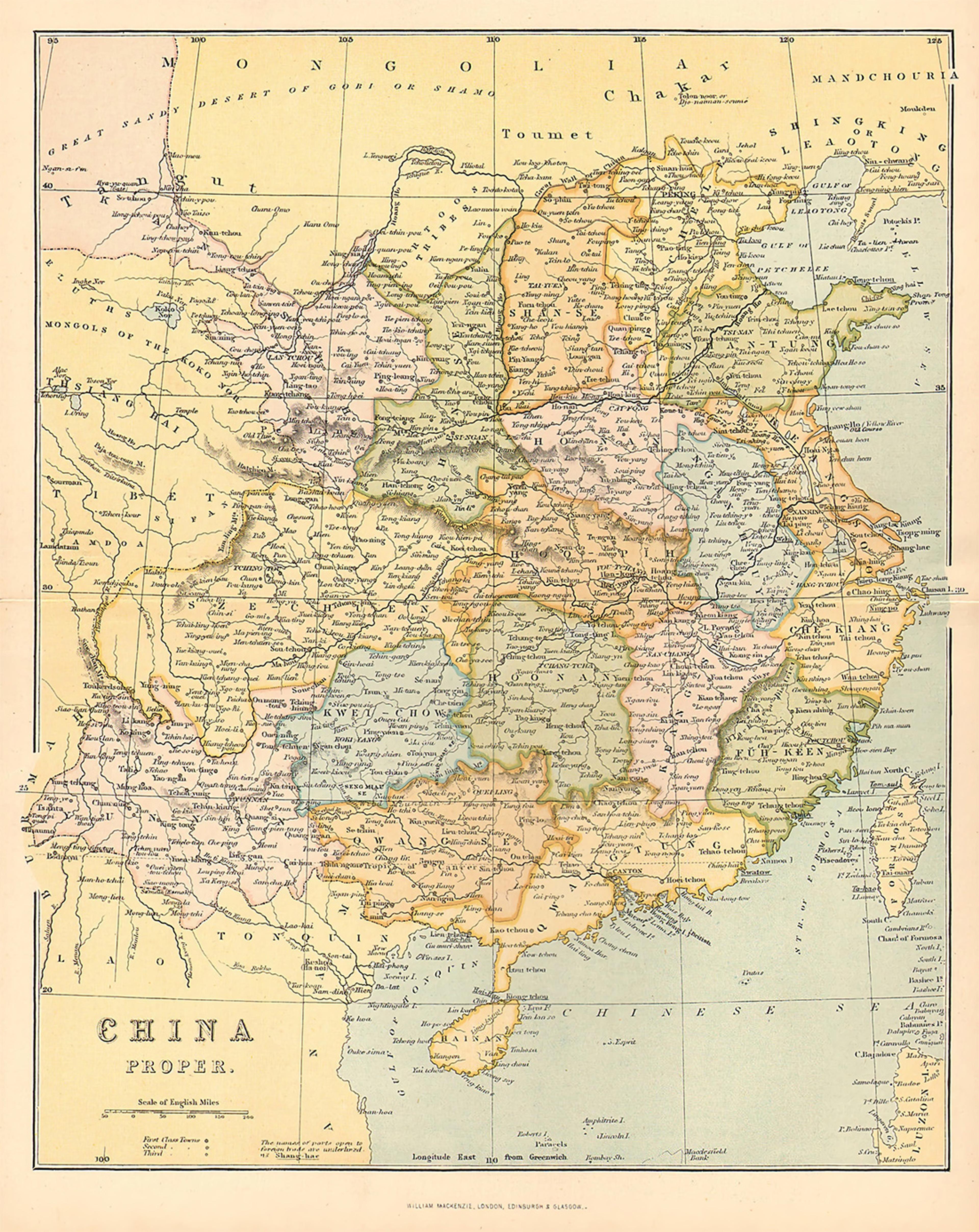
Qing dynasty China in 1866. Courtesy Wikipedia

Yet we may still ask, why have the Western and PRC versions of China’s global role diverged so sharply in the last decade? From Deng Xiaoping’s opening of the country to foreign trade and cultural contact in 1978, under the slogan of ‘hiding your light under a bushel’, to the ‘peaceful rise’ theory of Hu Jintao in the 2000s, symbolised by the accession of the PRC to the World Trade Organization in 2001, it seemed that the PRC aimed to join the global order, not to challenge it. Now it rejects wholesale the concept of a liberal ‘rules-based order’, and this ideology claims its origin from neither Adam Smith nor Marx, but from Confucius.

The great unity thesis has more grandiose goals: to make China the leading power in the world

We could dismiss the great unity thesis as mere window-dressing for great power politics, a convenient mask for a drive for economic and military dominance. Indeed, nearly all imperial powers have proclaimed a benevolent ‘civilising mission’. Is the great unity thesis the Chinese version of a civilising mission, designed to convince other powers of its altruistic intent and its own people of its exalted moral values?

This form of Confucian utopianism, however, hardly seems designed to impress foreign powers, who barely understand it, and it is difficult to tell how much traction it has gained at home. Popular interest in Confucius, formerly denounced as an agent of the feudal ruling class, has certainly exploded since the reform period. Other influences have, however, been equally important. The fastest-growing new religion in China, in fact, has been Christianity. Xi Jinping’s earlier slogan, ‘The China Dream’, meant the attainment of ‘modest prosperity’, a classical phrase for contentment among the people. The new ideology of the great unity thesis, however, has more grandiose goals: to make China the leading power in the world, dominant in all spheres as an economy, as a territorial state, and as a technological and cultural great power. We need to take this ideology seriously and understand it in its own terms.

We defenders of a liberal society may well view the great unity thesis as empirically flawed, tendentious and politically dangerous, a means of legitimising autocratic rule and imposing it on the rest of the world. One of the professional historian’s jobs is to debunk biased interpretations of the past, but we also recognise that ‘mythistory’ is itself a historical force. Westad also emphasises that, since many intellectuals in China take the thesis seriously, it offers valuable insight into the current state of Chinese cultural debate.

Historians of modern China like myself have a particular stake in the way that the great unity thesis redefines Chinese macrohistory. We certainly need to tell history on the grand scale, but with great care. Writing in 1997, the British historian Eric Hobsbawm commented that ‘history is the raw material for nationalist or ethnic or fundamentalist ideologies, as poppies are the raw material for heroin addiction.’ Our role as historians is not to support dominant ideologies; proper history critiques and subverts conventional wisdom by exploring paths not taken and alternative modes of living. The great unity thesis instead reinforces conformity. Quite a few leading Western and Chinese historians have now contributed to this discussion. Much of it supports these two points:

1. The great unity thesis is not a persuasive account of China’s premodern history. Its concepts originated in the early 20th century, when nationalist ideology crystallised. Nationalist ideology grew out of the entangled threads of Western ideology and classical Chinese theories of culture. It is scanty on empirical detail, so it is difficult to confirm or refute. It cherrypicks events from an extraordinarily diverse past. As scientists would say, it is not even wrong. This kind of history leads to an unfortunate narrowing of the mind. I certainly do not mean to imply that everyone shares this view. Historians in China have done outstanding work, but this thesis casts out much of their hard-won knowledge in favour of a parochial perspective.

2. It is also logically incoherent. Trying to graft China’s extensive, diverse past onto the demands of the modern nation-state inevitably produces impossible contradictions. All modern nation-states define themselves as unique products of territory, genealogy and history; China is no different. Benedict Anderson, in his pathbreaking theory of nationalism, Imagined Communities (1983), described this kind of official nationalism as an attempt to stretch ‘the short, tight, skin of the nation over the gigantic body of the empire’. China’s long imperial heritage, however, makes this effort particularly problematic. So many dynasties with different boundaries, rulers and cultural compositions preceded the 20th-century nation that selecting a single model is impossible. Chinese nationalists who want to revive the dream of empire now face the inverse problem: how to squeeze the gigantic body of imperial history into the tight skin of the nation-state.

Mao’s predecessor, ‘Generalissimo’ Chiang Kai-shek, chairman of the Nationalist Party (1928-49) and premier of the Republic of China (1950-75), might find the great unity thesis very congenial. In 1943, he turned his lectures into China’s Destiny, a tract expressing the basic tenets of Nationalist ideology. He, too, asserted the fundamental unity of Chinese civilisation. Since ancient times, a variety of ‘clans’, which were branches of a single race, spread out from the Yellow River Basin to embrace South China, Xinjiang, Mongolia, Manchuria and even Vietnam. Over the course of ‘5,000 years’, they blended into a single nation, and ‘the motive power of that blending was cultural rather than military, and the method of blending was by assimilation rather than conquest.’ The unifying of different customs to form a single national culture was the result of a ‘common historical destiny’ and was not merely the result of political necessity.
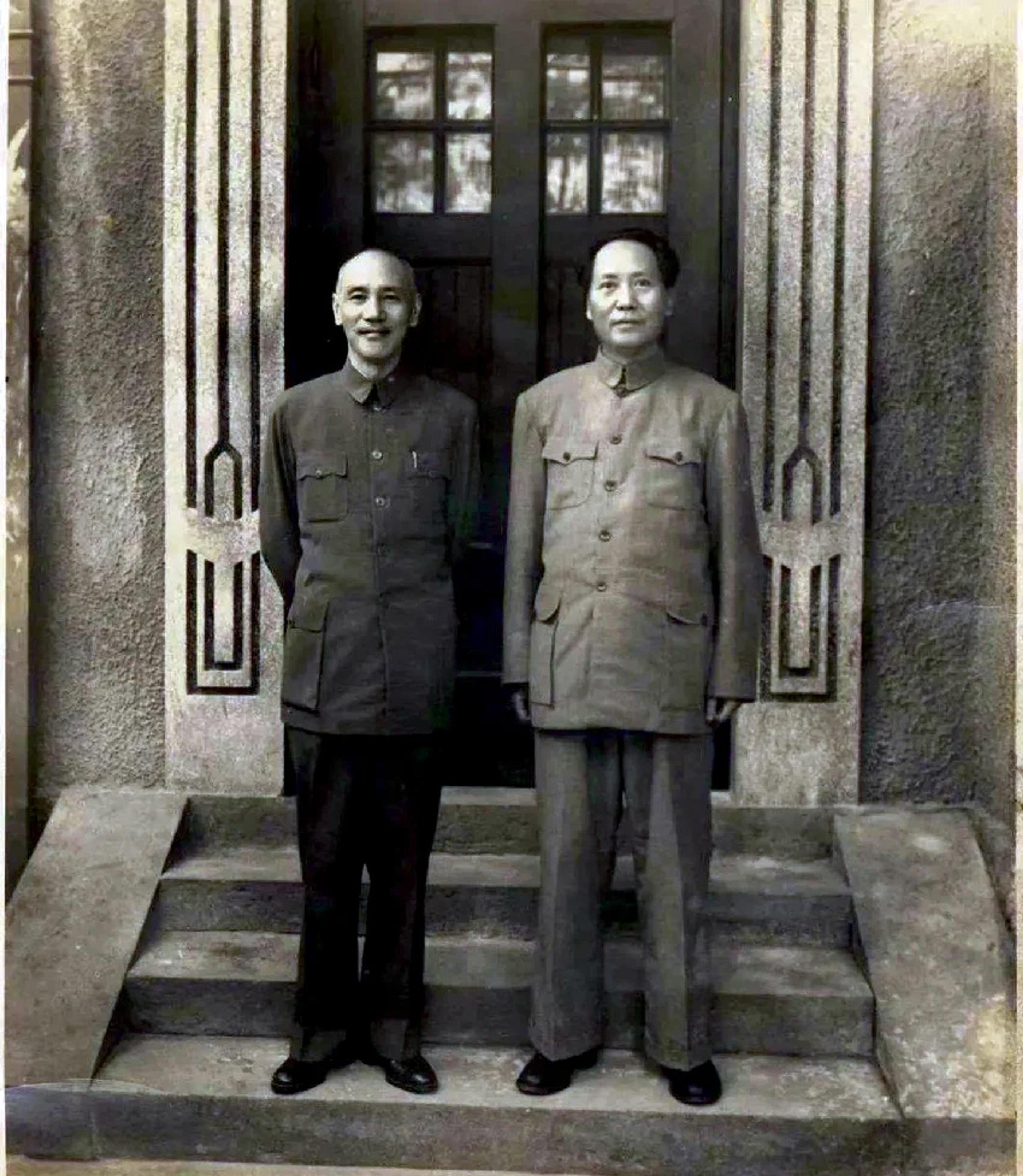


Chiang Kai-shek (left) and Mao Zedong (right) in Chongqing, China, 1945. Public Domain

In the 1940s, during the Japanese invasion, such ‘national humiliation’ required the recovery of all that the nation had lost. Mao Zedong, who ordered copies of China’s Destiny to be burned, in fact supported the same goal. Even though both Chiang and Mao were military leaders, they saw unification, rather, as a cultural or even cosmical process. Modern supporters of the great unity thesis also ignore military conquest and propagate an ineffable ‘destiny’ determined by cultural and natural processes independent of political change.

Chiang argued that the people required guidance by enlightened elites serving an autocratic ruler. He attacked Jean-Jacques Rousseau’s false doctrine of ‘natural rights of man’. In Chiang’s view, the dynasties ‘generally adopted a magnanimous attitude toward the people’, so the people had no need to fight for freedom against the state. Therefore, ‘our Chinese nation must crystallise into a solid, rocklike body of national defence, and needless to say, no individual may enjoy the “freedom” of a loose grain of sand.’ Endorsing datong as the ultimate goal, he stressed the continuity of traditional Chinese culture as the fundamental support of a unified society.

The inaccuracy of Chiang’s history and the incoherence of his ideology were bound together

During the Sino-American wartime alliance (1941-45), Chiang’s supporters praised him as a defender of freedom against Fascist aggression. The publisher Henry Luce featured Chiang and his wife on the cover of Time magazine several times. But Chiang attacked Western countries for invading China and imposing unequal treaties in the 19th century. The US State Department considered Chiang’s text to be so dangerous that it fought to suppress an English translation. In 1947, not one but two translations appeared, expressing radically opposed opinions on the nature of Chiang’s regime. The editor of one translation, Philip Jaffe, representing liberal organisations opposed to Chiang’s authoritarian rule, denounced China’s Destiny for supporting repression, hierarchy and exploitation of the common people. By contrast, the scholar Lin Yutang and the diplomat Wang Chonghui defended Chiang as a supporter of the traditional Chinese values that undergirded a democratic society. Lin praised Chiang for devotion to a single purpose, ‘that of unification of China and making her into a modern and democratic nation.’ Jaffe’s widely read critique, however, heavily damaged the credibility of Chiang’s regime.

John K Fairbank, then assistant professor of history at Harvard University, first read China’s Destiny in Chinese in 1943. He wrote in his diary: ‘I never saw a more pernicious use of history for political purposes.’ In 1947, reviewing the English translations, he gave a more substantive critique. Describing the book as the ‘skeleton in the Kuomintang closet’, a text so scandalous that English readers could not see it for four years, he concluded that Chiang’s regime, based on police terror and US support, was ‘a danger to American democracy’. Chiang claimed to support traditional Chinese values updated for the modern world. By constantly invoking benevolence, sincerity, loyalty and filial duty as necessary to building a national spirit, he demanded complete subordination to the Nationalist Party. His economic theories rejected free enterprise in favour of ‘anti-Marxist Confucian totalitarianism’. By claiming that Han, Manchus, Mongols and Tibetans had a common genetic origin, he used ‘racism for nationalistic ends’. His Chinese nation included all the territories conquered by the Qing dynasty at its maximal extent, including Mongolia, Tibet and Taiwan. His goal was to recreate imperial boundaries while assimilating the diverse peoples of the empire into a single culture. Chiang’s vision of the nation promoted ‘virtues that conduce to the subordination of the individual to the state’ and ‘a government for, but not by, the peasant masses’. Fairbank concluded: ‘One cannot avoid the question whether this ancient Confucian wine can be poured into modern bottles without turning slightly fascist.’

Resemblances of Nationalist Party ideology to Fascism are not hard to find. Some Nationalist Party leaders admired Mussolini’s paramilitary Blackshirts and tried to create the Blue Shirts Society on the same model. Liberals had good reason to oppose the Party’s repression. Yet to describe the entire Nationalist ideology as merely Fascist goes too far. It was a mixture of liberalism, authoritarianism, Confucian traditionalism and Christian moralism that does not separate easily into coherent parts. Thus, the inaccuracy of Chiang’s history and the incoherence of his ideology were bound together.

Such contradictory assessments of China’s Destiny expose the conundrums of Confucian ideologues and Western observers. Chinese officials and intellectuals write for an audience familiar with a classical tradition unknown to most Westerners, but in foreign languages their statements take on a different, more ominous tone.

Just as in the 1940s, the ambiguous implications of China’s ideology confound US observers. China fiercely asserts national sovereignty while practising imperial expansion. Assertive territorial nationalism may not threaten world order. Perhaps even the future of Taiwan could be settled if others believed that China had limited territorial ambition. But the mainland’s aggressive actions in the South China Sea, its extensive foreign investment, and its ideology of universal world order bely these modest goals.

Advocates of the great unity thesis today echo almost exactly Chiang’s version of Chinese history, but Chiang’s policies focused entirely on restoration of national sovereignty. He could not impose his vision on the rest of the world. He endorsed the repudiation of the unequal treaties as a victory against imperialism, but he intended to have China join a single world order. The current advocates of the great unity thesis cannot avoid arousing greater suspicion.

When Chiang Kai-shek lectured on unity in 1943, the nation was desperately fighting for survival. His fervent faith buoyed people’s spirits in difficult times. Liberals, however, expected only disappointment. Chiang claimed to follow Sun Yat-sen’s three people’s principles: liberalism, nationalism and socialism, but in fact supported only the second, in the form of an all-powerful state. Still, Chiang showed the courage of his convictions in stubbornly defying his main ally, the US.

The People’s Republic of China built a towering juggernaut on the ruins of the empire and the Republic. Despite the turmoil of the 20th century, two threads run through it: intense dedication to scientific and technological advance, and the insistence on preserving core cultural values. As anti-scientific attitudes and distrust of expertise infect Western societies, China and the rest of East Asia have stuck to the old-time religion of technological progress.

A confident national leadership would tolerate diversity, debate and openness to stimulate creativity

The Chinese state has survived: but what has Confucius to do with all of this? Why do the engineers of a modern technological state need an ancient moralist? This question returns us to the theme I raised in the beginning: the insecurity of a state with nothing to offer beyond economic growth and forcible bureaucratic rule. The Chinese Communist Party, with its billionaire members, hardly looks like a serious advocate of socialism. Reform leaders have critiqued Mao Zedong himself for his catastrophic ‘mistakes’. Xi Jinping’s efforts to promote his own thought as a substitute, including the usual forced recitation sessions, have not aroused enthusiasm. Confucius, when properly mummified to defang his dangerous notions of individual moral development, could be the Party’s last-best defence of its authoritarian rule. But slogans have come and gone so fast since 1949 that the new unity ideology itself may have a short shelf-life.

Today, when the PRC faces no threat of invasion and no significant internal upheaval, while dominating many sectors of the global economy, its insistence on unity seems perplexing. Beneath the repeated slogans lies a crisis of legitimacy. A confident national leadership would tolerate diversity, debate and openness to stimulate creativity. The incessant repetition of unity indicates that the PRC leadership has chosen a different path. It still acts like a ‘fragile superpower’ that constantly feels threatened from abroad and within. This psychology of resentment, insecurity and assertion of power has continued from Chiang Kai-shek’s time to now.

The late Hsu Cho-yun, a brilliant American historian originally from Taiwan, described the development of Chinese culture in terms of the course of its two great rivers – the Yellow and the Yangzi. Both rivers originate very close to each other in the Tibetan plateau and wind their way to the same sea. Nearly all historians exalt the culture founded along the Yellow River, but it winds through arid lands, has almost no tributaries in its lower reaches, and its bed, like government offices, looms far above the farmers’ fields. Today, it struggles to reach the sea. In 1988, a widely viewed TV series attacked the Yellow River and its associated culture of isolation for blocking China’s modernisation. Its authors argued that China had to follow instead the model of the blue ocean, representing the capitalist West. Furious debate ensued and the Chinese Communist Party condemned the series.

Writing in China: A New Cultural History (2012), Hsu prefers the Yangzi:
From its origins as a thin stream, Chinese culture developed like the long Yangzi River, absorbing the resources of many tributaries along the way until it became a vast torrent racing toward the great ocean – … world culture.

The Yangzi, by contrast to the Yellow River, absorbs many waters, flows through beautiful mountain scenery and prosperous paddy fields, and reaches the sea carefully channelled by canals and dykes. Its watershed is a large ecosystem of coexisting human cultures, flora and fauna, and its waters join the oceans of the world. Both rivers have united China, but in different forms.

Dusk on the Yangzi river. Courtesy Wikipedia

The southern coast of China, nourished by the Yangzi and Pearl rivers, has been the source of nearly all of China’s rapid technological and cultural progress in the past 30 years. A powerful state in Beijing, obsessed with unity, has tried to stamp out the creative forces of the blue south, but opposition persists. The students of Hong Kong joined the Umbrella Movement to protest forcible imposition of this version of patriotic history.

Which vision of unity will China choose to follow?

An African philosophy


It is not that I have never engaged with philosophical thinking.  What bothers me through decades of real interest is a sense of pure futility.  The wonder of empiricism is that you gather enough data, an operating model can appear.  It may even be ultimately absurd but still good enough to project useful conclusions.

Those conclusions lead you forward to tests.  that is good enough.

African philosophy surely started as a reaction to the colonial experience which was terribly brief compared to the long antique history of BIG MAN rule.  knowledge itself was almost entirely preliterate.  A philosophy involving oral knowledge is indicated.


An African philosophy

Lansana Keita rejected Eurocentric ideas, tracing the philosophical tradition back to African Kemet or ancient Egypt


A sustainable mud-brick house designed by the architect Hassan Fathy in the town of New Gourna, Egypt, 1987. Photo by Harry Gruyaert/Magnum Photos


is a fellow of the Stellenbosch Institute for Advanced Study (STIAS) in South Africa and a research associate of ZMO Berlin in Germany.


Though less-known to many than the civil rights movement of the 1950s and ’60s, there has been, over the course of the past century, a fervent struggle to build an African philosophical practice. That meant developing modern philosophical traditions that centred Africa as a universal site of thought. During the 1940s, after decades of colonial subjugation and rule, African nations started attaining political freedom, with Frantz Fanon and even earlier theorists of the Négritude movement like Léon-Gontran Damas, Léopold Sédar Senghor and Aimé Césaire seeking intellectual decolonisation by liberating the ‘native’ through thought and action. Fanon remains critical in theorising the conceptual and existential options available to the formerly colonised. He believed that decolonisation involved multiple aspects, at the very least political and psychological, in addition to an element of violence, to overthrow the decayed and unjust colonial order of things.

Within the global contemporary climate of decolonial agitations and reconstruction prompted by Latin American theorists such as Walter Mignolo and Nelson Maldonado-Torres, decolonial theory and critiques have become immensely popular. One of the philosophers to have risen to even greater prominence in this project is Kwasi Wiredu from Ghana, for his pragmatic and quite effective theory of conceptual decolonisation. Wiredu addresses the existential and philosophical deficiencies inherent in precolonial eras, as well as in the colonial one, seeking to make decolonised people more attuned to the challenges of modernity and postcoloniality, thereby making them reformed and epistemically empowered.

Another philosopher, V Y Mudimbe from the Democratic Republic of the Congo, traces the repressed and silenced Black subject in Western archaeological and anthropological archives. Mudimbe’s work demonstrates what it means to exist in colonial archives – he termed it the Colonial Library – as a mute and perennially dominated subject. In the Republic of Benin, the philosopher Paulin Hountondji made his career debunking the fallacies of ethnophilosophy in affirming universality. And the Kenyan philosopher Henry Odera Oruka established the Sage school of philosophy, which sought to recover suppressed folk knowledges of ‘ethnic’ and non-literate communities in East Africa. All these African thinkers faced similar existential and conceptual problems at the dawn of African political independence, which was chiefly an attempt to build new, modern societies in the wake of the widespread debacle occasioned by the often-violent colonial encounter.

All these renowned African philosophers have died within my career. Wiredu in 2022, Mudimbe in 2025, Hountondji in 2024, and Oruka in 1995. The debates they initiated and transformed remain some of the most relevant in African philosophy today.


Building an African philosophical practice during the previous century was no easy task. Philosophy as a discipline was never a welcoming enclave to Africans. Kant, Hegel and Hume had all disavowed the Black subject, claiming s/he hadn’t attained the status of real Homo sapiens. In works such as Observations on the Feeling of the Beautiful and Sublime (1764), Immanuel Kant espoused racist views. Meanwhile, in a footnote added in 1753 to his essay ‘Of National Characters’ (1748), the British empiricist David Hume stated:

I am apt to suspect the negroes, and in general all other species of men (for there are four or five different kinds) to be naturally inferior to the whites. There never was a civilised nation of any other complexion than white, nor even any individual eminent either in action or speculation. No ingenious manufactures amongst them, no arts, no sciences. On the other hand, the most rude and barbarous of the whites, such as the ancient Germans, the present Tartars, have still something eminent about them, in their valour, form of government, or some other particular.

This repudiation by Western philosophy had a devastating impact on the incentive and impetus for building modern philosophical practices in Africa. So the first task of the African philosopher was not necessarily a search for meaning per se but, rather, a search for a state of consciousness that was universally recognisable. During slavery and colonialism, the subjugation and maltreatment of Africans was justified on the basis that they were sub-human. Thus, initially, the primary task of African philosophy was a reclamation of a supposedly lost humanity. After this, all things, including the equally significant quest for meaning, were possible.

Keita is able to engage millennia of philosophy with the entanglements of the African continent

Wiredu, Hountondji, Mudimbe and Oruka all came of philosophical age after the demise of colonialism in Africa in the 1960s. The Ghanaian Wiredu and the Kenyan Oruka had an understandably Anglophone orientation that emphasised conceptual rigour and a barely stated ideological neutrality. The Beninese Hountondji and the Congolese Mudimbe, on the other hand, favoured the Francophone tradition, which stressed an interdisciplinary and multidisciplinary approach – in short, they embraced a holistic understanding of the human sciences much like the French theorist Michel Foucault had done.

Another contemporary African philosopher who engaged in the same foundational debates was Lansana Keita from Sierra Leone, who died in 2024. After a doctorate in economics and philosophy from Columbia University in New York City, Keita worked at the University of Arizona and Howard University in Washington, DC before returning to Africa to continue his career, teaching at universities in Nigeria and the Gambia. Keita offers one of the broadest understandings of the universal as well as the holistic inheritance of philosophy of all the major contemporary African philosophers (with the exception perhaps of Mudimbe). Keita is able to engage millennia of philosophy with the entanglements of the African continent. This kind of breadth is rare and not only refreshing but truly liberating.

One of Keita’s major philosophical achievements was his piercing critique of the notion that development in Africa entails purely technological and scientific progress. Instead, Keita argues, development should also involve ideological evolution, as well as economic and cultural advancement. In his article ‘Models of Economic Growth and Development in the Context of Human Capital Investment – The Way Forward for Africa’ (2016), Keita attempts to refine the meaning and purpose of philosophical study in Africa, especially as it pertains to the question of development.

Traditionally, in the West, philosophy had been regarded as ‘the queen of the sciences’ – and was located at the vanguard of the most significant advances in the natural and moral sciences, the law and axiology (value theory). Several of the Western philosophers of antiquity and beyond were highly accomplished polymaths. Aristotle, René Descartes, Hume, Kant and John Stuart Mill come to mind. Keita contends that this tradition continues today, as there are mathematicians, linguists and scientists who have employed philosophical methods within their respective disciplines. For instance, in the realm of pure science, key figures to mention are Niels Bohr, Albert Einstein and Werner Heisenberg, among others who have all expended a great deal of time on philosophical matters.

The perceived dichotomy between ‘philosophy’ and ‘science’ is not only superficial but privileges empiricism over metaphysics. Keita writes that, if the term ‘science’ had not supplanted ‘philosophy’, perhaps there wouldn’t have been the current division of labour between the two. ‘Philosophy’ (from the Greek philo-sophia for ‘love of wisdom’) and ‘science’ (from the Latin scientia for ‘knowledge’) are similar in meaning.

Philosophy and science were originally interrelated but, over time, both have developed several branches. The original idea behind philosophy as a quest for knowledge still exists in other disciplines where there is a constant search for theory that is, in turn, closely related to the preoccupations of epistemology and ontology. Undoubtedly, the persistent debates between socialism and capitalism are philosophical in nature as they include arguments about ontology, epistemology and axiology. African thinkers have a great deal to contribute to these debates.

In Africa, knowledge constituted via sensory perception is rather widespread and therefore more entrenched

In Keita’s view, a central problematique confronting African philosophers is that little attention has been paid to how philosophy itself has been defined and employed in the West. Given its etymology from the Greek, this epistemological quest involves the manner in which humans experience and constitute knowledge. Units of knowledge were assembled either through sensory or empirical means.

In many instances, knowledge constituted via sensory means is devalued as it does not adhere to the strict benchmarks of scientific adjudication. Meanwhile, in Africa, knowledge constituted via sensory perception is rather widespread and therefore more entrenched. This is because, although there are ancient traditions of writing in Africa, they were uncommon: the major modes of knowledge dissemination were oral in nature. Hence, understandably, scientific methods of enquiry and verification were not widespread. In this context, the metaphysical dimensions of knowledge are often positioned by leading European anthropologists such as Lucien Lévy-Bruhl and E E Evans-Pritchard to portray African forms of knowledge and cognition as animist in nature and orientation.

In his influential book Bantu Philosophy (1945), Placide Tempels, a Belgian priest, drew on examples from Central Africa to argue that Bantu knowledge systems were founded on attributes of animism. Parallels of this view can be discerned in Ethics (1677) by Baruch Spinoza, who promoted a notion of pantheism in which the universe can be understood as driven by animist phenomena. According to Spinoza, God and Nature were the same, and an understanding of the universe was verifiable through sensory or empirical means. According to Keita:

Spinoza who was later seen to propose a philosophy of pantheism, implicitly founded on an assumption that the world of reality was an animist one. For Spinoza, God and Nature (Deus sive Natura) were identical, and was expressed in both empirical and non-empirical forms.

Since humans are not controlled by instinct alone, there had to be other forces or principles that guided human conduct. Accordingly, Keita saw social behaviour determined by three aspects of knowledge, notably empiricism/meta-empiricism (metaphysics); ontology; and evaluative judgments (ethics and aesthetics). This line of reasoning, Keita believed, was first developed in Kemet, more commonly known as ancient Egypt. The discipline now known as philosophy evolved from this mode of critical thought, and Keita contends that philosophy in this exact sense can be found in all human societies. For some contingent reasons – including intellectual inputs from ancient Egypt especially – the ancient Greek philosophers were especially focused on the human quest for knowledge in all its dimensions. More specifically, the Greeks pursued knowledge throughout what they saw as the three dimensions of the empirical world (the world of sensate reality), the metaphysical world (the world of hidden causes eventually leading to religion and final causes), and the world seen through the evaluation of behaviour (ethical and aesthetical conduct). They used analysis and exploration of the three dimensions of knowledge to proffer holistic claims about the entirety of reality, called ontology.

At least, this is the conventional wisdom about how humans have understood the world since antiquity, according to the philosophical tradition. There are other more complex ways of understanding and experiencing the world too. Consequently, various Europeans in their individual ways have privileged Paul’s Christianity over their traditional metaphysical belief systems such as paganism, and Greek philosophical thought over Gallic, Vandal, Pict, Celtic, Jute and Saxon folk beliefs. Indeed, in Keita’s words: ‘It was philosopher Alfred North Whitehead who wrote that Western philosophy was not much more than footnotes to Plato and Aristotle.’

Descartes, Thomas Hobbes, John Locke, Isaac Newton and other major figures of the European post-Renaissance era learned in Latin, then later wrote in their native French or English. The general practice of Western scholars of the period was to engage with the latest developments in Christian theological theory as their primary sources of intellectual inspiration.

Keita debunks the Eurocentric approach that divides the African continent into two main geographical regions: the so-called ‘sub-Saharan Africa’ and North Africa. He shows that North Africa was never separate from ‘sub-Saharan Africa’, as the inhabitants of regions such as ancient Egypt, Morocco and Tunisia were all connected, by virtue of culture and phenotype, with Africa’s hinterlands. Keita reminds us that Eurocentric scholars often ignore Aristotle’s remarks in his Physiognomonica:

Too black a hue as an Egyptian or Nubian [also translated as ‘Ethiopian’] marks a coward. So too for having too white a hue as is the case with women. The best colour is the intermediate tawny colour of the lion. Such a colour marks for courage.

Furthermore, in Problemata, Aristotle posited that the Egyptians and Ethiopians developed curly hair as a result of the intense heat of their respective countries. Instructively, the Greek historian Herodotus in the Histories makes a similar claim regarding the phenotype of the ancient Egyptians and Colchians.

Keita bemoans Africa’s lack of familiarity with the history of ideas. He argues that, in the study of philosophy, the ahistorical approach is a colonial legacy in institutions of higher learning. It should hardly be surprising that professional philosophical study was organised to disadvantage Africa – we can see many cultural biases at work. For example, the study of philosophy differs between Anglophone and Francophone countries as a result of British and French colonial legacies. In Francophone African countries, Descartes, Foucault, Gaston Berger and Jean-Paul Sartre are favoured above Hobbes, Locke, Gilbert Ryle, Ludwig Wittgenstein and Galen Strawson, who are the preferred choices in Anglophone countries.

According to Keita, pre-colonial African philosophers such as Zera Yacob of 17th-century Aksum (now Ethiopia), author of the treatise Hatata (1667) meaning ‘Inquiry’, remain extremely rare in Africa too. Some interpreters make comparisons between Yacob’s work and the works of Descartes and Kant, as recently noted by the Harvard philosopher Teodros Kiros. Another rare example is the prolific 17th-century scholar Ahmad Baba, who taught at the University of Timbuktu. His study Miraj al-Sud (1615) is noted for its progressive insights on the human rights of individuals in an era when slavery was the norm, at the same time as arguing it was possible for slavery to have a human face and needn’t be necessarily brutal and inhumane. Going further back, the Muqaddimah (1377) by the historian Ibn Khaldun of Tunis, is considered by many a groundbreaking early work in social science theory.

Colonised and postcolonial Africans were not taught about African philosophers

Keita frequently promoted philosophical works by ancient Egyptian thinkers like Imhotep, who paved the way for Greek philosophers such as Plato, Thales and Pythagoras, all of whom travelled to ancient Egypt for study, inspiration and enlightenment. Their learning was informed by the Corpus Hermeticum, as originally conceived by ancient Egyptian thinkers, a major work crucial for the evolution of philosophical thought in Africa. Properly speaking, the Corpus Hermeticum belongs to the Graeco-Egyptian philosophical tradition. It was composed in Greek by Hermes Trismegistus and blends the insights of the Greek god Hermes with the thought of the ancient Egyptian deity Thoth. The postcolonial Ugandan scholar Dani W Nabudere even once argued that Thoth was actually responsible for a significant proportion of ancient Greek thought, being the author of more than 1,000 volumes in various aspects of human wisdom, many of which significantly shaped Greek philosophy.

In particular, the African philosophers Ammonius Saccas and Plotinus, both born in Roman Egypt, worked within this philosophical tradition. Plotinus, often regarded as the progenitor of Neoplatonism, claimed that his Enneads is a wholehearted endorsement of ancient Egyptian monism. Keita traces the animism of premodern African thought to the birth of modern science. He maintains that monistic beliefs and animism developed in East Central Africa, eventually spreading to other regions of the continent. From this mapping, it is possible to discern common metaphysical features across Africa. The 20th-century Nigerian scholar Jonathan Olumide Lucas argued that there are similarities between Ifa spirituality in West Africa, Brazil and, more tellingly, modes of worship in ancient Egypt. Lucas was a pioneer of modern studies in Yoruba culture and history. Originating from West Africa, primarily Nigeria and the Republic of Benin, Yoruba culture has proved to be rather resilient, having survived transplantation to various parts of the New World.

Keita avers that the influence of Plotinus was such that his ideas were adapted by a major intellectual figure in Christian theology – Augustine (an indigenous Berber from what is now Algeria). Augustine’s texts Confessions and The City of God are regarded as classics of Christian theology. The above discussion could be seen as establishing the format for both ancient and medieval philosophy in Africa. But there was a break in continuity that occurred with the European colonisation of Africa.

It was modern European colonialism that ruptured the deep relationship between ancient African philosophical thought, the classical world and medieval philosophy, and later with contemporary philosophy in general. Colonial-era European scholars and anthropologists promoted the erroneous view that, prior to the European incursion, there was no tradition of philosophical thought in Africa. The continent, they claimed, was a tabula rasa without any noteworthy currents of critical or conceptual thought. G W F Hegel made this claim in The Philosophy of History (1837), where he concluded that Africa was exempt from the human telos (meaning ‘purpose’) through history. Consequently, colonised and postcolonial Africans were not taught about African philosophers but compelled to rely solely on British or French traditions of philosophical thought.

Hegel’s derogatory remarks about the racial status of Africans have become fairly well-known in African intellectual circles. In his Nobel Prize lecture in 1986, the Nigerian author Wole Soyinka – Africa’s first Nobel laureate in literature – quoted Hegel writing that the African had not ‘attained that realisation of any substantial objective existence – as for example, God or Law – in which the interest of man’s volition is involved and in which he realises his own being.’ And yet today, said Soyinka, ‘the libraries remain unpurged, so that new generations freely browse through the works of Frobenius, of Hume, Hegel, or Montesquieu and others without first encountering, freshly stamped on the fly-leaf: WARNING! THIS WORK IS DANGEROUS FOR YOUR RACIAL SELF-ESTEEM.’

Due to these counterproductive legacies of colonial intellectualism, Keita advocates that contemporary African philosophers should also be educated in at least one of the natural or social sciences. Keita himself is an avidly multidisciplinary scholar, versed in philosophy, history, economics and development studies. He claims that current philosophical research in Africa seems methodologically unmoored and overly localised. Keita also bemoans the over-compartmentalisation of disciplines such as anthropology, sociology, economics and political science, while at the same time advocating a meta-analytical role for philosophy in mediating the differences and connections between these newer academic disciplines.

The argument that African philosophers should be educated in at least one of the social sciences seems to possess some merit. Karl Marx’s axiom that philosophers ought not only to interpret the world but also to strive to change it would require knowing more than just philosophy. Marx himself knew political economy, history, sociology, anthropology and other social sciences. In Keita’s view, this path best suits African philosophers in building relevant and useful traditions of philosophical thought in the continent. There is also the example of many Western philosopher-mathematicians such as Gottlob Frege, Kurt Gödel, Alan Turing and John von Neumann.

Keita is able to engage with the Western philosophical heritage with equanimity, without rancour

Keita advocates this transdisciplinary view for the contemporary African philosopher, rather than highly specialist work that bedevils so much scholarly and research work. With the foundations of philosophy being epistemology, ontology and value theory, the African philosopher should in turn view this range as an opportunity to examine and analyse the complexities of human sensate consciousness. Keita adds that African philosophy ought to include investigations of neurons, synapses and dendrites in exploring the correlations between neuroscience and philosophy. The same approach could be adopted in the study of space and time, which would be assisted tremendously by a knowledge of quantum mechanics.

Unlike Afrocentrists such as the Senegalese historian Cheikh Anta Diop and the American philosopher Molefi Kete Asante, Keita’s primary sources can sometimes seem patchy. Even when his work espouses a consistent multidisciplinarity, there isn’t much evidence on bibliographical sufficiency and rigour. However, his references and positions are widely known and respected within Afrocentric circles. His method isn’t argumentative: it works more like historical narratives aimed at the converted. Rather than being analytical, it is descriptive and mildly prescriptive.

Keita’s thought is confidently Afrocentric without the jarring political militancy that usually accompanies Afrocentricity. He is able to engage with the Western philosophical heritage with equanimity, without rancour. Keita embraces and even celebrates the epistemic holism of ancient philosophical traditions. His approach distinguishes him from his other philosophical peers, with the possible exception of Mudimbe. But where Mudimbe establishes and maintains ideological neutrality, Keita is more focused on rebuilding African communities at a broader social level, reinvigorating philosophical discourse. Herein lie his main contributions to philosophical discourse in Africa.

The clock in our genes


This is important. it shakes biology free from external models which both inform and misdirect and back to what the eves can see.

Batter yet, she can image all vthose molecules well enough to allow human intuition to contribute as well.

Who is continuing this work?


The clock in our genes

The biologist Victoria Foe discovered a timing device in ‘junk’ DNA that could unlock the evolution of complex life


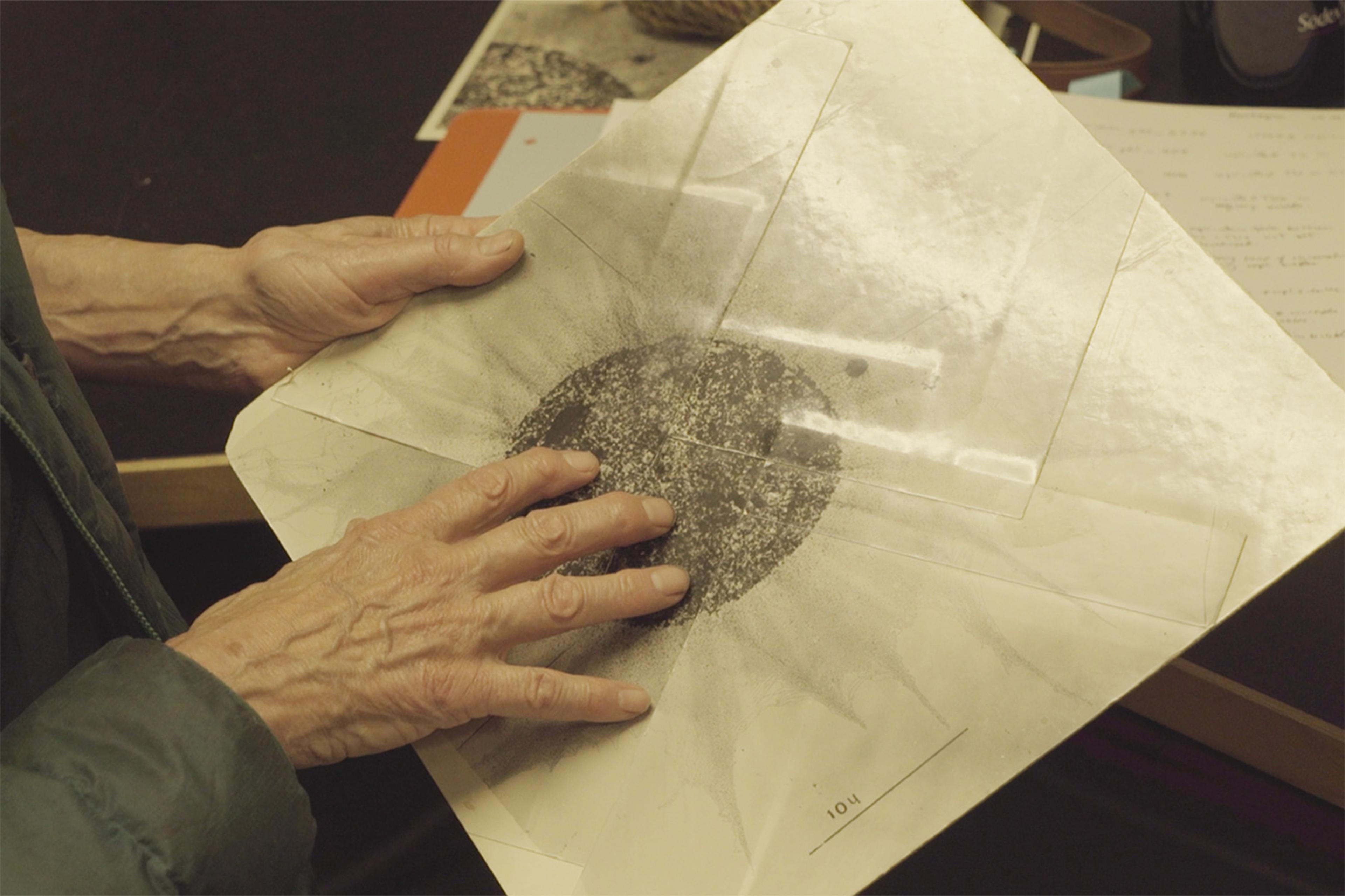
Cell negatives on a lightbox at Victoria Foe’s lab at Friday Harbor, San Juan Island, Washington State. Photo courtesy of Beatrice Steinert


is a developmental biologist, science and technology studies scholar, and artist. She is a Provost’s STEM Postdoctoral Fellow at Brown University in Rhode Island, US.


In the summer of 2017, two biologists set out for Denman Island in British Columbia, Canada, to build a house from scratch. This was not the first time. Years before, they’d built a cabin on the same 40-acre property, a cherished place of respite away from the lab. ‘We made the whole thing with almost no tools,’ Victoria Foe tells me with a playful, nearly mischievous energy. ‘We cut down the trees and made the joints.’ The only motorised device was a large drill the pair put in the refrigerator to cool down between driving dowel holes in the lumber. Foe, renowned for her precise studies of microscopic cells and embryos, debarked logs that would become the main framing posts. Garrett Odell, her life partner and close collaborator, designed the structure in a custom early CAD program he coded for Foe as a Christmas present.

But that summer things came to an abrupt halt. They had only just begun on the new house when Odell started feeling unwell. By October, he was diagnosed with aggressive liver cancer. ‘He died in May,’ Foe says. ‘It made the light go out in the world.’

For Foe, a developmental biologist, life and biology are intimately entwined, each motivating and deepening understanding of the other. Rather than turn her away from science, Foe’s grief pulled her back to an observation about the fragility of life she’d carried for decades, ever since the start of her PhD in the late 1960s.


Then a graduate student at the University of Texas at Austin, Foe was studying the shape of genes in milkweed bug embryos no larger than a grain of rice. Foe took embryos and burst their cells, releasing deoxyribonucleic acid (DNA) from nuclei, the inner compartments where genes are stored. After centrifuging this liquified material onto a microscopic grid, she coated it with platinum, forming a thin, heavy dusting of metal that would make genes show up under an electron microscope. In the resulting micrographs, she saw genes that were shockingly long, stretching to nearly 20,000 ‘letters’ of the genetic code built from four chemical bases labelled A, T, C, and G.

By the time Foe got her first glimpse of genes, the meteoric rise of molecular biology was well underway. This momentum was fuelled by evidence for the ‘central dogma’, which states that DNA stores the ‘code’ of life; that this code is transcribed into ribonucleic acid (RNA); and that RNA, in turn, translates the code into the chains of amino acids forming proteins.

Placing her own vulnerability within that of the living world, she was struck by the fragility of genetic material

First proposed by Francis Crick in the late 1950s, the central dogma of molecular biology was popularised in James Watson’s textbook Molecular Biology of the Gene (1965); there, Watson added that the information transferred from DNA to protein can flow only in one direction. The idea that DNA’s value lay solely in the proteins it coded for led, ultimately, to the realisation that the vast majority of DNA in our cells didn’t code for protein at all; this ‘non-coding’ DNA was thus considered dark matter, a nuisance tolerated by complex organic life for more than 2 billion years – probably since a retrovirus invasion lodged this extra material into our single-celled ancestors’ genomes. Biologists said it was junk.

But when Foe observed the enormously long threads of DNA back in Texas, she sensed there might be more to the story – but what? Placing her own vulnerability within that of the living world, she recalls being struck by the fragility of genetic material, two helical threads of nucleic acid that can be severed clean through every time the cell containing them divides. The more thread, the more opportunity for breakage, which is a cause of many cancers. In multicellular organisms such as humans, the genes inside our cells are much longer than they seemingly need to be. Of the 10,000 loops of DNA packed into 23 pairs of chromosomes (tight, spool-like bundles of genetic material) within nearly every human cell, only about 1 per cent is used to make proteins. If the expanse of our DNA exposes it to damage, Foe wondered, then why have we evolved this way? Far from ‘junk’, she proposes, the fragile stretches of non-coding DNA in our cells may enable our very existence.

Foe is best known for work she did in the 1980s at Friday Harbor Laboratories, University of Washington, charting where and when cells divide in the earliest stages of the fruit fly embryo – an organism that has anchored modern genetics. During the first two hours of the embryo’s life, its nuclei divide in lockstep. Soon, that unity breaks: distinct rhythms of division set in, with groups of cells falling into their own tempos as the embryo begins laying the foundation for different parts of the body to develop. The timing and locations of these dividing groups, Foe realised, were highly predictable. She detected this through meticulous observation of hundreds of micrographs, in which she stained every cell so its inner scaffolding was visible, and mapped these division domains in full-page spreads of colourful drawings and micrographs

.

Victoria Foe holding an electron micrograph collage of a nucleus with DNA spread at its edges. Photo by Beatrice Steinert, 2023

To work on this project uninterrupted by the usual demands of academic science – teaching, mentoring trainees, and managing labs with often enormous overhead – Foe, who did not yet have a faculty position, convinced the US National Institutes of Health to give her a personal grant. She has held fast to this model of being a biologist ever since. This commitment made space for an attention to her craft that has earned her Guggenheim and MacArthur ‘genius’ fellowships, among other accolades. Most importantly for Foe, it has kept her close to what she holds dear: ‘Making something beautiful is really, really important to me.’

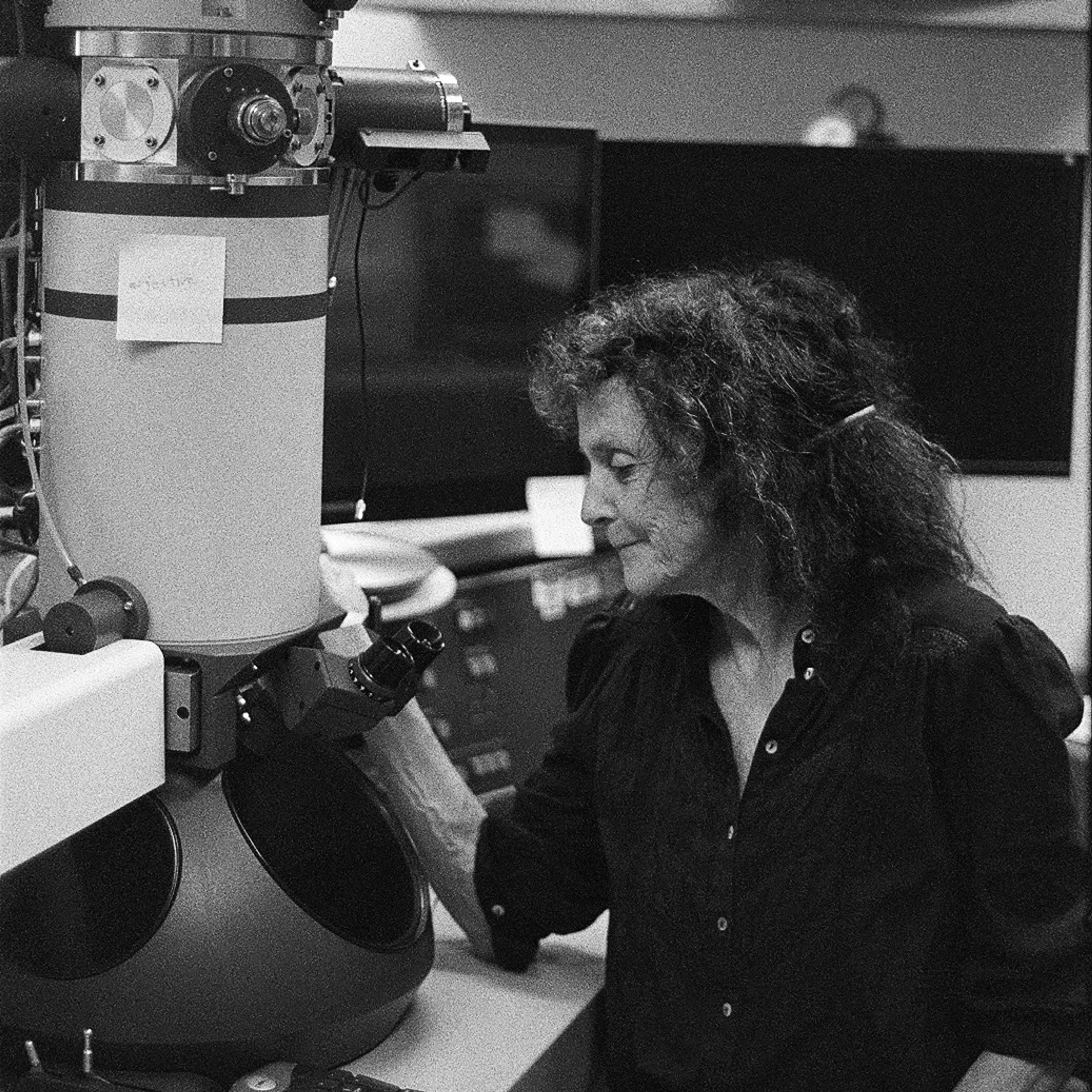
On a rainy early fall day, I meet Foe in her lab on the coast of Friday Harbor on San Juan Island, Washington State. For someone of her stature, she is surprisingly nervous, which I quickly realise emanates from her desire to be certain I completely understand the story she has to tell. She is wearing hiking boots and a light down jacket, attire equally suited for long days in the lab and walks with her dogs along the rocky northern shores of San Juan. Following Foe’s quick movement from the front room with a view of the San Juan Channel to the windowless back room is arresting. The walls of the space are covered with large prints of her micrographs and drawings, reminiscent of the elaborately illustrated wall charts that adorned 19th-century scientific lecture halls. Rather than the digital screens that fill most contemporary labs, negatives are spread out on lightboxes. The centrepiece of the room is Foe’s towering electron microscope that she refers to with the endearment of an old friend.

‘This is a nice one,’ she says with tenderness, ‘it’s laid out nice and relaxed, not pulled or under tension’

Foe’s interest in embryonic cellular rhythms originated in her graduate work imaging the architecture of genes, a practice she has returned to in the past decade, now using fruit flies as her model organism. After chemically fixing fruit fly embryos – freezing them in time – she spreads open their nuclei and coats the resulting tangle of genetic material with platinum. She then loads the preparation onto the electron microscope and begins looking for patterns. She can spend up to a month observing a single embryo. Kept company by audiobooks, Foe spends hours on end detecting the looping and branching forms that appear when genes are actively being read to produce RNA during development. When she finds something interesting, she begins imaging it piece by piece to collage together an expanded field of view.


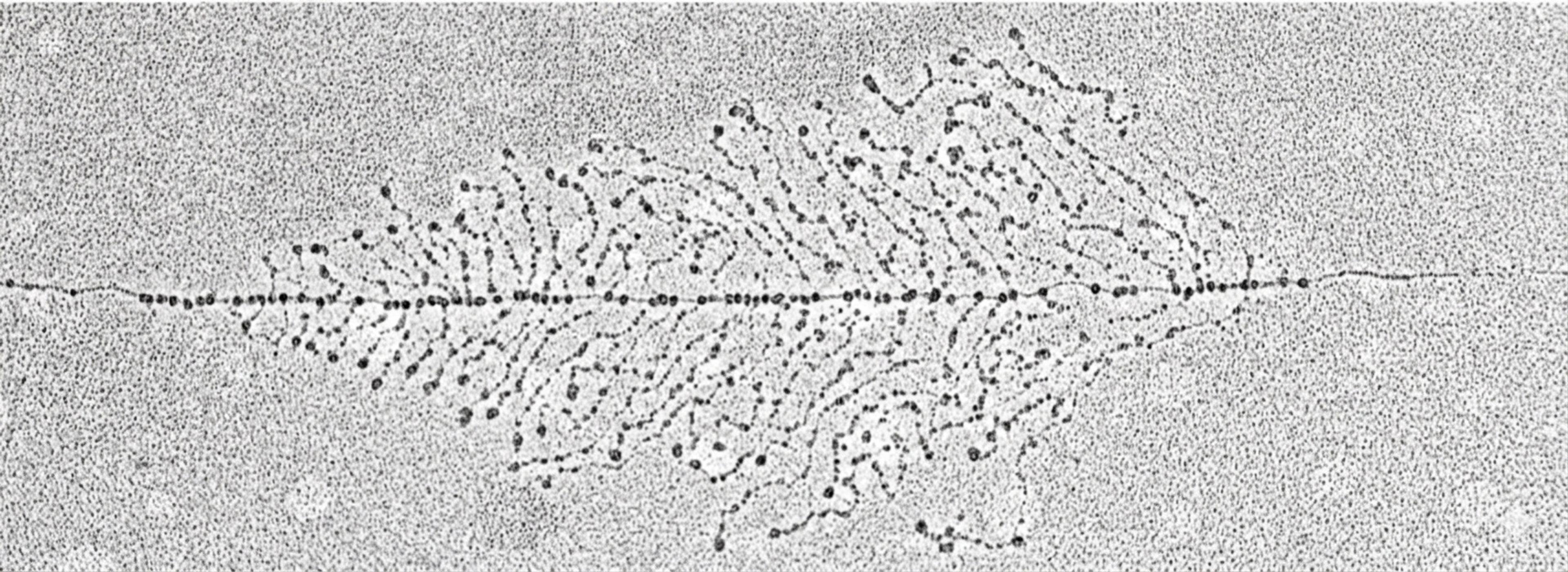
Electron micrograph of a fruit fly (Drosophila) gene. Courtesy of Victoria Foe

At the microscope, Foe pulls up one of her micrographs to show me. ‘This is a gene,’ she says, gesturing to a five-micrometre length of thread. The gene she encompasses with outstretched fingers has been dislodged from the nuclear tangle just enough to reveal its shape. ‘This is a nice one,’ she says with tenderness, ‘it’s laid out nice and relaxed, not pulled or under tension.’

Delicate branches extend perpendicularly from the base of the gene. These are nascent fibres of messenger RNA, built base by base from the underlying DNA template. Higher up, the branches lengthen, reaching out with knotty twists and turns. Foe points to the specialised proteins – called spliceosomes – encrusting these branches that cut away non-coding stretches from the newly transcribed RNA and stitch the remaining pieces together. The result is a cleaned-up message, an RNA transcript ready to leave the nucleus and travel into the rest of the cell, where it can be used to make proteins. These mature transcripts, Foe says, ‘get to the end, fall off, and off they go.’

As a graduate student, Foe hand-traced images like these to unspool them into meaningful parts, laying a foundation for our current understanding of how genes function. What she found was that there were distinct locations where DNA-to-RNA copying began and ended, bounding what she called a ‘transcription unit’ – the entire stretch of DNA that was transcribed – or rethreaded – to activate it. Foe noticed in her drawings, published in Cell in 1976, that most of the transcription units had the same undulating architecture: small branches near the start site, followed by long ones, and ending with RNAs that were much shorter than the full length of DNA from which they were made.

Milkweed bugs, it turned out, were no exception. Over the decades, biologists found long transcription units – more commonly called genes – in species after species. Many of these genes are studded with introns: stretches of DNA that are copied into RNA only to be cut out before proteins are made from them. In humans, this genetic extravagance is taken to an extreme. The largest human transcription unit spans more than 2 million base pairs and would take at least 17 hours to transcribe.

As these discoveries were being made, biologists considered the system grossly inefficient. For many of Foe’s colleagues, she recalls, ‘that this non-coding stuff was being read into RNA seemed metabolically incredibly wasteful’. Together with other non-protein-coding stretches, the introns that make genes such as our own so long were called ‘junk DNA’ because they didn’t appear to contribute anything meaningful to an organism’s biology.

‘But it makes a lot more sense when you can understand that it’s a timing mechanism,’ Foe tells me. Her latest paper, published in 2022, distils a lifetime of work synthesising how gene activation and cell division are integrated to create wings for flying or finely branching roots for absorbing nutrients from the earth. Foe argues that the degree of complexity in a multicellular species depends in part on the choreography made possible by the length of their genes, including their introns. Embedded in the rhythm of cell division, these extra stretches of transcription add a layer of time – one that helps make room for elaborate body plans and dynamic nervous systems.

Inheritance can look beautifully straightforward – until you ask how genes actually contribute to making organisms. Gregor Mendel – the 19th-century Austrian monk who helped inaugurate what the historian of science Evelyn Fox Keller called ‘the century of the gene’ – caught nature at its most cooperative. When he crossed pea plants of different heights, the outcomes were a crisp, teachable ratio: in the next generation, roughly three-quarters of the offspring were tall and the remaining quarter short. Plant height, Mendel reasoned, had to come from a discrete factor – something passed from one generation to the next and shuffled according to simple combinatorial rules.

That tidy calculation offered a dream of biological clarity. The simplicity of Mendel’s scheme allowed him – and then a century of 20th-century biologists – to begin naming heritable factors that, to a certain degree, set the range of forms an organism can become. But the deeper researchers looked, the more Mendel’s clean, straight-line causation began to fray. In complex life, the same genes can lead to wildly different outcomes – not because the DNA changes, but because the use of DNA within cells changes.

In 1961, the molecular biologist Jacques Monod proclaimed that ‘anything found to be true of E coli must also be true of Elephants.’ While this holds true for the basic DNA-to-RNA-to-protein logic of genetics, it loses meaning in the context of development. In eukaryotes – which include multicellular plants, animals, and fungi – traits seldom emerge from a lone gene acting like a switch, as operates in the bacteria E coli.

As an organism of one cell, E coli, a prokaryote, has only a single copy of its genome propagating signals throughout its body. An adult elephant, in contrast, has more than a quadrillion cells, nearly all of which house its own set of every gene in the genome. It is not just that genes, or specific sequences of DNA, are strung together (a staggering number are shared across the tree of life) but – even more potently – when, where and to what degree they are set in motion in cells that makes the difference. Starting from a single fertilised cell, the single-celled embryo, cell divisions gradually expand and sculpt multicellular bodies. As development flows from one moment to the next, cells take on new behaviours and identities that are initiated by interacting collaborations of genes and cellular processes: bone cells begin secreting minerals to counter gravitational forces, neurons make connections at their synaptic junctions, and heart cells electrically pulse in unison to disperse oxygen. An ultraprecise mechanism is needed, then, to bring on each gene in the right place and at the right time in a constantly transforming multicellular landscape.

In the 1950s, the organism was viewed as a one-dimensional machine to be decoded

The length of genes, their physical presence in the cell, Foe proposes, acts like a molecular clock – a built-in timer that tunes exactly when, whether and how much RNA – and ultimately protein – is made during a given cell division. The moment of division is key. During development, cell division is not simply growth; as cells divide, they also frequently change identity, turning different genes on and off so that one cell becomes muscle, another nerve, another bone. Those identity shifts depend on bursts of RNA production that precede the making of proteins.


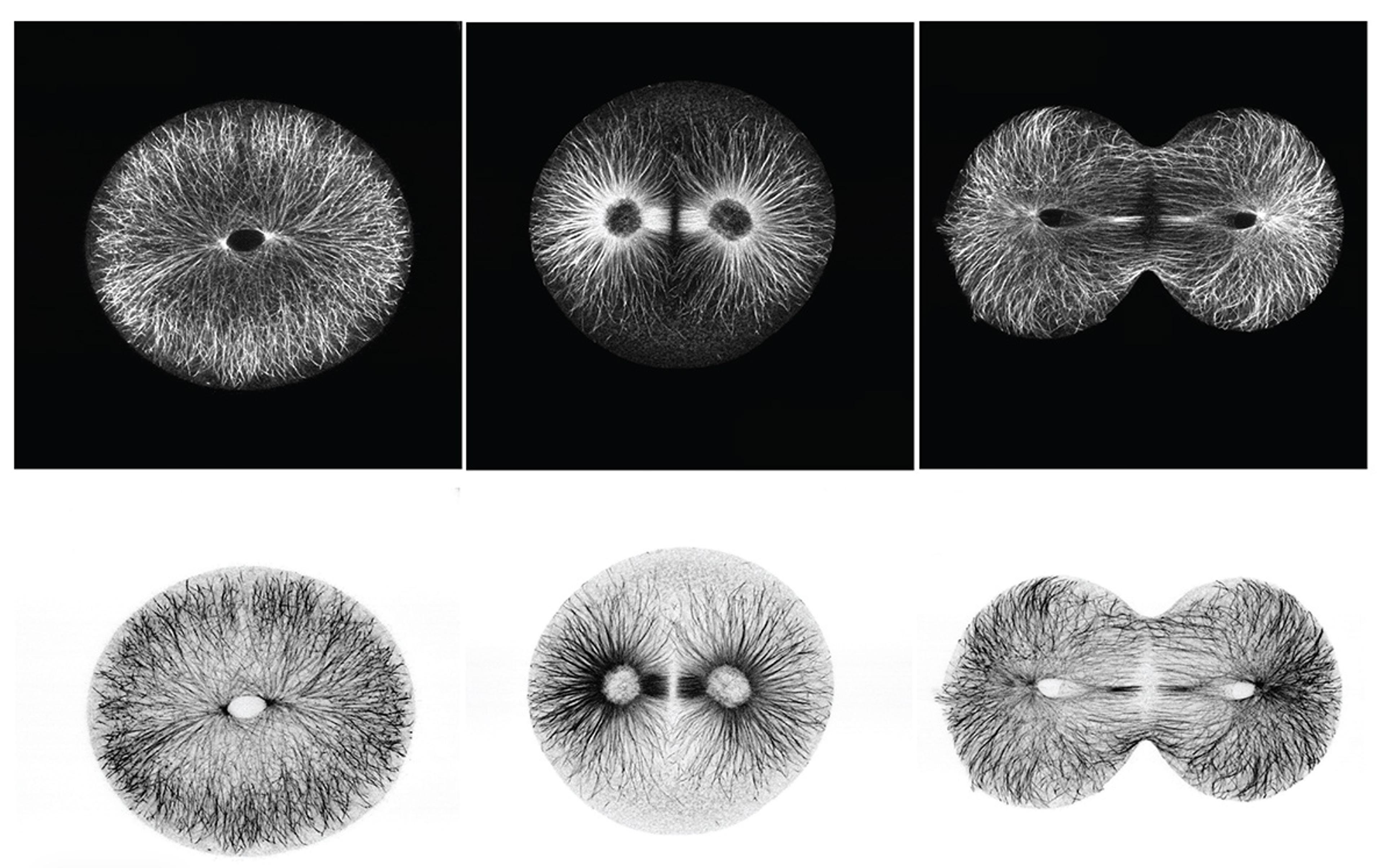
Strongylocentrotus droebachiensis (sea urchin) cell-division series, 2008. Courtesy Victoria Foe

The reason gene length can function as a timer is built into the ins and outs of cell division. Every time a cell divides, it has to package its DNA for safe distribution. To do that, it condenses the DNA within its nucleus into chromosomes that can be moved and evenly divided between daughter cells. As the genetic material is packed for division, RNA polymerases – enzymes that move along genes, reading the code and building an RNA copy – are knocked off the DNA. RNA construction thus grinds to a halt. The timing of this intricate process, known as the cell cycle, is itself variable and carefully controlled.

In fruit flies, for example, the hormone that initiates metamorphosis floods the larval body in a punctuated pulse. Multiple genes involved in this dramatic transformation from ground-crawling to flying life await their cues. But even after the signals come, beginning the process of transcription, it takes time to assemble the required RNA nucleotide by nucleotide. If a short gene takes five minutes to be copied, its RNA will appear on the scene swiftly and in copious amounts during a two-hour cell cycle. A longer gene unit full of DNA that needs to be cut out, however, will be finished only by the very end. If a gene is extra-long, its transcription will be halted midway; its RNA message will be finished for protein translation only in cells with a longer cycle. Once the cell has split in two, the clock resets.

This finding exposes the limits of a century of biological thought – not just the simplicity of Mendelian genetics, but also a Cold War impulse to recast genes as circuitry. As the historian of science Lily Kay has documented, beginning in the 1950s, computational metaphors became the bread and butter of molecular biology; the organism – at first, mostly viruses and single-celled bacteria – was viewed as a one-dimensional machine to be decoded.

We are not merely machines governed by switches, Foe suggests, but dynamic matter

By the 1970s, developmental biologists had expanded this framework into multicellular beings, elaborating the linear diagrams of Monod and his colleagues as they experimentally parsed gene regulatory networks (GRNs), cohorts of genes with the ability to turn one another on or off among groups of cells. Abstractions of a kind of information flow, these diagrams eclipse the physicality of the cellular milieu in which genes are made meaningful.

The informational gene has held enormous sway in the life sciences over the past half-century. DNA as ‘code’ – as if life could be read from a single text – proved a profoundly seductive idea, one powerful enough to reshape institutions as well as research agendas. In the mid-20th century, biology departments split along these lines, as molecular biologists, led by figures such as James Watson, pursued the logic of genes as information, while other biologists remained focused on organisms, development and evolution.

Explanations centred on ‘master’ genes became especially compelling. Technologies built around isolating, sequencing, synthesising and editing DNA transformed what counted as experimental progress, making it straightforward to remove or amplify a gene and document the discrete changes resulting from that perturbation. In fact, this strategy has been extraordinarily productive; the volume and speed at which genetic data is published continue to expand at a breathtaking pace. Even the recognition that genes operate within complex regulatory networks did little to dislodge the deeper assumption that biological meaning resides primarily in information coded in DNA sequences.

Foe’s work presses against that assumption. Genes are not only messages but material entities embedded in time, subject to interruption, constraint and decay. Living systems, especially those of multicellular organisms, cannot be understood solely as circuitry or code. Instead, development unfolds through the physical realities of our molecular building blocks, colliding, being halted, and beginning again. We are not merely machines governed by switches, Foe suggests, but dynamic matter – sensitive to our surroundings, vulnerable to damage, and open to transformation.

When I first learned about Foe as an early graduate student, I was still immersed in the distancing ethos of most of biology. Against this backdrop, I was instantly captivated by her sense of deep interiority, and her work grabbed me with a force I had never experienced from scientific literature. In an age when scientists strive for efficiency, Foe’s papers are long and lusciously dense. They are also by contemporary standards unusually visual, with clear and detailed images often laid out in full-page spreads. Her presence jumps out in every turn of phrase, particularly in her methods sections, which elaborate her mastery in wrangling the smallest of living beings under the microscope.

Foe’s trajectory has been unique, especially as a woman who began her scientific training in the 1960s and is a lifelong women’s rights and antiwar activist. ‘I did not have in my mind that I wanted to be a scientist,’ Foe says when I ask about her early years. But the British education she received living abroad as a teenager seeded her interest in biology when she began as an undergraduate at the University of Texas at Austin. Supported by a US mandate to invest in science during the Cold War, she received a prestigious fellowship for graduate school. She began a zoology PhD in 1968 but immediately had trouble finding an advisor. At universities across the country, Foe recalls, ‘the assumption was it’s just not worth training women because they’re going to get married and they’re going to get pregnant, in some order.’ It was obvious to her that access to birth control was essential for increasing equity in science. Along with her lab-mate Judy Smith, one of the only other women in her department, and another student, Barbara Hines, Foe started a birth control information centre near campus and went on to be involved in the state legislative work that would give rise to Roe v Wade.

‘Once you get into [it], there’s just one more delicious puzzle after another’

It was during this time of upheaval across the US that conflict began to emerge in university biology departments, including Foe’s, over whether or not DNA was the prime mover of life. Departmental infighting is what caused her PhD advisor to move to the University of Washington. Foe eventually followed him there so she could finish her degree, driving from Austin to Seattle in a rickety purple VW Beetle she borrowed from an ex-boyfriend. After a stint in San Francisco, where she first began working on fruit fly development at the University of California, Foe returned to the Pacific Northwest in the 1980s. She took up residence at Friday Harbor Laboratories, a nature preserve and marine research station on San Juan Island, where she has remained ever since, adding studies of myriad marine embryos to her zoological repertoire


Victoria Foe at her electron microscope. Photo by Beatrice Steinert, 2023

In several respects, Foe’s work and career resemble that of an artist even more than a scientist. On her research webpage she writes: ‘My favourite research instruments are my eyes.’ Her work is forwardly descriptive and relies on the same observational and spatial skills of visual artists. While descriptive morphological studies are regarded by many biologists as a lesser way of knowing – well below the rigour of molecular experiments – they are in fact, as the historian of biology Soraya de Chadarevian has argued, the foundation of modern life science. Also like artists, Foe embraces her subjectivity. Much of modern science is about conformity: scientists strive to cultivate the look and sound of removed authority, especially in their publications, because that is how they maintain credibility. In The Politics of Women’s Biology (1990), Ruth Hubbard – the first woman to be tenured in Harvard’s biology department – writes that ‘scientific writing implicitly denies the relevance of time, place, social context, authorship, and personal responsibility’. Foe has largely disregarded these norms, putting herself – her style, her ‘I’ in her writing, and her valuing of visual aesthetics – unapologetically into her work.

When I posit Foe’s work as art to her, she seems somewhat uncomfortable with the proposition, even while her image-adorned lab around us suggests otherwise. I sense this stems from the wedge driven in the past century between art and science; also, at least during Foe’s formative professional years, a whiff of her artistic inclinations would have detracted from her being seen as a serious scientist. Being a woman scientist, or a woman artist, itself was hard. A woman artist-scientist? Too many boundaries crossed. I also gather, however, that Foe doesn’t think much about how her work is categorised by others. Her primary motivation comes from within. ‘I got into science because an opportunity was made available to go to school. And then once you get into [it], there’s just one more delicious puzzle after another … It’s just so intoxicating understanding how the world works, what life is, you know. Who wouldn’t want to study that?’

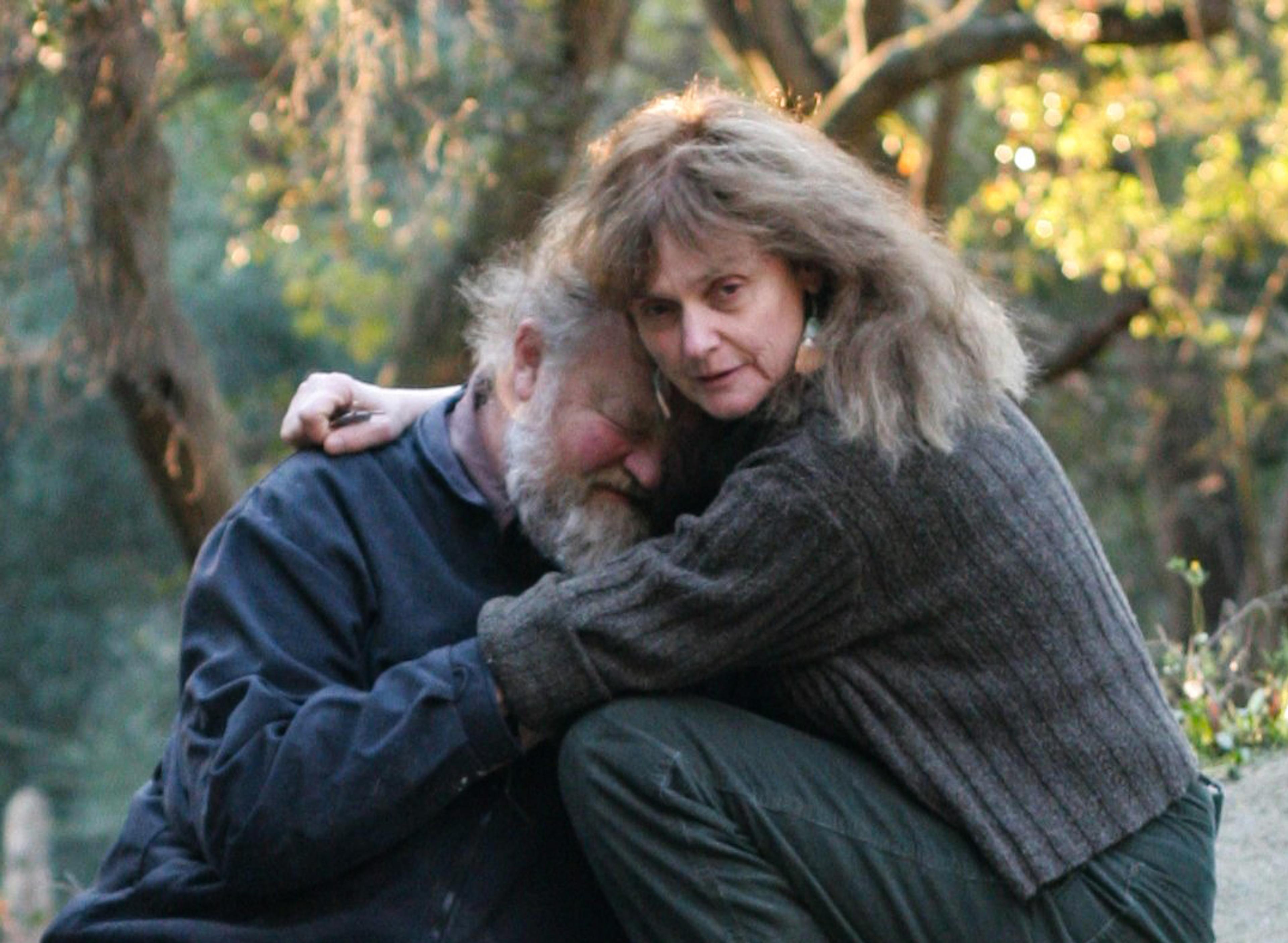
When I first searched for Foe online, I found an image of her and Odell in an embrace. They are crouched on the ground, surrounded by sun-raked trees. Their arms are slipped into one another’s sleeves, and their similarly textured hair entwines as Foe’s cheek rests on Odell’s forehead. This photograph accompanies the Friends of Foe webpage that raised funds for Foe to finish the research she stepped away from while caring for Odell when he got sick. It poignantly captures the price of complexity, of winding entanglement with the world. Present in this snapshot is the possibility that life brings – of beauty, love, companionship – but also the chance that it can unravel.


Garrett Ode
ll and Victoria Foe. Courtesy of Friends of Foe Fund, University of Washington

Foe and Odell first met at Friday Harbor in the late 1980s, soon after Odell was recruited by the University of Washington zoology department. Trained as a mathematician who began his career at the Rensselaer Polytechnic Institute in New York, Odell’s fascination with how molecules create organisms drew him into biology. His early work on mathematical models of emergent behaviours – ranging from insect predator-prey interactions to cytoplasmic streaming in slime moulds – anticipated the rise of systems biology and the computational simulation of biological processes at the turn of the 20th century. Odell was an equally gifted builder; upon meeting Foe, he set to work making her a microscope so she could film and track the oscillations of cell division in fruit fly embryos. Working together at the Center for Cell Dynamics at Friday Harbor, an interdisciplinary initiative that Odell would go on to direct, the two continued to collaborate closely. Among other projects, they constructed an experimentally validated mathematical model of how cytoskeletal fibres called microtubules are assembled to provide the scaffolding for a cell to divide.

Every time a human cell cycles, its genome can suffer 10 to 50 double-strand breaks – snapping the DNA helix clean through. When two breaks occur on the same chromosome, large stretches of DNA can be rearranged – or even fail to make it cleanly into a daughter cell – when the cell divides. Given this peril, our cells – and those of other multicellular species – have evolved exquisite mechanisms for DNA repair. Yet repair is not the same as restoration: these molecular toolkits can make mistakes, stitching together the wrong ends or reinserting fragments in the wrong place in the genome. Unlike point mutations, which alter DNA in small, local increments, double-strand breaks can rewrite the genome on a much larger scale. The nearly one-half of the human genome that is contained within genes – with some verging on the size of entire bacterial genomes – is at risk of break and misrepair.

Over the course of a lifetime, there are trillions of opportunities for the carefully timed rhythms in our bodies to break down. These vulnerabilities drive ageing and cancer by triggering cells to proliferate at the wrong time and place. ‘My husband’s death from cancer highlighted for me how it is that individuals die very often of damage to their genomes. They don’t die of something mechanical first,’ Foe tells me. But, she wonders, ‘why don’t we pass cancers on to offspring, or very rarely do?’ Given the fragility to which complexity has exposed our genes, Foe realised, there must be a way of preserving our bodies’ mind-bending intricacies. Somewhere between one generation and the next, there must be a checkpoint: a way to refuse broken instructions, to keep genetic inheritance intact enough to build again.

Organisms need a way of recognising one another to ensure they mate with the correct species

Sexual reproduction is one answer to that problem. Within all sexually reproducing species, a special kind of cell division called meiosis produces the cells – and the genetic material – that will be passed on to the next generation. During meiosis, each pair of chromosomes within the cell must first find each other and lock precisely together. In an elaborate dance of connection that can take several days in animals, and weeks of sloshing and jiggling in plants, the matching chromosomes zip themselves together until their DNA threads are aligned and bound together by a biological ‘glue’ called the synaptonemal complex.

If either chromosome is missing genes or has a chunk of DNA in the wrong place due to break or misrepair, the cell in which it resides is fated to die. Only chromosomes with aligned sequences can come apart again and partition into daughter cells that will become spores (fungi), seeds or pollen (plants), or eggs and sperm (animals).

This molecular embrace – called the pachytene checkpoint – has had an enormous impact on the evolution of life over the past 2.5 billion years. Crucially, Foe proposes, it keeps genetic timing mechanisms that maintain our cellular rhythms intact across generations. The pachytene checkpoint also explains why it is that closely related species, even when they can physiologically mate, produce offspring that are sterile; the DNA rearrangements that distinguish species, even when minor, trip the checkpoint during meiosis, preventing reproductive cells from being made. Species recognition is thus essential for survival. In dense ecosystems, such as the canopies of tropical rainforests where birds and insects fly en masse, organisms need a way of recognising one another to ensure they mate with the correct species and produce fertile offspring. Rather than a signal of fitness, Foe argues, the elaborate plumage of birds of paradise or the courtship dance of bowerbirds have evolved as wayfinding signals.

Like all things in life, the pachytene checkpoint is not 100 per cent effective. Things slip through, allowing organisms to adapt to changing environments and, Foe reasons, new species to emerge. Every once in a while, a break and misrepair will relocate a piece of DNA containing intact genes particularly relevant to the moment. By chance, this genetic shuffling escapes the ancient choreography of chromosomal aligning and checking during meiosis, and gets passed on to the next generation. This rearranged DNA tunes cellular rhythms, both posing a threat to fertility yet setting new boundaries for an organism’s capacities. ‘Say you’re a sand dune sunflower,’ Foe says, gesturing to the world outside the lab. In this flower, inherited misrepaired DNA has allowed its roots to become longer and its body more resistant to temperature fluctuations. It’s a hot summer and most sunflowers are making their way on the shady side of the dunes where the ground is consistently cooler. But the shuffled flower is thriving in the front. ‘Say there’s a couple of hot summers like this. Even though it doesn’t reproduce as well, it may gradually be able to establish itself.’ Having slipped through a protective mechanism, this flower gradually establishes a proto-species, one better adapted to its environment. The checkpoint then kicks back in to keep it, and its offspring, reproductively separate from parental species, carving a new evolutionary path.

Foe sees this latest work as an antidote to the long divide between molecular biology and whole-organism thinking, carrying us from the nucleus’s intimate mechanisms to evolution’s expansive sweep across the space and time of living forms. Only a broad view, she believes, can make sense of how complex life works. The lengthening of our genes, the enmeshing of temporality right into their fibres, made them vulnerable to potentially catastrophic damage. Dealing with this vulnerability has had magnificent side effects: ‘Here we are in the middle of this absolutely extraordinary planet and all of these creatures, and here’s a mechanism that just drives diversity. It drives beauty. We wouldn’t be here if it weren’t for that,’ Foe says. And as for biologists, ‘it’s been too long that you haven’t been talking to one another.’

The last time I spoke with Foe, she was preparing for the journey from San Juan to Denman Island, where she plans to move full time. The house is not yet finished but is liveable. It needs only, she tells me, a small utility room for firewood, tools, and a table for making botanic block prints inspired by the years her family spent in Mexico during her childhood. ‘Why block prints?’ I ask. To which Foe responds: ‘I like their aesthetics. I like the boldness of the region.’

For her next chapter, Foe wants to live simply: ‘I’ve got my garden planted except for beans and squash. I love having a garden again.’ For Foe, gardening is another way into the marvel that ‘you can have a seed, and it’s got all the information needed to make this huge, amazing plant.’ She wants to spend her remaining time planting and pruning as a way of ‘celebrating what it means to be a creature on this planet’. When I enquire what will become of her microscope in Friday Harbor, Foe seems ready to let it go. It’s not working properly, and she is unsure if she wants to repair it. ‘It could be a blessing in disguise,’ she admits reluctantly. ‘The truth of the matter is I just love looking down it and asking things, but I’m extremely happy on Denman Island.’

When not tending her garden, Foe’s priority will be getting the word out about genetic fragility and her hypothesis about the solution millions of years of evolution have wrought to protect the complexity of life. This project’s current form, an extended exposition in the journal Integrative Organismal Biology, is up against the reduced attention spans of modern readers. Foe’s prose resembles that of historical synthetic monographs such as Charles Darwin’s On the Origin of Species (1859) or D’Arcy Wentworth Thompson’s On Growth and Form (1917), which bore down on details over hundreds more pages. But in our fast-paced digital age, few scientists want to attend to long explanations any more, even when the intricacy of the things being described demand them. Foe is trying to break up this transformative story into digestible bites, but I can sense that it pains her to do so. Her other challenge is that the independent path she chose means a younger generation of biologists is largely unaware of her. Her focus has been on the work itself, cultivating life in and outside the lab, and not the scientific seminar or conference circuits.

The person Foe most wants to tell her story to, however, is Odell: ‘One of my greatest sorrows is that I never got to tell him what I think the answer is.’ As she envisions the ability to do so, she smiles and her whole being brightens: ‘He would’ve been delighted with it.’