Friday, October 31, 2025

First outdoors exoskeleton puts real power in your stride


Something that apparently works.  Its value will surely be optimizing a users actual gait which is no minor issue.  I know that the right gait makes walking uphill easier than walking horizontal or downhill.

Getting that right means minimizing energy wastage and extending range.  how about folks having neural issues leading to balance probnlems  amoung the elderly.

Definately better than a wheel chaitr.


Review: First outdoors exoskeleton puts real power in your stride


October 26, 2025

It makes running up hills feel a lot lighter on the legs

https://newatlas.com/outdoor-gear/hypershell-exoskeleton-pro-x/


The Hypershell Pro X exoskeleton might be the closest we'll get – in this age, at least – to being able to instantly tap into a type of superpower, and once you've experienced it, it's hard to go back to just using the legs nature gave you to.


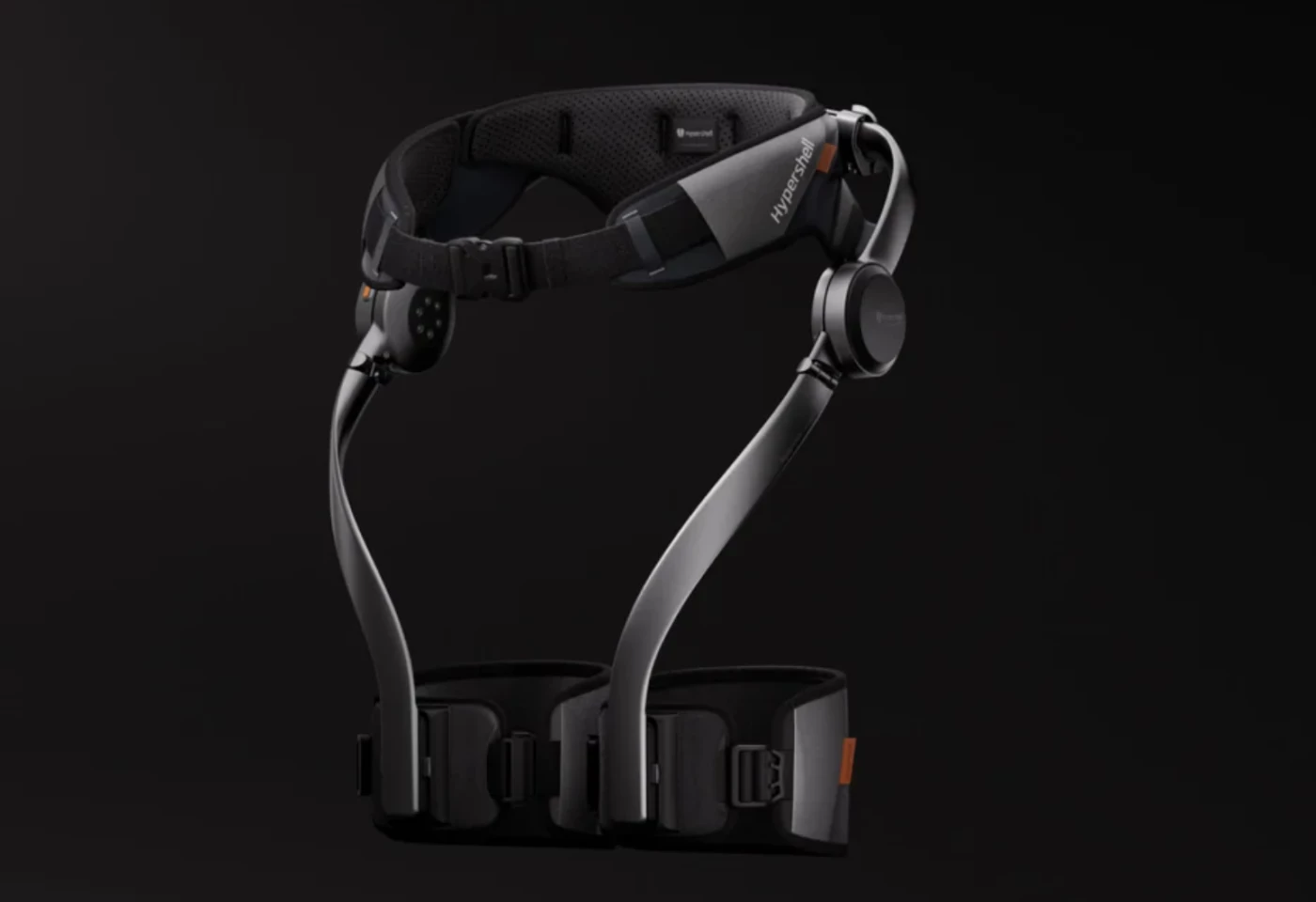
At first glance, the Hypershell Pro X looks like high-end hiking gear, but the moment you strap in and turn it on, you see that it’s technology built for a future where hiking harder, running longer distances or carrying heavier loads doesn't mean putting in the work to manage it on your own.


The Pro X is an AI-powered exoskeleton with an 800-watt output, 10 different modes – walking, race walking, uphill, downhill, up/down stairs, gravel hiking, cycling, running and mountain trekking – and a sturdy but lightweight frame at 4.4 lb (2 kg), excluding battery.


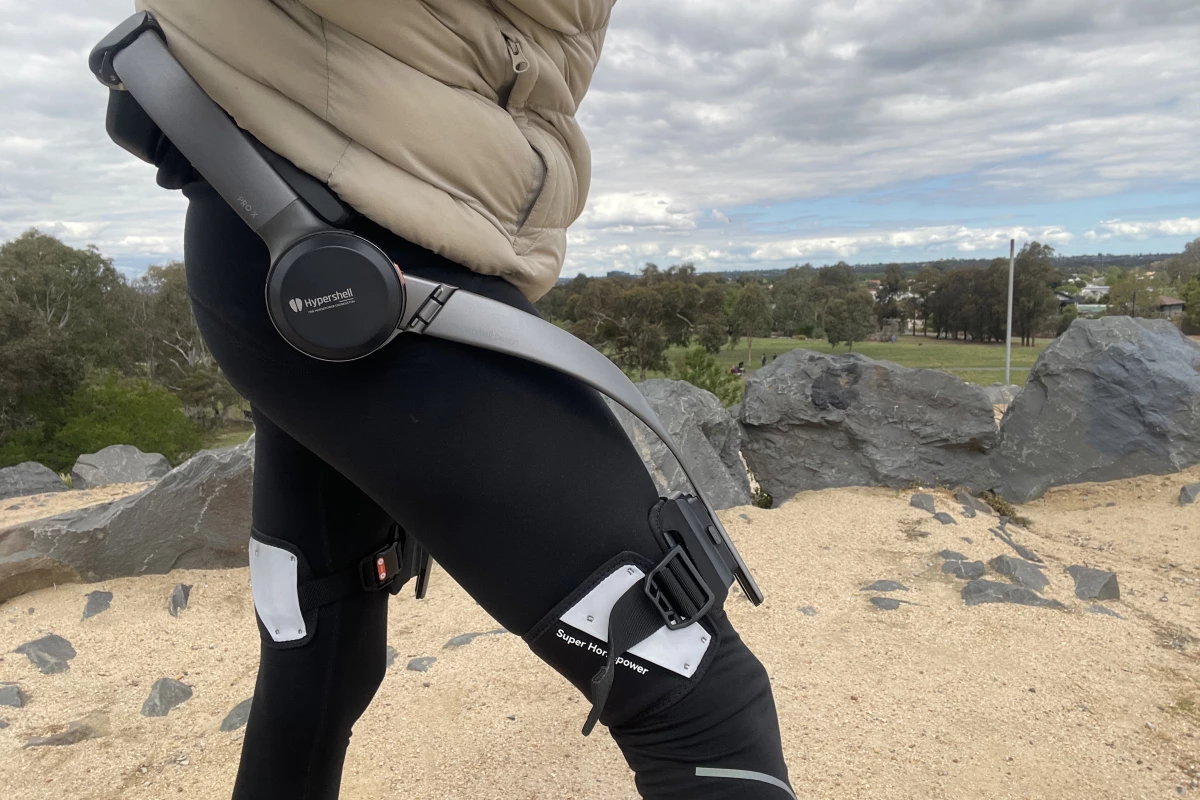
While the Pro X is a noticeable piece of wearable tech, you get used to being out in public with it
Hypershell

Unpacking it from the handy carry case it comes packed in, the exoskeleton looks slightly intimidating, however once you strap yourself in, the accompanying app walks you through adjusting the equipment for your build and height, to ensure a comfortable fit. Hypershell says it should fit around 80% of people, and at about 5ft5 (169 cm) and with a reasonably slim build, it was never going to be an issue with me. You do feel the weight of it when strapped in, so it's important the hip joints are properly adjusted. Then, excellent padding on the back of the Pro X, which also houses the removable battery, provides great support. Overall, it doesn't feel at all as cumbersome on as it appears it might be when you're holding it out of the box.


Now, I have to admit, I was maybe even more intimidated by using the Pro X. As someone who has been running, kickboxing and cycling regularly for decades, my natural limbs seemed a little resistant to hand over some control to this foreign contraption that promised to assist in a range of movements. And at first the exoskeleton does feel quite alien, even though it's incredibly comfortable and not all all restrictive. At first you can expect to walk in a slightly exaggerated way – a little like a half-robot marionette – until you get more of a hang of it (and a hang of the settings and intensity).

The app (iOS, Android) allows you to override the AI activity sensor and choose just one mode – cycling, for example – but I found it was intuitive enough to switch between running and walking, uphill and walking, and cycling and walking the bike that it becomes easier to put the phone away and control everything from the Pro X itself. That said, everything on the model is controlled by a single button, and different LED colors and dots represent modes and levels. The sensor's 2-ms response time ends up being faster than manually switching between activities on the app, too.
Unlike some apps paired with devices and gadgets, the interface and control on this one are exceptional, and it offers extra metrics like battery, speed and distance, plus easy updates to firmware (however, you'll need to be strapped into the exoskeleton for the updates to come through).


The control center to operate the Pro X when not on your phone
New Atlas

The modes are Eco, Hyper and Transparent, and it does take a bit of learning to hit the right button combination to switch between them – I kept double tapping, which instead increased intensity by a level each time. Eco mode offers a gentle support for more everyday activities like walking or covering slight inclines, while Hyper definitely takes things up a notch for running or steeper climbs. The higher the level of support, the trickier it is to walk 'normally' – which is why it's best to then switch into Transparent, which pauses the power to let you take all the control back. Overall, the Pro X offers up to 32 Nm (23.6 lb.ft) of torque – but you won't be pushing it to its limit often – and delivers 12.4 mph (20 km/h) speed assistance.

The makers claim that the Pro X helps to redistribute weight and effort in order to reduce strain on knees, hips and ankles, especially when carrying a load. I definitely felt the help going up steeper inclines, which I could even switch into a run and cover pretty easily without the usual exertion. However, running or walking at pace at an incline on a treadmill didn't necessarily change how much effort my body was putting into the movement – if heart rate is anything to go by. That said, I'm very active, running up to 15 miles (24 km) and walking a good 50 miles (80 km) a week, so it may benefit someone with less endurance power more. It did, however, seem to improve my posture when activated, keeping my lower back braced in position better than my clearly not-great natural mode – and this helped to feel like the exoskeleton was supporting me, more than me carrying it along.
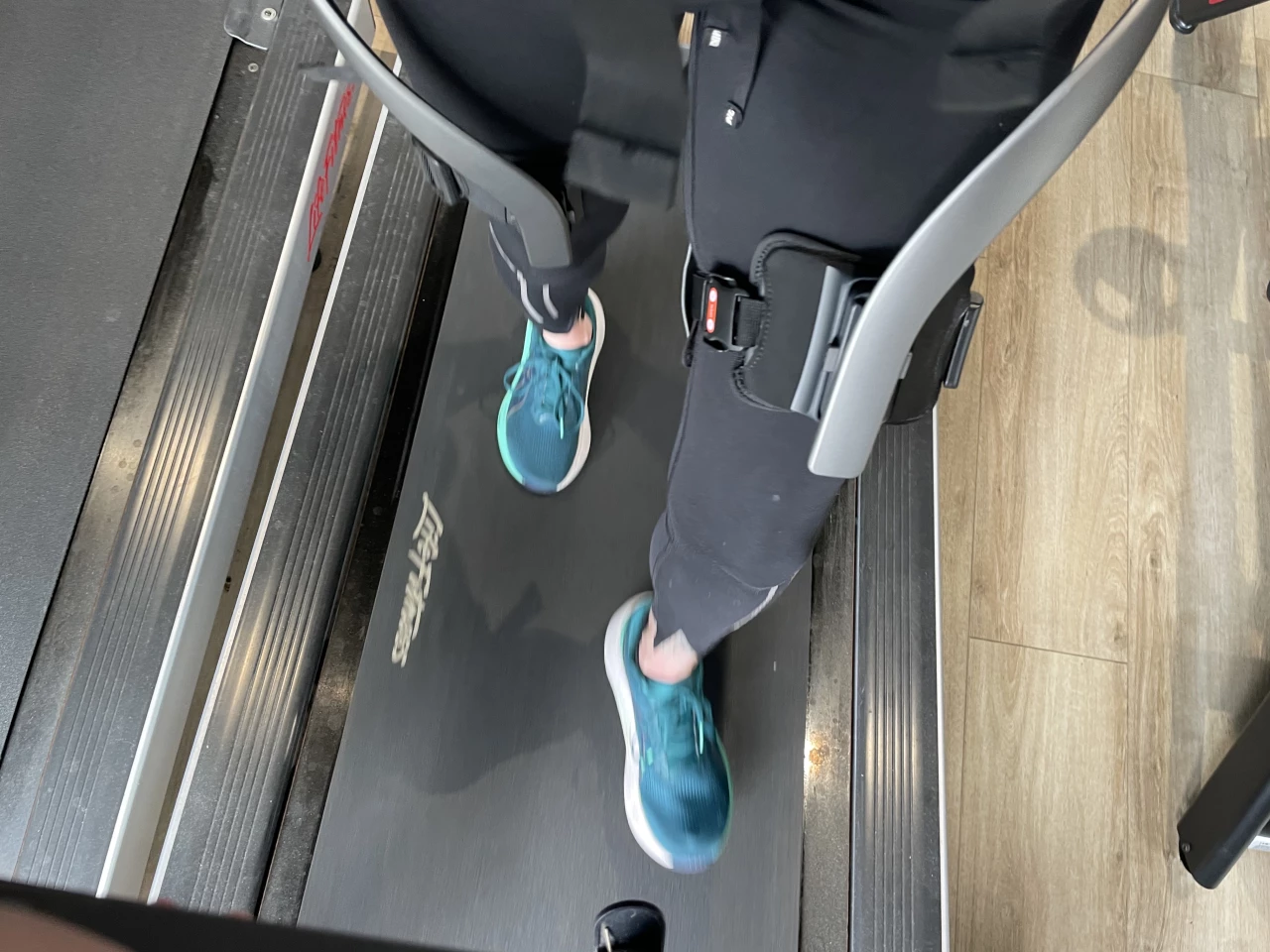
Going for a trot on the treadmill – which took some getting used to
New Atlas

And it does seem to lighten the load on joints. I have a temperamental ankle due to a triple break a few years back, and the Pro X certainly feels like it's taking some of the pressure of it when undertaking lengthy repetitive movements. The exoskeleton pulls your legs up, which creates momentum, but you'll certainly still feel a workout in your hamstrings on lengthy inclines. Hypershell claims the Pro X offsets 66 lb (30 kg) of weight, though it's a little less in reality given the extra load of the device itself.

When not in use, the exoskeleton folds down to around 16.9 x 10.2 x 4.9 in (430 x 260 x 125 mm). It won't slip into small backpacks, but it could squeeze into my medium-sized everyday pack without too much trouble. Which means it's also fine for airline cabin bags, if you don't want to port it around in its own carry case. One issue, though, is that if you don't have a dedicated charging station, you'll need to plug the USB-C cable into the whole exoskeleton, not just the battery. So even if you have swappable batteries, you'll need to have both charged up on the device before packing the spare in your bag for later.


The Pro X comes with two battery packs that are easy to switch in and out
Hypershell

Speaking of batteries, the Pro X promises 800 W of power over 10.1 miles (17.5 km) per charge, but there's a lot of variability in that depending on what mode you're using. After a few hours, the battery loses about a third of its charge, so you'd want a backup unit if you're planning on using it for more than about 8 miles (13 km). Hyper mode is a lot of fun, but will drain the battery fastest, so Eco should be the go-to mode for endurance. Charging to full from flat also takes some time – around 88 minutes – so a backup battery is recommended.

Now, the padding will get sweaty if you're hiking hard or in warm weather (not an issue in Melbourne, Australia during spring). The padding is removable for washing, however, and the material is easy to wipe down. It does restrict access to pants and jacket pockets, and might feel a bit awkward wearing with a backpack that sits lower than the top of the hips, so bear that in mind. The frame itself is sturdy but not obtrusive, made of carbon fiber reinforced polymer, aluminum alloy and stainless steel.

While the technology is still emerging, if you've been curious about an exoskeleton then the Pro X is a good model to jump in on. If you're like me and have a pretty high level of aerobic fitness and leg strength, you may appreciate the assistance but not get as much out of it as you would if you had any mobility issues (online reviews suggest it's been excellent for improving movement and how far people can walk without needing an aid such as a walking stick). The makers claim it offers 40% more leg strength, but this obviously varies based on activity and physical fitness. While I didn't test for it, it feels like it would also be a handy assistance tool for injury rehabilitation – though you'd best to take your physiotherapist's, not my, advice on that.

Overall, the Hypershell Pro X is a robust hill-flattener for early adopters – and it offers a credible glimpse of where outdoor exoskeletons are heading. The model comes with two batteries, charging cable, carry case and clear user manual, and is available for US$1,099.
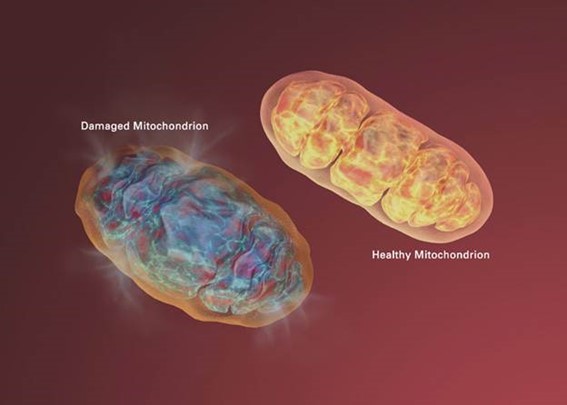
Lipid Membranes – PPC, the Key to Liver and Mitochondrial Health, Anti-Aging & Cell Detox


All useful as we continue on the path of supporting aging cells.

The science is now fast and furious and we want to at least learn how to sustain prime condition to at leat one hundred when DNA triggers apparentl kick in.

Generally today survivors start having problems as they hit 80.  We obviously want to do better.  way better, actually.

Lipid Membranes – PPC, the Key to Liver and Mitochondrial Health, Anti-Aging & Cell Detox

Published on October 27, 2025

https://drsircus.com/detox/lipid-membranes-ppc-the-key-to-liver-and-mitochondrial-health-anti-aging-cell-detox/?

The cell membrane, also called the plasma membrane, is not merely a barrier—it’s the intelligent interface between life and the environment. Its structure and function are foundational to understanding how cells maintain balance, communicate, and respond to both external and internal stimuli. Cell membranes aren’t static—they’re dynamic, lipid-based living structures. Anything that oxidizes, destroys, or alters their lipid balance sabotages metabolism and signaling, causing premature aging and chronic disease.

This might be one of the most important essays I have written about the biology of life because the health and integrity of all our cell membranes, including the inner and outer membranes of all the cells’ mitochondria, are a central part of overall health and longevity. Now we have to pay attention to one medicine, considered both natural and pharmaceutical, PPC (Phosphatidylcholine), which all membranes can use to repair themselves.

I wrote about it earlier in terms of its use for cardiovascular disease. Its multi-modal action – simultaneously affecting cell membranes, cholesterol transport, and inflammation – is advantageous in complex metabolic diseases. Here, we delve into the depths of life itself and what contains and continues it. Want to live longer and be healthier? Restore your membranes with PPC.

The cell membrane regulates what enters and leaves the cell. It allows essential molecules, such as water, oxygen, and nutrients, to enter while removing waste products and toxins. This semi-permeable nature is achieved through a lipid bilayer embedded with proteins that act as transport channels, receptors, and pumps.

Modern research increasingly recognizes the membrane as the actual “brain” of the cell, not just a passive barrier. Biologist Bruce Lipton highlighted decades ago that cell behavior changes dramatically when membranes detect environmental shifts, even when DNA remains static. This reframes heredity—your genes are not entirely in control; your cell membranes and environment are.

Healthy cell membranes block the entry of invasive agents—bacteria, viruses, and synthetic chemicals. Industrial pollutants (like PFAS, pesticides, microplastics, and heavy metals) can intercalate into membranes, making them leaky or dysfunctional. This leads to inflammation, mitochondrial damage, and accelerated aging.

The quality of cell membranes depends directly on fats. One is only as
conscious as your cells’ ability to respond intelligently to their environment.

We will discuss not only PPC and liver restoration but also the intersection of biochemistry and systemic coherence, both of which depend on the integrity of the body’s cell membranes. The cell membrane is where Voltage, signaling, and consciousness meet matter.

Nutritional phospholipids aren’t just molecules—they’re structural life supports. When the membrane potential collapses (due to oxidative stress, EMF, toxins, or psychiatric drugs), the organism’s self-organization deteriorates. PPC is one of the few agents that literally reconstitutes the structural integrity upon which cellular intelligence depends. PPC is the substance —the best molecule — for membrane regeneration. Cell membranes, which are crucial inside the cell’s mitochondria, are the key to biological activity.

PCC is a phospholipid — a molecule that forms the membrane of every cell, including inside the cells’ mitochondria. PPC is derived from natural sources such as soy lecithin. It’s available in a highly purified form containing a high percentage of unsaturated phosphatidylcholine species, most notably dilinoleoylphosphatidylcholine (DLPC). This specific molecule integrates directly into damaged cellular membranes — and, initially, over 50 years ago, was used to repair and restore the integrity of hepatocyte (liver cell) membranes.


Polyenylphosphatidylcholine (PPC) is a purified extract of phosphatidylcholine rich in polyunsaturated fatty acids. It is a form of phosphatidylcholine (the major phospholipid in cell membranes). Available in liquid (for the strong, hearty who already take enough pills) or in gel capsule form.

PPC literally rebuilds the lipid bilayers of hepatocytes damaged by alcohol, fatty infiltration, medications, or toxins. The liver is unique in how rapidly it can regenerate if given the right substrates — PPC provides those substrates. And in a world as toxic as ours, this is incredibly important for health and longevity.

PPC is not only for liver health but also a crucial element in detoxification, a principal function of the liver and of all cells. Too many “detox” products flood the liver with mobilized toxins before the liver is capable of neutralizing and exporting them. PPC works differently:It heals first, increasing the liver’s capacity for safe detox.

Only afterward — once membranes and bile flow are restored — does effective “detoxification” occur naturally.

This sequencing (heal → detox) is crucial. Otherwise, you risk redistributing toxins or worsening systemic inflammation. Thus, PPC isn’t a typical “detox supplement.”

It is a biological membrane-restoration compound that provides the liver with the raw materials it needs to self-heal. When this foundation is rebuilt, detox pathways (phase I/II, bile excretion, glutathione conjugation) begin to operate optimally again.

Phosphatidylcholine (PPC) and Mitochondrial Membranes


Phosphatidylcholine is the most abundant lipid in mitochondrial membranes (both inner and outer), comprising up to 40–50% of their composition. Mitochondria, the cell’s energy powerhouses, rely on PPC for structural integrity, as it forms the fluid bilayer that houses electron transport chains, enzymes, and transport proteins.

PPC’s polyunsaturated fatty acid chains (e.g., linoleic acid) ensure membrane fluidity, enabling protein movement and signaling. At the same time, its choline head group facilitates interactions with other lipids, such as phosphatidylethanolamine (PE), in non-bilayer structures critical to fusion/fission dynamics.

Disruptions in PPC levels or composition—often driven by oxidative stress, aging, or disease—can impair ATP production, trigger apoptosis, and contribute to pathologies such as liver disease by compromising mitochondrial bioenergetics. PPC supplementation supports mitochondrial membrane repair, reducing steatosis and inflammation by restoring lipid asymmetry and transport functions.

PPC isn’t just a passive scaffold—it’s dynamic, influencing biogenesis, protein import, and resilience:Membrane Fluidity and Dynamics: Maintains optimal viscosity for cristae folding (inner membrane ridges that house respiratory complexes) and for fusion/fission, preventing mitochondrial fragmentation under stress.

Protein Translocation and Assembly: Facilitates import of nuclear-encoded proteins via translocases (e.g., TIM23 complex); low PPC disrupts sorting and assembly machinery (SAM), halting biogenesis.

Antioxidant Protection: Shields against ROS-induced damage to cardiolipin (another mitochondrial lipid), preserving electron transport efficiency and reducing permeability transition pore-mediated leakage of energy.

Lipid Transport and Equilibration: Enables bidirectional flux of precursors (e.g., CDP-choline) across outer/inner membranes, ensuring even distribution for ongoing synthesis.

PPC bolsters mitochondrial membranes against ROS induced by steatosis, enhancing beta-oxidation and reducing fibrosis—trials show 15–25% reductions in ALT with 1,200 mg/day over 3 months. Dose: 300–1,200 mg/day oral (soy-derived). Alanine Aminotransferase (ALT) is a liver enzyme primarily found in hepatocytes; elevated levels (>40–50 U/L in adults) signal cell injury or inflammation, common in conditions such as NAFLD/MAFLD, viral hepatitis, or toxin exposure.

Deterioration of inner-membrane lipids and CL oxidation correlates with Cancer.

Damage to the inner membranes of the mitochondria, to the Cardiolipins (CLs), which are a family of diphosphatidylglycerol lipids—unique, cone-shaped phospholipids that make up ~20% of the inner mitochondrial membrane’s composition, are fragility points where failing membrane depletion hits hardest, turning the cell’s engine room into a stuttering relic. Think Cancer here: normal oxidation with oxygen goes into the toilet, while dirty fermentation takes hold so that cells can survive the drop in energy production. Inner-membrane lipid deterioration and CL oxidation correlate with mitochondrial failure, dysregulation of apoptosis, and metabolic reprogramming in Cancer. In Cancer and degenerative disease, decreased total CL content is observed, forcing cells to shift toward glycolysis even when oxygen is available (the Warburg effect).

The Electron Transport Chain (ETC) is the powerhouse assembly line in the inner mitochondrial membrane, a cascade of four protein complexes (I–IV) plus ATP synthase that harnesses electrons from food-derived NADH/FADH2 to pump protons (H+) across the membrane, creating an electrochemical gradient. This “proton motive force” drives ATP synthase to forge adenosine triphosphate (ATP), the cell’s energy currency—90% of our total output.

Pair with magnesium for membrane stability, and bicarbonates to curb acidosis that erodes membrane integrity —we have the beginning of one of the most remarkable medical approaches that pharmaceuticals cannot touch. This interplay underscores a quiet heroism—guarding the mitochondria’s sacred fire.

Magnesium, as the master mineral of relaxation and electrical stability, fits perfectly with PPC. Magnesium stabilizes phosphate groups on ATP, making energy usable. It also binds to negatively charged phospholipids, fortifying the membrane against excessive permeability. In short, magnesium sets the frequency, and PPC restores the instrument. Decalcification (calcium is toxic in the face of magnesium deficiencies) and membrane fluidity work in concert: magnesium prevents rigidity, PPC ensures reactivity.

The Body Electric


All cells are electrical instruments.Cell membrane potential (Δψ): Every living cell maintains a voltage gradient across its membrane (~-70 mV typical). This Voltage is the primary driver of nutrient uptake, waste removal, protein folding, and signaling.

Voltage and coherence: When the membrane potential collapses, the cell loses polarity — effectively becoming chaotic, inflamed, or even cancerous.

Energy, Voltage, and consciousness: Cellular coherence resonates up to tissue coherence and to what we perceive as clarity of mind or vitality. The human biofield cannot function without consistent cell-level charge separation.

Crucial Phospholipid Membranes

The membrane is more than a container — it’s an information transducer.PPC is the dominant lipid, providing the membrane with its fluidity and conductivity.
Membrane fluidity determines receptor sensitivity, enzyme docking, and proper ion channel function.
Think of it as the guitar string of life — its tension and composition determine the tone. If oxidized fats, toxins, or EMFs disturb it, the music turns to static.

When hepatocytes (liver cells) or neurons lose PC content, electrical signaling falters. Reintroducing PPC restores structural conductivity—the material correlate of “biological listening.”

CO₂ Increases Membrane Potential

Elevated CO₂ via controlled respiration, sodium, potassium, or magnesium bicarbonate increases membrane potential by enhancing oxygen delivery and buffering intracellular pH. This creates the correct redox and voltage environment for PPC to integrate efficiently into membranes. Low CO₂ (chronic hyperventilation, anxiety, EMF stress) accelerates membrane oxidation and lipid peroxidation — a biochemical mirror of psychic fear and instability. Carbon dioxide inhalation therapy has only recently become available to the public.

Back To The Liver

The liver is central to all this. When hepatocytes regenerate under PPC support, several bioelectrical consequences follow:Restored glutathione synthesis: Reduces ROS and maintains redox circuitry.
Improved bile flow: Enhances toxin elimination and indirectly stabilizes microcurrents in other organs.
Membrane-anchored voltage restoration: Each cell becomes a recharged capacitor.
Anti-fibrotic Effects:
PPC has been shown in multiple animal and human studies to reduce collagen deposition and the progression of fibrosis. It seems to modulate stellate cell activation (the key step in scar formation).
Bile Flow & Detoxification:
Bile is composed mainly of bile acids and phosphatidylcholine. PPC helps normalize bile viscosity, protects bile ducts, and aids toxin excretion. It prevents cholestasis (stagnant bile flow), which is a core mechanism in many detox failures.
Protection Against Toxins & Drugs:
PPC lowers the hepatotoxicity of numerous xenobiotics — including alcohol, acetaminophen (paracetamol), and certain drugs — by improving mitochondrial function and membrane resilience. (phase I/II, bile excretion, glutathione conjugation) begin to operate optimally again.

Eye Health

PC is a component of retinal membranes, especially photoreceptor/outer-segment membranes, which are highly sensitive to damage. There is evidence that oxidized phospholipids accumulate in the macula (region of the retina) with age. PPC “nourishes” and “protects” eye-cells (retina, lens, RPE) by helping maintain cell-membrane health, flexibility, and nutrient/ waste exchange.

Photoreceptor outer segments and RPE cells require fluid, flexible membranes rich in PC and PUFAs. If PC is low/altered, membranes may be more vulnerable to oxidative damage. As in other cells, membrane phospholipids support proper mitochondrial membrane structure and function; since retinal cells are metabolically intense, they may benefit from membrane lipid support.

If someone has eye stress (e.g., high screen time, UV exposure, early macular changes, dry eye) and they are otherwise healthy, ensuring their diet (or supplement) includes PPC is reasonable as part of a broader eye-health strategy.

Conclusion

Therefore, detox without PPC or Magnesium is like trying to reboot a corrupted operating system while the hard drive is still fracturing. PPC is one of the most underappreciated yet profoundly compelling compounds for liver regeneration, detoxification, and mitochondria restoration. And since we live on a toxic polluted planet all of this is crucial to the continuation of life and health.

Vaccine Tylenol Market conditioning


This likely explains the abrupt panic over Tylenol which came out of  nowhere.

Understand that money really believes they can condition markets to look away from even awful news.

The awful news is that we finally have a proper study that confirms that the genesis of autism goes back to vaccinations.  We always had ample indication. but now we have an irrefutable study using meta stats to truly lower the error range to negligible.

Let us be nasty.  Every autism victim will have a vaccination history is a clearly testable assertion readily disproven by locating a lt of exceptions.


Vaccine Tylenol Market conditioning

'How Vaccines Cause Autism: Breaking Down the Data in 3 Simple Points The Week That Could Have Changed Everything'; Franklin O'Kanu's excellent stack that could inform RFK Jr. and Makary to refocus on deadliness of vaccines and impact on infants, children, adults & stop this bullshit about Tylenol and circumcised etc., thank you Franklin for seminal top work (support Franklin) and please RFK.Jr please Sir, refocus on vaccines and ask Cassidy to let go of your testicles and please tell The Outlaw Josie Susie Wales that your stones are off limits to her from now on…

I have nothing to say about Makary for IMO he is a waste of time.


Alexander News Network (ANN): Trump's War 2.0 for America is a reader-supported publication. To receive new posts and support my work, consider becoming a free or paid subscriber.

But please focus on Franklin’s great work RFK Jr. for we support you and stand with you as we await you doing the right thing in removing the Malone Albert Bourla Bancel Weissman Sahin Moncef Kariko Perna Tureci etc. Pfizer Moderna BioNTech et al. mRNA deadly technology vaccine from US market…thank you RFK Jr., huge praise to you!

Read O’Kanu’s excellent work here and support please:


Start here:

‘Over the past three weeks, information has emerged that could have fundamentally alter society’s understanding of health—particularly when it comes to our children.

Two weeks ago, congressional testimony revealed data from the Henry Ford Health System showing a stark pattern: vaccinated children demonstrated significantly higher rates of autism and autoimmune diseases compared to their unvaccinated peers.

This was groundbreaking news that I analyzed in depth in my recent article—one of my most-read pieces this week.

(Note: I’ll be locking that analysis for paid members within 24 hours due to the extensive research involved, so please access and share it while it’s still publicly available.)

But here’s what’s troubling: instead of a national conversation about this data, we’ve witnessed a strategic shift toward Tylenol. The Tylenol narrative has completely overshadowed what should have been a watershed moment in understanding childhood health outcomes.

Even more concerning, I’m now seeing people attempt to justify Tylenol as the primary cause of the autism epidemic—a convenient distraction from the real culprit.

What’s getting lost in this noise is the fundamental truth: vaccines cause autism and other autoimmune diseases.

I’ve written extensively on this topic across multiple articles, but I recognize it can be overwhelming. So, in this piece, I’m going to break it down into three clear, straightforward points that explain exactly how vaccines cause autism.

Let’s dive in.
A Note on Replication

Before we begin, I want to address what researchers like Aaron Siri and others should do with this Henry Ford data: replicate it.

And here’s the thing—this data has already been replicated. Florida conducted their own study using their Medicaid health system and found a nine-fold increase in certain conditions among vaccinated children. Individual medical practices have shown the same pattern, as I documented both scenarios in my article comparing unvaccinated versus vaccinated children across multiple clinical studies. Read that article here.


Florida Health Care System

One argument you’ll hear is that “unvaccinated people live different lives” or concerns about “confounding variables.” This is rationalization masquerading as science. These children live the same lives—same communities, same socioeconomic backgrounds, often the same households. The only significant difference is vaccination status.

I addressed this thoroughly in my article “Weaponized Logic,” where I demonstrate how these statistical objections are deployed to dismiss inconvenient truths. Don’t let these arguments distract from what the data clearly shows: the Henry Ford Health System, Florida’s Medicaid system, and independent clinical practices all reveal the same pattern.

Now, let’s examine how vaccines actually cause autism.

Unorthodoxy is a reader-supported publication. To receive new posts and support my work, consider becoming a free or paid subscriber.

Subscribe
Point One: Understanding the Bell Curve of Vaccine Injury

First, we need to establish something critical: vaccines are “relatively safe”—and I use that term very deliberately.

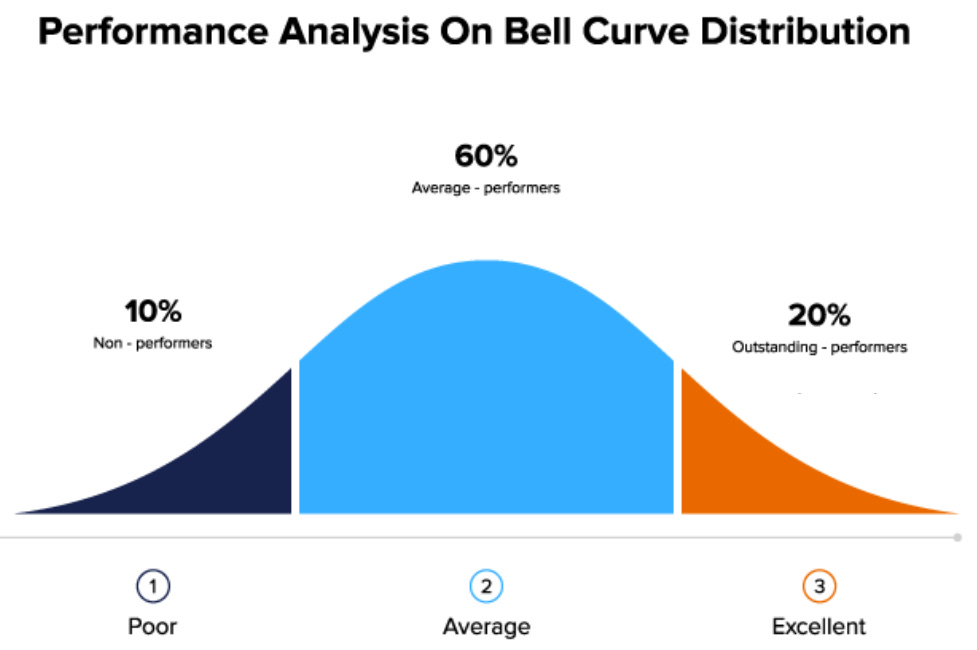
When we look at the population on a bell curve distribution, here’s what we see:


At one end of the curve (20%): A small percentage of people who get vaccinated and experience virtually no adverse effects throughout their lives. These individuals appear perfectly healthy, with no discernible conditions. They’re often held up as proof that vaccines are harmless.


The middle of the curve (60%): People who experience some effects—allergies, ear infections, eczema, asthma, or other conditions. These are often dismissed as “relatively minor” or “normal childhood illnesses,” even though they represent a departure from true health. Society has normalized these conditions to such an extent that we barely question them.


The other end of the curve (10%): The worst-case scenarios—SIDS, classic autism, lifelong debilitating conditions. Not everyone lands here, but these outcomes are still occurring at significant rates.

When I say vaccines are “relatively safe,” this is what I mean: most people fall within the first two-thirds of that bell curve. And because those outcomes have been normalized, we ignore what’s happening at the far end—the children whose lives are permanently altered.

The problem is that we only hear about the first two-thirds. We’ve declared that distribution “acceptable” and moved on. But that far end of the curve represents real children, real families, real devastation—as many parents on Substack are vocalizing.
Point Two: Vaccine-Induced Encephalopathy Is Real

Here’s what many people forget: every pharmaceutical has side effects.

In our modern world, we’ve become so casual about pharmaceuticals that people pop Tylenol daily without a second thought. But Tylenol itself carries a risk of liver failure. Recently, TikTokers have been showing up in hospitals with liver damage because they’ve popped Tylenol like candy.

These drugs can kill you. Every single one has side effects. Read my article on Modern Medicine as Poison.

But we’ve become desensitized to this reality because of Point One—the bell curve makes everything appear “normal.” But normal doesn’t mean safe.

Now let’s focus on vaccines. Vaccines carry a known side effect: vaccine-induced encephalopathy—brain inflammation and damage.

Stop and think about that for a moment.

A vaccine—mandated for virtually every newborn in this country—has a documented side effect of brain damage.

Let me ask you directly: Would you take a pharmaceutical that lists brain damage as a potential side effect? Would you take it daily? Would you take it even once if you had a choice?

Of course not. No rational adult would willingly accept that risk for themselves.

Yet somehow, when it comes to our children—our newborns, just entering the world—we’ve been convinced this risk is not only acceptable but necessary. We inject them within hours of birth, and then repeatedly throughout their first years of life, with substances that carry the risk of permanent neurological damage.

Adults wouldn’t take it. But we give it to babies.

Think about the insanity of that for a moment.

This is the power of narrative. This is the power of marketing. We’ve been conditioned to accept a level of risk for our children that we would never accept for ourselves.

As I documented in my article on vaccine-induced encephalopathy and my analysis of the DSM, there is a clear correlation—an observed, documented association supported by odds ratios—between vaccination and autism. But thanks to marketing, it’s becoming normal—even celebrated.

Vaccines do cause autism. What we’ve called “autism” is, in many cases, misdiagnosed vaccine-induced encephalopathy.

A vaccine—mandated for virtually every newborn in this country—has a documented side effect of brain damage.
Point Three: Vaccines Bypass the Body’s Natural Defenses

Sasha Latypova has explained this concept brilliantly, and it’s crucial to understand.

When you inject synthetic chemicals directly into the bloodstream, you’re bypassing the body’s natural protective systems.

Think about how the body is designed to work:

Defense Layer One: The skin—a physical barrier against external threats.


Defense Layer Two: The digestive system. When you consume something, your body has multiple mechanisms to break it down, neutralize toxins, and eliminate what doesn’t belong.

These are complex, divinely created, time-tested biological defense systems.

But vaccines bypass both of these defenses entirely. They go straight into the bloodstream, delivering synthetic chemicals, proteins, metals, and other compounds directly into your system without any of the body’s natural filtration or processing.

This creates the potential for tremendous biological disaster—and we’re seeing it in the data.

Children who are vaccinated show up to 400 times the risk of developing life-long conditions compared to their unvaccinated peers.

Vaccines are not natural. They represent a form of “modern magic”—a pharmacological intervention that our bodies were never designed to handle. And this intervention is driving the epidemic of chronic childhood—and adult—illness we see today.

I’ll explore the origins and philosophy of vaccination in a future article, but for now, recognize this fundamental truth: injecting substances directly into the bloodstream—especially in newborns—is a violation of natural biological processes.

Children who are vaccinated show up to 400 times the risk of developing life-long conditions compared to their unvaccinated peers.
Closing Thoughts: We’ve Normalized What Should Shock Us

The most disturbing realization of this: we’ve been deceived to accept this as normal.

We think it’s normal for children to have allergies. We think it’s normal for children to have eczema. We think it’s normal for one in every 36 children to have autism.

We’ve normalized these conditions to such an extent that we no longer question them. We’ve moved the goalposts on what “healthy” means.

But here’s the pattern we need to see: within the first five years of life—the exact window when the vaccine schedule is most intensive—these conditions emerge. Children who were developing normally suddenly regress. And the children who don’t follow the vaccine schedule? They don’t develop these conditions at anywhere near the same rates.

The data is clear. The pattern is undeniable. The only question is whether we’re willing to see it.

I hope this breakdown has made the case clear and accessible. The evidence spans multiple articles and years of research, but it comes down to these fundamental points:

Vaccine injury follows a bell curve distribution, and we’ve normalized the harm


Vaccine-induced encephalopathy is real and is being misdiagnosed as autism


Vaccines bypass natural biological defenses, creating systemic damage

It’s the vaccines. It always has been.

I’m forever open to discussion and differing perspectives, but I encourage you to examine all the evidence I’ve compiled across my articles before dismissing this conclusion.

For those new to this work, please explore the comprehensive analysis linked below. The truth is hidden in plain sight—we just need the courage to look.

As always, thank you for your time and attention. Have a wonderful day.


Alan Turing Knew the Power and Limits of Computing


This is something never actually emphasized, but should have been inferred.  Understand that the whole of our digital age is standing on the shoulders of Principa Mathematica with Whitehead and Russel.  This expands our natural five operator logic system which needs to be properly realized as a six operator logic system for it to propetrly work in nature.

The meme there inferred that it is inclusive for mathematics.

Yet propositions can be unknowable.  impossible to calculate is certain, but i do think unknowable means we can never describe such a proposition.  So how do we know it even exists?


Alan Turing Knew the Power and Limits of Computing

By BEN BRUBAKER


https://mailchi.mp/quantamagazine.org/why-black-holes-keep-pulling-physicists-in-4867774?e=69d36d2113


What exactly is a computer? Until the mid-20th century, the word typically referred to humans who did calculations for big science and engineering projects. Those human computers were then replaced by electronic behemoths hard-wired to solve specific math problems. Today we can use a single laptop for a host of unrelated tasks that seem far removed from number crunching. A definition of computing that encompasses all of this might seem too vague to be useful.

Yet computing does have a precise definition, one that dates back nearly 90 years to a paper by the famed logician Alan Turing. Turing imagined hypothetical devices (now called Turing machines) that would read and write 0s and 1s on an infinitely long tape according to a set of simple rules. Computing, he then proposed, was just whatever Turing machines could do. That definition may sound circular, but Turing’s simple model proved enormously influential. It revealed the fundamental limits of computing and laid the theoretical foundations for the general-purpose computers we now use every day.

Turing devised his model of computation to answer a major open problem in the foundations of mathematics about the limits of step-by-step theorem-proving procedures, or algorithms. He showed that Turing machines could in principle execute any known algorithm, and then proved that there are fundamental limits on what problems Turing machines can solve. This suggested that certain “undecidable” problems are beyond the reach of algorithms altogether.

Turing’s milestone result wasn’t all bad news. He also proved that it’s theoretically possible to build a universal Turing machine that can simulate the computations of any other Turing machine. That insight inspired the mathematician John von Neumann to devise a more practical plan for a programmable computer, one that could run different programs to solve different problems. It also prompted later researchers to explore intimate connections between computation and the fundamental laws of physics, as Michael Nielsen explained in a 2015 column for Quanta.

Alan Turing never intended his imaginary machine to be a blueprint for a real computer. But his invention nonetheless played a central role in the history of computer science, and it inspired questions that researchers are still grappling with today.

What’s New and Noteworthy

Turing machines aren’t the only way to model computation mathematically. Researchers have devised countless other models that are “Turing complete,” meaning they can theoretically execute all the same algorithms that Turing machines can. Some of these models are much less practical than others. In 2024, Quanta editor Jordana Cepelewicz wrote about a whimsical new addition to the list: origami computing, in which different ways to fold paper represent elementary mathematical operations.

Turing completeness has a dark side. Any universal computational system must be plagued by the same undecidability that afflicts Turing machines. Charlie Wood recently surveyed decades of work on Turing completeness and undecidability in physics. For some physics problems that seem simple, researchers have proved that it’s impossible to devise any general-purpose algorithm for finding a solution, even if you have perfect knowledge of the system’s configuration.

Even as many researchers have turned to newer models of computation, others continue to explore the behavior of Turing machines. One of my favorite topics in computer science is the busy beaver game, in which researchers aim to find the longest possible running time for Turing machines with a given number of rules. Last year, I reported on an online community of amateur mathematicians who found the busy beaver for five-rule Turing machines, settling a question that had remained open for 50 years. This summer, I wrote a follow-up story about progress on the six-rule case that’s forced researchers to grapple with staggeringly large numbers. And in 2020, John Pavlus showed how researchers have used the busy beaver game to gauge the difficulty of the thorniest problems in mathematics.

Thursday, October 30, 2025

American Canadian Proto Provinces and the Rule of Twelve


Thought provoking image.


 Canadian Proto Provinces and the Rule of Twelve


Since the Orange Man has expressed an enthusiasm for the concept of Canada as a fifty first state, however that might work out, It is appropriate to posit a superior concept able to protect sovereigny and cultures and ameliorate economic friction.


I suggrest we formulate geographic configurations known as proto provinces that include subsets of USA States and Canadian provinces.  this allows a govenors and premiers council under the Rule of Twelve, if yo uwill have it able bto extablish a group consensus in terms of common ploicy.  It is not meant to legistlate, but to inform and influence on common issues.

It is easy to imagine a proto province taking in our maritmes of four provinces along with several coastal states all obviously part of New England.

It is also easy to imagine upper New york et all and quebec and ottawa valley also forming up a Proto province as well.  Again ample commin geographic interests.

Now imagine Ontario and a natural ring of old Northwest states bounded on the south by the Ohio and on the west by Thunderbay.  This is the prime watershed of the Great lakes with a huge geogrphic footprint.

that leaves a western plains proto privince which easily includes vthe Dakotas and no obious southern boundary but incvludes much of the Missouri river.  

of course BC and washington on the Salish sea is a natural geographic unit of its own while Idaho is in there somehow.

That leaves Alaska and the Yukon as anothert proto province.

Throwing history aside we have identified six clear geographic proto provinces that can benefit from establishing a common consensus on issues.  Better yet ,this can empower through the rule of Twelve ,the ability to lobby both Washington and Ottawa for general support.

This is a tempered consideration that ameliorates all forms of border friction and provides a fresh road to local empwerment.  Who knows?  Pehaps New England can join the Canadian Health Care system


Apios americana


This wild plant has a long history as a forage plant amount natives and is an obvious prospect for domestication and global distribution.  Recall that all domesticate plants looked rather like this in the wild state.

Can the greens be consumed?  That turns out to be yet, but fussy as always.  Sweet potato leaves are also god as well.  my point as an old grower is that picking during the season can provide cooked greens.  however we all grow spinach or chard for just this.

The tuber and peas are good enough and i am sure dried peas must be good.

The natives used the plant universally and it behooves us to spread therm in the wild wood.  We so need to do more there.


<iframe width="853" height="480" src="https://www.youtube.com/embed/KT9x6P5HBBI" title="This Lost Native Vegetable Outperformed Potatoes — and It’s Still Growing Wild!" frameborder="0" allow="accelerometer; autoplay; clipboard-write; encrypted-media; gyroscope; picture-in-picture; web-share" referrerpolicy="strict-origin-when-cross-origin" allowfullscreen></iframe>


Comments


It was only harvested in small quantities because it is VERY time consuming to gather. Dig an hour and still not get enough to eat a full meal. It was never a domestic crop because potatoes were brought to North America and beat it in every way. I have grown ground nut for 28 years and have yet to get enough to be worth one meal. Its bland and very unproductive. It requires a climbing trellis. It's expensive to get because its so unproductive. I still have it but it can't handle being harvested more than every few years. Worse yet, it does not taste as good as potatoes and is very tedious to clean up.


To grow these you have to plant the improved varieties. The wild types are not great at producing food in a small area. One improved plant can be 100× the yield of a wild one.


If you grow them in deep mulch, you can give the root a tug and a whole string will come out. They have this white sticky latex so a bit messy, don't cook them in aluminum pans. The pods only produce peas on diploid plants, and I've yet to get enough to try them. Honestly I almost never eat them but I let them go wherever they want as an emergency food. If they climb on something I don't want them to I just cut it and it's fine. But everywhere there are little tubers if I need them, they last for years in the soil.


Looks VERY labor intensive to process and prepare, per unit of nutritional yield. I don't think you can even compare them rationally, with potatoes or yams and for nitrogen fixing, peanuts are an excellent rotation crop. Peas and beans, too. The ground nut is not grown or harvested or processed or distributed or used commercially, and only on a very limited scale otherwise, for very good reason. The end product is a trivial amount of food for all the work involved, even though there does not need to be any cultivation labor. That's not to say that it isn't a great idea to have a go at it, out of interest or for variety, but there are a LOT of far better things to raise or gather if you really want to feed yourself, family, or others, or make a profit.


Post War configuaration


 The Ukraine Russia War is approaching it completion however arranged.  Think several months perhaps.

To start with the Ukraines military budget has climbed from one billion to a present 35 billion.  this means that the Ukraine is now the bleeding edge of NATO.  The Ukraine will become part of NATO.

At the same time the entire outpput of the Russian military industrial complex has been massively reduced  leaving minimal effective tools to hand.  A death spiral is at hand.

What is way worse is that soldier training is not obviously improving  overall.  While the ukraine training is now at NATO standard becsanse they have learned to rotate through training sessions.

Sooner than later, the Russians will be unable to stop a broad front combined arms assault able to open a blocking front that cuts off crimea and confronts northward essentially reducing the length of the front.  At some point, a small force will be ablle to rumble Russians out of Crimea.

I do think that blowing a major salient into Russian positions will cause the Russians to seek a ceasefire, just as happened in 1918.  We easily forget how totally Amiens put the German General Staff on the back foot in 1918 and how local unstoppability of the Canada Corp in its 100 day advance finished them.  We are now reaching this type of climax.

Recall arriving USA troops numbering 2 million were largely replacing massive French loses of 5;6 million including wounded.  Germany had 6.1 million casulties.  Breaking that stalemate mattered a lot more than pure numbers.

The strategic stalemate itself must be broken as a last act in this conflict.

The stage will be set for two things:

1  I hope we all submit to a general border commision covering all the Eastern borders including the Causasus at least.  too many historical issues to leave dormant. Stalin was horrible but he exiled Germans and Poles and many others to end a long list of causi bella.  Dual citizenship is a beterr solution allowing an organic resolution.

2  Russia itself needs to become a NATO member and NATO needs to deploy a forward force out to Eastern Siberia to prevent Chinese adventurism.  The actual settlement agreement likely needs this deployemt as a sign of good will.  No point in negotiating when armies are crossing borders in the East.


EMP protection for cell phones.


 EMP protection for cell phones.


Industry has been invisable when it comes to cell phone protection.  Understande that EM emissions are also not healthy and also need to be addressed.

The easiest fix that i can imagine wil be using aluminium shells for the phone and to perect design for the emissions away from the head if not done already.

armoring our cell phone infrastructure just means a design rollout fitted into our current cycle and should not be too difficult.  And we do need this.


Infrastructure protection is smething else.  Yet much of it seems well protected in fact.  Everything is is a steel box..  This means that an EMP pulse may well cause damage, but typically localized. and may well be no more dangerous that a bad strom.


This risk is no secret, and one wonders if it has been dealt with.  Too obvious a priority.  And managers do get fired for missing the obvious or not acting in go9od faith..


Wednesday, October 29, 2025

Study Links Surge in Children’s Memory Problems to Wireless Radiation Exposure


essentially we have a long literature with animal studies telling us thatb itt is a risk and so far no literature about babatement.  

after all, we will not give them up.  

It may be as simple as best practise, and/or shielding and/or design considerations.  They are potent enough to pay attention and this is detected damage.

So fix is already.  We did do something about tobacco smoke.


Study Links Surge in Children’s Memory Problems to Wireless Radiation Exposure


Children and teens in Sweden and Norway are experiencing an “alarming” rise in memory problems, according to the authors of a new peer-reviewed study that linked the issue to increased exposure to wireless radiation. “Radiation exposure must be reduced, and people must be informed about the associated health risks,” one of the study’s authors said.


(Children's Health Defense) Children and teens in Sweden and Norway are experiencing an “alarming” rise in memory problems, which the authors of a new peer-reviewed study attributed to increased exposure to wireless radiation.

“The steep increase in memory issues cannot be explained by changes in diagnostic criteria or reporting to the registries alone,” Lennart Hardell, M.D., Ph.D., one of the study’s authors, said in a press release. He added:

“We urge our findings on increasing numbers of children having impaired memory to be taken seriously by public health authorities and consider children’s increasing exposure to wireless radiation as a possible cause.


“Thus, we ask for measures aimed at decreasing exposure to RF radiation [radiofrequency radiation] to protect the brain and general health of children.”

The study was published this month in the Archives of Clinical and Biomedical Research.

Hardell, an oncologist and epidemiologist with the Environment and Cancer Research Foundation, has authored more than 350 papers, nearly 60 of which address RF radiation. He is also one of the first researchers to publish reports on the toxicity of Agent Orange.

Hardell and lead study author Mona Nilsson, co-founder and director of the Swedish Radiation Protection Foundation, examined national health data in Sweden and Norway and found that the number of medical consultations for memory disturbances in Norwegian children ages 5-19 increased roughly 8.5-fold from 2006 to 2024.


In Sweden, the number of children ages 5-19 diagnosed with mild cognitive impairment — a diagnosis that includes memory problems — increased nearly 60-fold from 2010 to 2024.

“The findings must be taken seriously and evaluated,” Hardell told The Defender. “Action must be taken to reduce children’s overall exposure — especially in schools.”

Nilsson agreed. “These alarming trends must be reversed — radiation exposure must be reduced, and people must be informed about the associated health risks,” she said.
Authors link memory problems to wireless radiation

The authors argued in their report that wireless radiation is a leading cause of memory decline in children.


They cited numerous epidemiological and experimental studies showing that very low levels of RF radiation can negatively affect the brain — particularly the hippocampus, which plays a central role in memory and learning.

“There is abundant evidence [dating back] several decades, both on animals and humans, that RF radiation impairs memory,” Nilsson said. “The trends we are observing coincide closely in time with the sharply increasing exposure of children and adolescents to RF radiation.”


Wireless exposure has escalated in the last decade due to the increasing use of cellphones, wireless headsets, Wi-Fi and 5G, Hardell said.

“Other contributing factors can, of course, not be excluded,” he said. “They must, however, be defined and not based on hypothetical discussion.”

New investigation targets ‘biased’ European report on RF radiation

The new study coincides with the European Ombudsman investigation into how the European Commission handled a key report that found no “moderate or strong” evidence linking adverse health effects to chronic or acute RF radiation exposure from existing wireless technologies.

The European Ombudsman, who “investigates complaints about maladministration by EU [European Union] institutions and bodies,” will question the European Commission on how it chose the experts to write the report, said Sophie Pelletier, president of PRIARTEM/Electrosensibles de France, in an Oct. 22 press release.

The report, called the SCHEER Opinion, was adopted in April 2023 by the European Commission’s Scientific Committee on Health, Environmental and Emerging Risks (SCHEER).

The SCHEER Opinion was “clearly biased,” according to an October 2023 critique published by the Council for Safe Telecommunications in Denmark and the Swedish Radiation Protection Foundation.


The investigation stems from a complaint filed by several European nonprofits, including the Swedish Radiation Protection Foundation, alleging that the authors of the SCHEER Opinion had conflicts of interest due to industry ties or industry-funded research.

The nonprofits also claimed that the European Commission excluded experts critical of wireless radiation’s possible health effects from the report’s working group and that the report authors ignored peer-reviewed studies showing harmful effects from exposure below current limits.

In the U.S., the Federal Communications Commission (FCC) has not updated its RF radiation exposure limits since 1996 and bases them largely on a few small sample studies conducted in the 1970s and 1980s.

The FCC has not yet complied with a 2021 court-ordered mandate to explain how it determined that its current guidelines adequately protect humans and the environment from the harmful effects of RF radiation exposure.